






Definition and Purpose of IRS Publication 501 for 2017
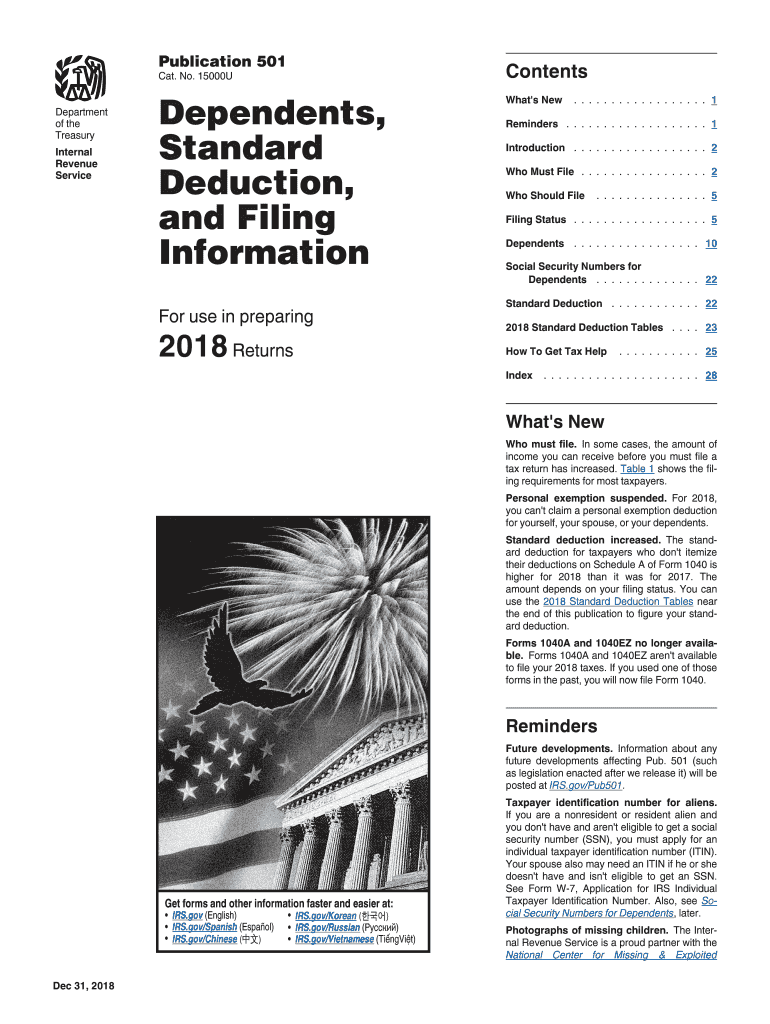
IRS Publication 501 for 2017 outlines essential tax information for U.S. taxpayers. This publication delineates rules about filing status, determining who must file a tax return, and the criteria for claiming dependents. The 2017 version is noteworthy for addressing the specifics in the context of that tax year, which includes dependency tests and changes from prior years. This document helps taxpayers understand potential eligibility for the standard deduction and provides the necessary information to correctly file taxes. Importantly, it aids in clarifying aspects like the suspension of personal exemptions during the relevant tax year, serving as a crucial reference point for accurate tax reporting and compliance in the United States.
Utilizing IRS Publication 501 for 2017
IRS Publication 501 is primarily used to ascertain filing requirements for individuals. To leverage it effectively:
- Determine Filing Status: Review the publication to understand different filing statuses such as single, married filing jointly, or head of household.
- Identify Dependents: Use the guidelines to accurately identify and claim dependents, analyzing qualifying relationships and conditions.
- Check Standard Deduction: Reference the standard deduction amounts specific to 2017, and evaluate eligibility for additional deductions. The publication also provides detailed instructions for those with unique circumstances, ensuring taxpayers have the tools needed for error-free filing.
Accessing IRS Publication 501 for 2017
To obtain the IRS Publication 501 for 2017, taxpayers have several options:
- Online Access: The most straightforward method is through the IRS website, where publications are available for download in PDF format.
- Physical Copy: Request a printed version by calling the IRS or by visiting a local IRS office where publications are available for free.
- Tax Software and Resources: Utilize tax preparation software like TurboTax, which often includes access to IRS publications as part of their tax filing services, ensuring that users have the most relevant information at hand.
Steps for Completing IRS Publication 501 for 2017 Reference
Understand the information contained within the publication by following these steps:
- Review Filing Requirements: Begin by identifying the threshold income necessitating a tax return.
- Determine Filing Status: Assess life situations such as marriage or dependents which affect your filing status.
- Gather Required Documents: Compile personal and fiscal documents, including previous tax returns and W-2 forms.
- Calculate Deductions: Use the detailed information on standard and itemized deductions to optimize your tax outcomes.
- Evaluate Changes in Tax Law: Stay alert to the changes from the previous year that might impact your filing.
Importance of IRS Publication 501 for 2017
Publication 501 holds significant value as it:
- Clarifies Requirements: Provides clarity on whether an individual is required to file a tax return.
- Assists in Tax Planning: Facilitates effective tax planning, enabling taxpayers to understand liabilities and benefits.
- Enhances Legal Compliance: By adhering to guidelines, taxpayers can ensure that they are compliant with federal tax obligations, avoiding potential legal complications related to tax filings.
Typical Users of IRS Publication 501 for 2017
The publication is primarily targeted at:
- Individual Taxpayers: Individuals intending to file taxes, determine their filing status, or claim dependents.
- Tax Preparers: Professionals assisting clients with tax returns benefit from the detailed guidelines.
- Educators and Students: Those in accounting or finance fields who study tax law as part of their curriculum use it as an authoritative reference.
Key Terms Explained
Understanding important terms within IRS Publication 501 for 2017 includes:
- Filing Status: Different classifications like single or head of household that determine the tax rate and deductions.
- Dependents: Individuals who qualify to be claimed on a taxpayer's return, affecting tax benefits.
- Standard Deduction: A fixed amount reducing taxable income, adjusted annually for inflation or legislative changes.
Legal Aspects and Compliance
IRS Publication 501 ensures legal compliance by:
- Regulatory Alignment: Helps taxpayers meet the legal requirements of U.S. tax laws.
- Avoidance of Penalties: Provides information to accurately file and pay taxes, preventing penalties related to incorrect filings.
- Audit Readiness: Equips taxpayers with documentation and understanding necessary for potential audits, ensuring they can validate their filing decisions if questioned by the IRS.