




01. Edit your mold remediation certificate of completion online
Type text, add images, blackout confidential details, add comments, highlights and more.

Type text, add images, blackout confidential details, add comments, highlights and more.

Draw your signature, type it, upload its image, or use your mobile device as a signature pad.

Send mold clearance letter template via email, link, or fax. You can also download it, export it or print it out.
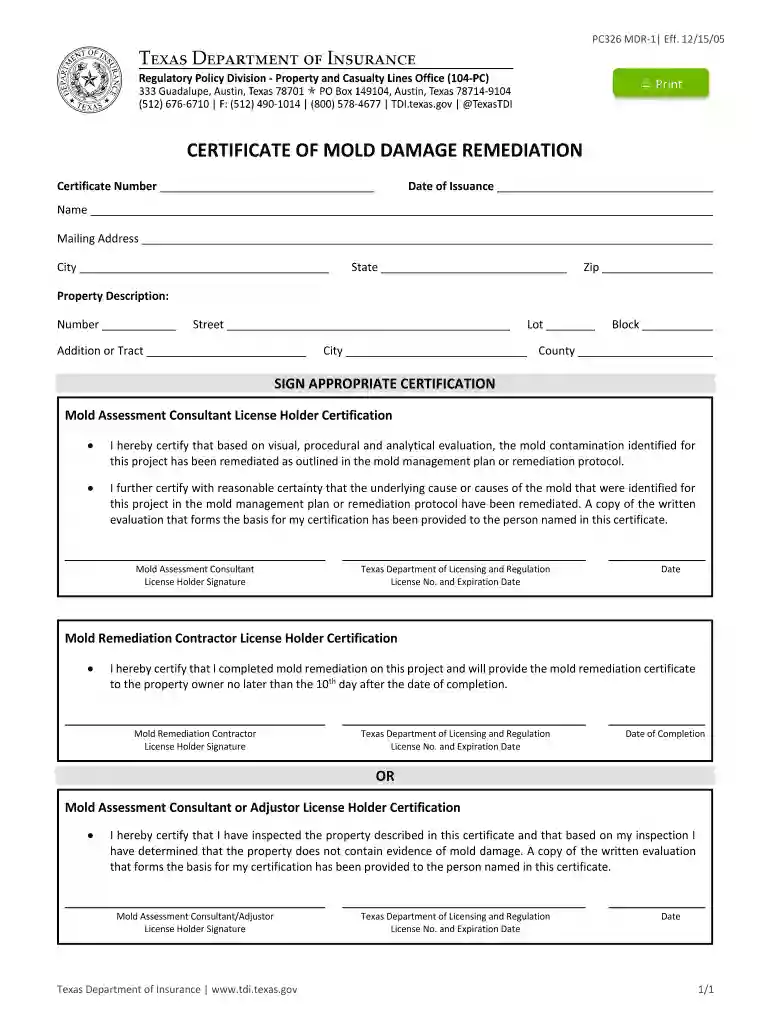
The mold remediation certificate of completion is a formal document issued to confirm that mold remediation work has been conducted in adherence to established protocols. This certificate typically contains vital information regarding the remediation process and serves as a key element in verifying compliance for both homeowners and service providers.
Certification Details: The document includes the names and license information of the mold assessment consultants and remediation contractors involved in the process. The presence of these details is crucial as it establishes accountability.
Scope of Work: The certificate outlines the specific actions taken to remediate the mold issue, which may involve identifying the source of moisture, removing contaminated materials, and implementing preventive measures to avert future growth.
Clearance Testing: After remediation, clearance testing is usually performed to ensure that mold levels are within acceptable limits. The results of these tests are often documented as part of the certificate.
Signatures: The certificate must be signed by the certified professionals who conducted the assessment and remediation. This not only validates the certificate itself but ensures that qualified individuals carried out the work.
Initial Assessment: A certified mold inspection is necessary to identify the presence and extent of mold damage.
Remediation Services: Following assessment, a licensed remediation company undertakes the removal or mitigation of mold.
Post-Remediation Inspection: After remediation, an inspector evaluates the affected area to ensure all mold has been effectively removed.
Issuance of Certificate: Upon successful completion of the inspection, the certificate of completion is awarded, signifying that the area is safe for occupancy.
This step-by-step process underscores the importance of engaging qualified professionals in both assessment and remediation stages.
The mold remediation certificate of completion holds legal weight, especially for property transactions. Homebuyers often request this certificate to confirm that previous mold issues have been properly addressed. Failure to provide a certificate can lead to complications in selling a property. Other reasons for obtaining this certificate include:
Insurance Requirements: Some insurers may mandate proof of remediation to process claims related to mold damage.
Regulatory Compliance: Adhering to local or state regulations regarding mold remediation often requires formal documentation of completed work.
Homeowners and remediation companies must understand the legal implications of the mold remediation certificate. It serves as a formal record that can be referenced in case of disputes. Legal requirements can vary significantly from state to state, making it essential to familiarize oneself with local regulations regarding mold damage.
If you're seeking mold remediation services, consider using search terms like "mold remediation near me" or "remediation company near me" to identify licensed professionals. Many states have their own certification programs, including specific certifications for states such as Florida, Georgia, and California, which may influence the process of obtaining the certificate.
After receiving the mold remediation certificate of completion, it is wise to maintain a healthy indoor environment to prevent mold reoccurrence. Regular inspections, maintaining appropriate humidity levels, and addressing leaks promptly are effective strategies. Staying proactive ensures that properties remain compliant with safety regulations and are protected against potential mold-related issues in the future.
At DocHub, your data security is our priority. We follow HIPAA, SOC2, GDPR, and other standards, so you can work on your documents with confidence.
This two day training course provides instruction on the identification, assessment, and correction of mold problems in buildings. Practical instruction on moldRead more
May 20, 2016 USPS personnel will not remediate mold. Remediation of mold will be contracted to firms qualified to perform such work. Reference AS-516Read more
Box A: To be filled out by the mold remediation contractor. I DocHub that: I treated the damage caused by mold at this property. Treatment can includeRead more


