




01. Edit your free temporary tag generator online
Type text, add images, blackout confidential details, add comments, highlights and more.

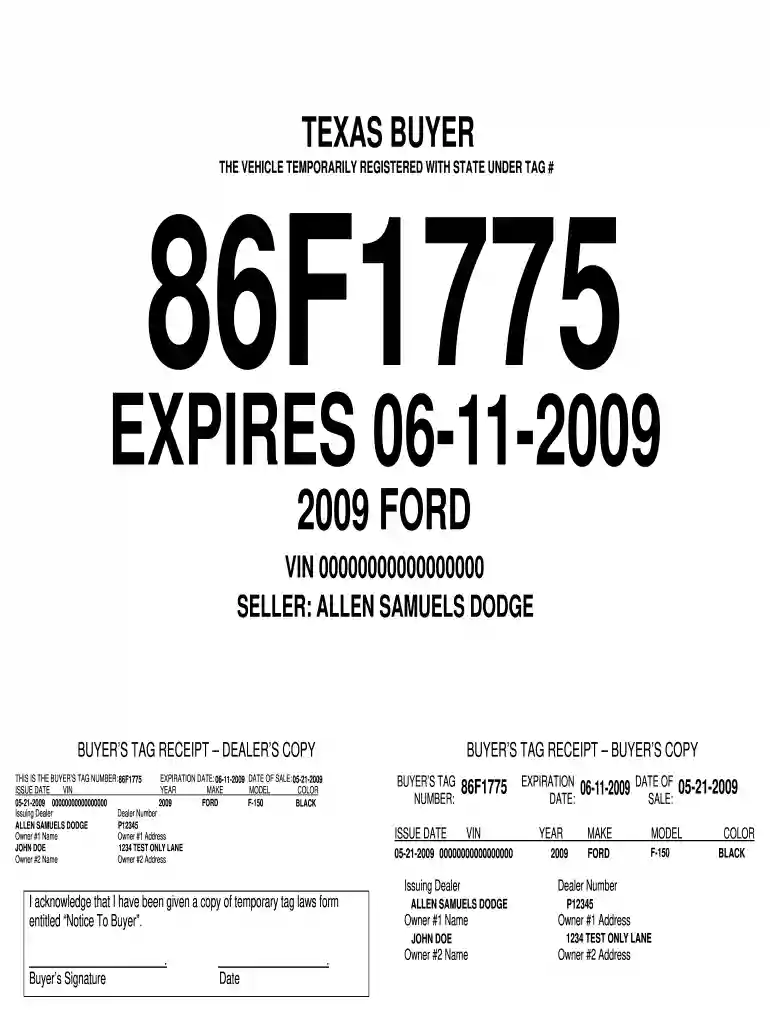
Type text, add images, blackout confidential details, add comments, highlights and more.

Draw your signature, type it, upload its image, or use your mobile device as a signature pad.

Send printable iowa temporary license plate via email, link, or fax. You can also download it, export it or print it out.
A temporary tag generator is an online tool designed to create temporary vehicle registration tags. These tags are often needed by vehicle buyers or sellers when a permanent registration cannot be immediately issued. The temporary tags provide lawful authorization for vehicles to be driven while waiting for permanent plates. This service is particularly vital for transactions involving used vehicles or when a new owner needs to drive a vehicle home post-purchase. Each state may have different regulations regarding the issuance and use of temporary tags, affecting how the generator operates.
Using a temporary tag generator is a straightforward process that typically involves the following steps:
This simple procedure enables quick access to a temporary registration without the need to visit a DMV office.
Different states have unique regulations concerning temporary tags, influencing their validity and application. Here are some general differences:
For example, Florida has specific templates that must be adhered to, whereas Texas allows more leeway with formatting, as long as the essential information is included.
Completing a temporary tag generator form entails an organized approach to ensure all necessary data is captured accurately. Follow these sequential steps:
Gather Required Information: Collect details about the vehicle and ownership, including:
Access the Generator: Navigate to the selected temporary tag generator, ensuring it complies with state regulations.
Fill Out the Form: Carefully enter all gathered information. Double-check for accuracy to avoid errors that could lead to future complications.
Review the Summary: Most generators present a summary before finalizing. Review this to confirm accuracy.
Generate and Save: Upon confirmation, generate the tag. Save the document in a secure location and print it as necessary.
Adhering to these steps can help ensure that your temporary vehicle registration process is smooth and legally compliant.
There are several compelling reasons to utilize a temporary tag generator:
This service proves invaluable for individuals involved in vehicle transactions, offering a practical solution for vehicular legality during transitional ownership.
The following groups frequently utilize temporary tag generators:
This tool caters to anyone in need of a temporary vehicle registration solution, ensuring that compliance is met regardless of the situation.
Various real-world scenarios illustrate the utility of a temporary tag generator:
Private Vehicle Purchase: A buyer purchases a used car on a Saturday. Instead of waiting for a DMV appointment, they use a temporary tag generator to print a tag, allowing them to drive their new vehicle home immediately.
Dealer Transactions: A dealership sells a new car but cannot complete the permanent registration immediately. They generate a temporary tag, allowing the buyer to drive the vehicle while the dealership finalizes the registration process.
Cross-State Sales: When someone purchases a vehicle in one state but lives in another, a temporary tag generator can quickly provide necessary tags for driving the vehicle back home legally.
These examples highlight the flexibility and necessity of temporary tag generators in facilitating vehicle transactions efficiently and lawfully.
At DocHub, your data security is our priority. We follow HIPAA, SOC2, GDPR, and other standards, so you can work on your documents with confidence.





This tutorial teaches how to survive in Minecraft without any data packs enabled. When data packs are disabled, gameplay in Survival mode becomes much more
Oct 9, 2025 A generator is any person who produces a hazardous waste as listed or characterized in part 261 of title 40 of the Code of Federal Regulations (CFR).Read more
Sep 10, 2025 If labs are going to put surplus items in the waste room, they need to have surplus stickers affixed so they can be transported back to campus.Read more


