




01. Edit your nomad training certificate online
Type text, add images, blackout confidential details, add comments, highlights and more.

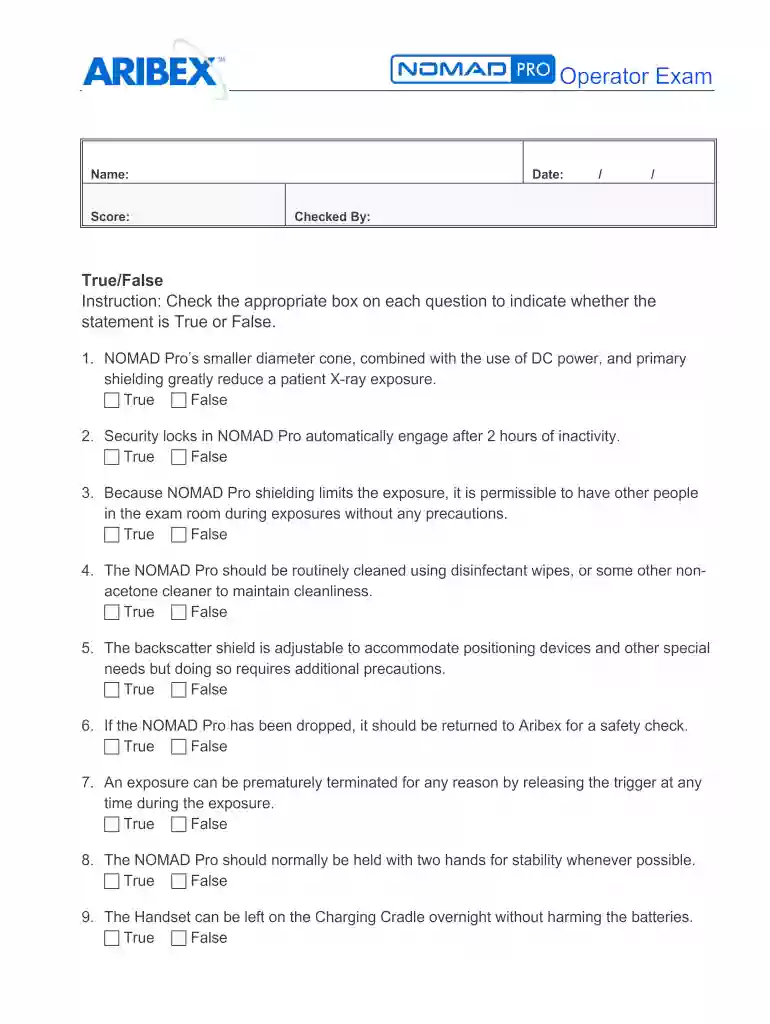
Type text, add images, blackout confidential details, add comments, highlights and more.

Draw your signature, type it, upload its image, or use your mobile device as a signature pad.

Send nomad pro 2 operator exam via email, link, or fax. You can also download it, export it or print it out.
The nomad training certificate represents an essential qualification for operators of the NOMAD Pro in various clinical contexts. This certification indicates that an individual has successfully completed a series of training programs focused on the safe operation, maintenance, and regulatory requirements associated with using the NOMAD Pro portable x-ray device. This certificate not only validates expertise but also ensures compliance with safety protocols and enhances the quality of patient care.
Obtaining a nomad training certificate involves demonstrating proficiency through examinations and practical assessments. Key areas covered in the training include radiation safety, device operation, and understanding maintenance procedures. This documentation can be critical for both legal compliance and ongoing professional development.
Acquiring the nomad training certificate typically requires enrolling in an accredited training program that focuses on the NOMAD Pro operation. Here are the essential steps involved:
It is beneficial to confirm program details and requirements with the organization offering the training to ensure compliance with any state-specific rules and regulations.
Obtaining the nomad training certificate offers several advantages, particularly for those working within the healthcare sector. Here are key reasons to consider pursuing this certification:
Investing time in obtaining the nomad training certificate is justified not only for professional advancement but also for the assurance of patient safety.
Understanding the terminology surrounding the nomad training certificate is crucial for effective communication and comprehension within the industry. Here are some significant terms:
Familiarizing yourself with these terms can enhance your understanding of the entire certification process and the responsibilities that come with operating portable x-ray machines.
The nomad training certificate is utilized by a diverse range of professionals within the healthcare system. Here’s a breakdown of typical users:
By understanding the diverse group of individuals who utilize the nomad training certificate, one can appreciate the widespread application and importance of this qualification across multiple fields.


Each state in the U.S. has distinct legal requirements and regulations governing the operation of x-ray equipment, which can affect the nomad training certificate. Important factors to consider include:
Navigating the state-specific rules is critical to maintaining compliance and ensuring the safe operation of portable x-ray technology.
There are notable distinctions between the digital and paper versions of the nomad training certificate. Understanding these differences can help streamline processes within clinical environments:
Each format has its pros and cons, but the trend is shifting towards digital certificates due to the increased efficiency in documentation and compliance checks.
The nomad training certificate includes several core elements that provide essential information regarding the holder's qualifications:
These key elements are critical for verifying compliance and ensuring that operators can appropriately handle portable x-ray devices in their respective fields.
Sure, it is possible with DocHub. This reliable and compliant online editor has a phone-based signing option. Once you log in to your DocHub account and add your nomad pro 2 operator exam answers to our editor, fill out all necessary areas and use the Sign tool on the top barf. Click on Create your signature and choose Phone from the available choices. Here, you scan a QR code using your smartphone and draw your signature on your phone screen, as you usually do when signing hard copies. If you access DocHub right from your mobile device, you can electronically sign your document by drawing your electronic signature, adding its picture, or simply with a typed name.
If you are looking for a state-specific nomad pro exam sample, you will find it in our DocHub Forms & Templates catalog. Use the search field, key in your form’s name, and search through the results for your state. You may also filter out irrelevant results while exploring our catalog by groups.
At DocHub, your data security is our priority. We follow HIPAA, SOC2, GDPR, and other standards, so you can work on your documents with confidence.


