
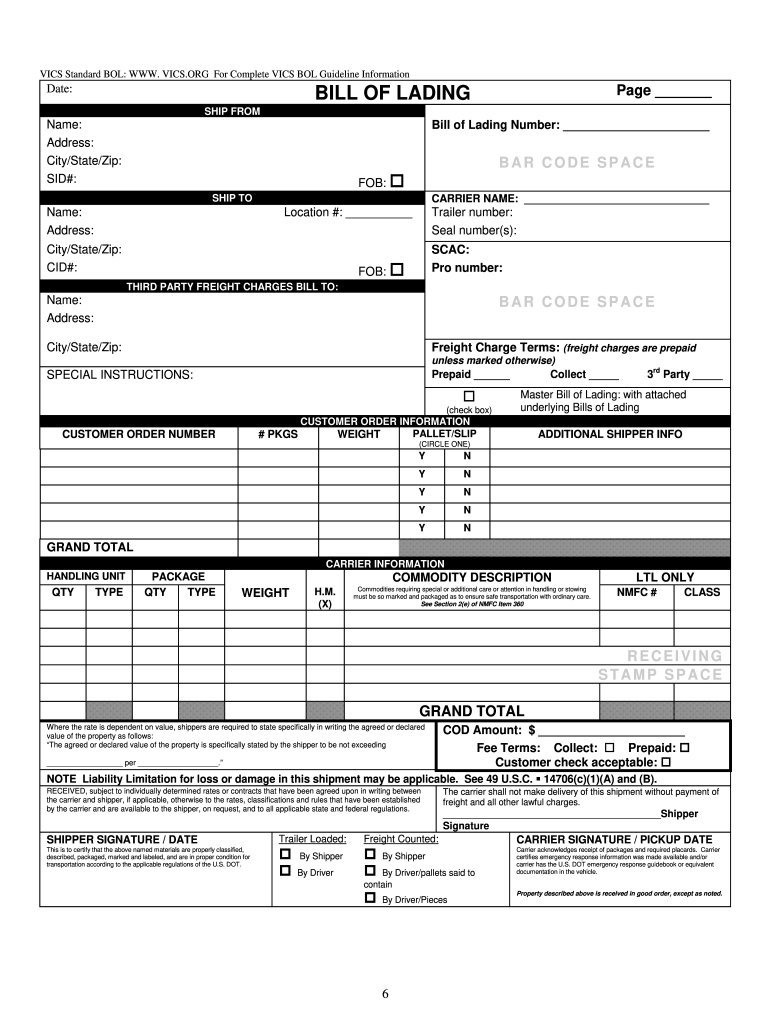







Definition and Meaning of Bill of Lading Template
A bill of lading template is a standardized document used in the shipping and logistics industry that serves as a contract between a shipper and a carrier. This document details the specifics of the goods being transported, including the quantity, type, and destination. It also contains important shipping terms and conditions, ensuring all parties are clear on their responsibilities.
The bill of lading acts as a receipt for the goods once they are shipped. It holds the carrier accountable for the items, ensuring that they must deliver the goods to the designated recipient in the same condition they were received. In essence, the bill of lading template is crucial for record-keeping, legal purposes, and facilitating the smooth transit of goods across various modes of transportation.
Key components typically included in a bill of lading template are:
- Shipper's name and address.
- Consignee's name and address.
- Description of the goods, including quantity and weight.
- Carrier's name and contact information.
- Freight charges.
- Special instructions or handling requirements.
- Terms and conditions of the shipment.
How to Use the Bill of Lading Template
Using a bill of lading template efficiently involves several systematic steps, each ensuring that the document serves its purpose effectively. First, it is essential to choose the right form, whether a free blank bill of lading, a generic bill of lading template, or a more specific bill of lading template for Google Docs.
- Fill in Shipper Information: Enter the details of the shipper, including name, address, and contact information.
- Include Consignee Details: Clearly state the name and address of the person or entity receiving the shipment.
- Describe the Goods: Provide a comprehensive description of the goods being shipped, noting specifics such as weight, dimensions, and quantity.
- Specify the Carrier: Fill in the carrier's details, ensuring that the chosen carrier is listed accurately.
- Indicate Shipping Instructions: If there are any special requirements or handling instructions, they should be clearly stated.
- Review and Finalize: Ensure all information is correct before printing or sharing the document. Discrepancies may lead to delays or complications.
Following these steps allows users to create functional, clear, and legally sound bills of lading. Each template, whether a fillable BOL or a printable bill of lading PDF, should be tailored to the particulars of the shipment.
Steps to Complete the Bill of Lading Template
Completing a bill of lading template requires careful attention to detail to avoid errors that could disrupt the shipping process. Here are detailed steps to help you navigate the completion process:
- Select the Template: Choose a blank BOL template that meets your needs, whether using free online resources or your own file.
- Input Shipper Information: Begin by writing the name and address of the shipper, ensuring every detail is correct.
- Consignee Information: Clearly write the consignee's name, address, and contact number. Verify that this information matches the recipient's details to avoid misdeliveries.
- Detail the Shipment: Provide a thorough description of the goods being sent. Include:
- Type of goods (e.g., electronics, textiles).
- Quantity.
- Weight and dimensions.
- Carrier Information: Include the carrier’s details, such as their name and any identifying numbers or codes related to the shipment.
- Freight Charges and Terms: Clearly indicate shipping charges and any specific terms regarding payment or liability.
- Instructions: If necessary, add a section for special instructions regarding the shipment’s handling and delivery.
- Review for Accuracy: Before printing or sharing, review all entries for accuracy. Mistakes can lead to complications during transport.
Important Terms Related to Bill of Lading Template
Understanding the terminology associated with a bill of lading template is essential for its effective use. Here are some crucial terms that individuals should be familiar with:
- Consignor: The person or entity that sends the shipment; often the shipper.
- Consignee: The recipient of the goods, as specified in the bill of lading.
- Carrier: The company responsible for transporting the goods from the shipper to the consignee.
- Freight Charges: The costs associated with transporting the goods; these can vary based on weight, distance, and mode of transport.
- Liability Limitations: Legal provisions indicating the extent to which a carrier is liable for loss or damage to goods in transit.
- Special Instructions: Specific handling instructions that must be adhered to during transit.
Familiarity with these terms helps ensure clarity and reduces potential disputes during the shipping process.
Key Elements of the Bill of Lading Template
A well-structured bill of lading template includes several key elements that provide essential information for all parties involved. These components are critical for ensuring both transparency and legal compliance during transportation. Important elements to note include:
- Document Title: Clearly labeled as a bill of lading at the top of the document.
- Date of Issue: The date when the bill of lading is generated, marking the start of the shipping process.
- Shipper and Consignee Information: Comprehensive details about both the sender and recipient, including names, addresses, and contact numbers.
- Cargo Description: A concise yet detailed description of the goods being shipped, incorporating quantity, weight, and nature of the shipment.
- Freight Charges: Breakdown of costs for shipping, which should be clearly stated to avoid misunderstandings.
- Carrier Information: Information identifying the transport company, ensuring the right entity handles the shipment.
- Signature Section: A space for signatures from authorized parties, indicating agreement to the terms of carriage.
These elements work together to create a legally binding and functional document, ensuring smooth transportation and delivery of goods.
Examples of Using the Bill of Lading Template
Notably, a bill of lading template can be applied in various scenarios, reflecting its versatility in logistics and shipping. Here are a few real-world examples of its usage:
- Domestic Freight Shipments: A manufacturer sends products to a retailer within the United States. The manufacturer completes a bill of lading template detailing the shipment specifics to ensure clarity for the carrier and the retailer.
- International Shipping: An importer receives goods from overseas. The shipper fills out a generic bill of lading detailing customs requirements, ensuring compliance during the international transportation process.
- Returning Goods: A company sending defective merchandise back to a supplier utilizes a bill of lading template to document the goods being returned, which helps manage accountability.
- Third-Party Logistics (3PL): A business using a fulfillment service includes a bill of lading template in its shipment instructions, providing critical details for efficient processing and delivery.
These examples illustrate how diverse industries incorporate the bill of lading template, emphasizing its importance in ensuring smooth logistics operations.




