







Comprehensive Guide on Fomu za Kujiunga na Chuo Cha Utumishi wa Umma Dar Es Salaam
Definition and Purpose of the Application Form
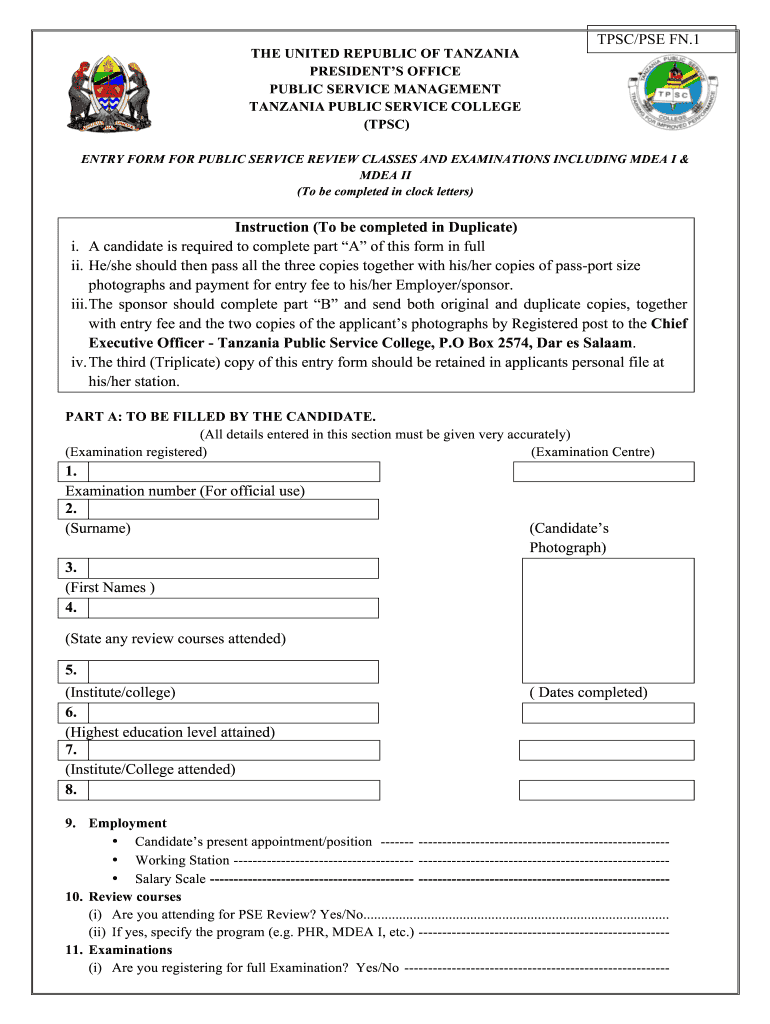
The fomu za kujiunga na chuo cha utumishi wa umma dar es salaam is an application form designed for individuals seeking admission to the Public Service College in Dar es Salaam, Tanzania. This academic institution focuses on preparing students for careers in public service through various training programs. The form collects essential information about applicants, including personal details, academic backgrounds, and organizational affiliations. By filling out this application, candidates express their intention to pursue courses that contribute to public service roles in various government sectors.
Detailed Steps for Completing the Application Form
Completing the application form requires careful attention to detail. Each section must be filled out accurately to avoid delays or rejections. Here is a step-by-step breakdown of the completion process:
- Personal Information: Fill in your full name, date of birth, and contact details. Ensure that your information matches your official identification documents to prevent discrepancies.
- Educational Background: Provide a comprehensive educational history, including schools attended, dates of graduation, and qualifications obtained. Attach copies of certificates where required.
- Employment History: If applicable, detail your work experience, specifying position titles, employers, and duration of employment. This section is crucial for assessing your suitability for the programs offered.
- Declaration and Signature: Sign the declaration to confirm that all provided information is accurate and complete. This lends credibility to your application.
- Submission: Review the entire form before submission. Ensure that all required fields are filled and any necessary documents, like ID copies and photos, are attached.
Eligibility Criteria for Applicants
To ensure that candidates are suitable for the programs offered by chuo cha utumishi wa umma, specific eligibility criteria must be met. These include:
- Educational Qualifications: Candidates typically need a minimum academic qualification, often a secondary school diploma.
- Age Limit: There may be an age requirement, which varies based on the specific course or program applied for.
- Professional Background: Some courses may require candidates to have relevant work experience or endorsements from current employers.
Understanding these criteria is vital for applicants to assess their eligibility and prepare accordingly.


Important Dates and Deadlines
Adhering to deadlines is critical during the application process. The following are key dates to remember:
- Application Opening Date: The date when applications are first accepted for the upcoming academic cycle.
- Application Deadline: The final date by which all forms must be submitted to the admissions office. Late submissions are generally not accepted.
- Examination Dates: Some programs may require candidates to pass entrance exams, with specific dates announced alongside application deadlines.
- Admission Notification Date: The date on which successful candidates will be informed of their acceptance into the program.
Being aware of these dates helps applicants plan their preparations and ensures timely submissions.
Submission Methods for the Application Form
Candidates can submit their application forms through various methods. Understanding available options allows for a smoother application process. Common submission methods include:
- Online Submission: Applications can often be completed and submitted electronically via the college's official website. This method is typically preferred for its convenience and immediate confirmation of receipt.
- Mail Submission: Candidates may opt to print and postal mail their application forms. For this method, it is crucial to send forms with adequate time to reach the admissions office before the deadline.
- In-Person Submission: Applicants may choose to deliver their completed forms directly to the admissions office. This method allows for immediate feedback and the chance to clarify any issues on the spot.
Each submission method has its benefits, and candidates should choose based on their circumstances.
Required Documents to Accompany the Application
Completing the application form requires accompanying documentation to verify the information provided. Typical required documents include:
- Academic Certificates: Copies of relevant educational qualifications, validated by the appropriate authorities.
- Identification: A government-issued ID or passport to confirm the applicant's identity.
- Passport-Sized Photographs: Often specified regarding the number and format.
- Endorsements: For employed candidates, letters from employers may be required to support the application.
Having these documents organized and ready simplifies the process and enhances the application’s credibility.
Key Elements to Consider When Applying
When filling out the application, there are additional elements that applicants should keep in mind to enhance their chances of success:
- Clarity and Legibility: All information must be clearly written in the designated fields. Avoid using abbreviations unless specified to ensure clarity.
- Consistency: Information provided on the application form should align with any attached documents. Discrepancies may raise concerns during review.
- Follow Up: After submission, applicants can consider following up with the admissions office to confirm receipt and inquire about the processing timeline.
Familiarity with these key elements allows for a more robust submission and increases the likelihood of a successful application.




