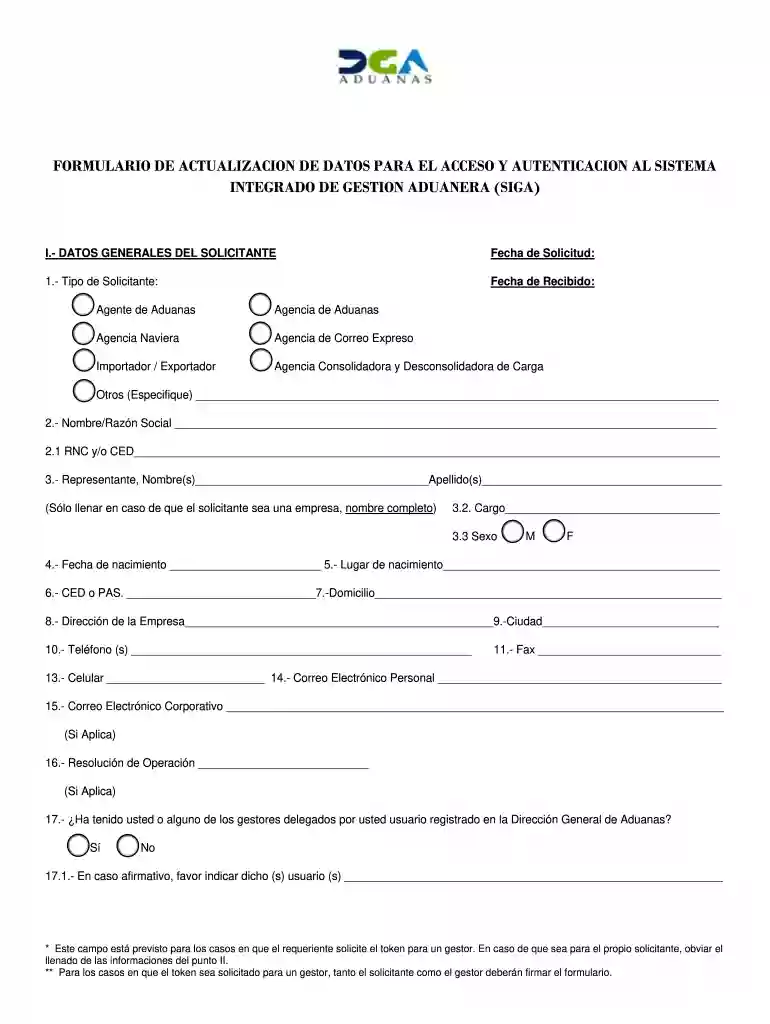
Formulario de datos generales 2026

Get Form
formularios para llenar Preview on Page 1

Here's how it works

01. Edit your formularios para llenar online
Type text, add images, blackout confidential details, add comments, highlights and more.

02. Sign it in a few clicks
Draw your signature, type it, upload its image, or use your mobile device as a signature pad.

03. Share your form with others
Send ejemplos de formularios para imprimir via email, link, or fax. You can also download it, export it or print it out.

Definition and Meaning of the Formulario de Datos Generales

The formulario de datos generales serves as a crucial document used to collect general information about individuals or entities. This form may require details such as name, address, contact information, and specific identifiers like Social Security numbers or Tax Identification Numbers. Its primary purpose is to create a structured way for organizations, including government agencies and businesses, to gather accurate information for processing applications, registrations, or updates.

Understanding the specific data this form collects is vital for compliance with various regulatory requirements. This includes adhering to privacy laws, ensuring data integrity, and minimizing the potential for fraud. Utilizing this form effectively can help streamline administrative processes and improve the accuracy of records maintained by an organization.

Steps to Complete the Formulario de Datos Generales

Completing the formulario de datos generales typically involves several methodical steps.

  1. Gather Necessary Information: Compile all essential personal and identifying data required for the completion of the form. This may include:

    • Full name
    • Address details
    • Contact information
    • Social Security number or Employer Identification Number
  2. Fill Out the Form Completely: Ensure every applicable field is filled accurately and legibly. Pay particular attention to:

    • Required fields marked as mandatory.
    • Any optional sections that may enhance the completeness of your submission.
  3. Review for Accuracy: Before finalizing the document, review all entered information for accuracy. Errors can lead to delays in processing or necessitate resubmission.

  4. Sign the Form (if required): Some versions of this form may necessitate a signature to validate the information. Make sure the signature aligns with name input.

  5. Submit the Form: Follow the specific submission guidelines applicable to your situation, whether submitting online, by mail, or in person.

Each step should be executed with care to facilitate a smooth processing experience.

Key Elements of the Formulario de Datos Generales

The formulario de datos generales comprises several key elements that facilitate the collection of essential information:

  • Personal Identification Information: This section typically requires the full name, date of birth, and Social Security number or Tax Identification Number.
  • Contact Information: Includes residential address, phone number, and email address, ensuring accurate communication channels.
  • Recipient Designation: In cases where the form pertains to multiple parties, the relevant sections allow the designation of primary and secondary contacts to streamline communication.
  • Purpose of Data Collection: Clear guidance is often provided to explain the reason for collecting specific data, which strengthens transparency.

Each element of this form plays a critical role in ensuring that organizations can effectively manage data collection and compliance with regulations.

Important Terms Related to Formulario de Datos Generales

Understanding the terminology associated with the formulario de datos generales can significantly enhance clarity and ease of completion:

  • Personal Data: Any information that can identify an individual, such as name, contact information, and identification numbers.
  • Confidentiality: Reflects the obligation to protect personal information from unauthorized access or disclosure.
  • Data Processing: Refers to how data is managed, stored, and utilized by organizations in compliance with relevant laws.
  • Mandatory Fields: Sections of the form that must be completed for it to be considered valid.

Being familiar with these terms helps individuals comprehend their obligations and rights in the context of filling out this form.

Examples of Using the Formulario de Datos Generales

The formulario de datos generales is widely used across different contexts. Here are a few practical examples:

  • Government Applications: Individuals may be required to complete this form when applying for permits, licenses, or government assistance programs.
  • Employment Records: Employers often use this form to collect necessary information from employees for payroll and tax reporting purposes.
  • Educational Institutions: Schools may require the formulaire de datos generales from students or guardians to maintain accurate enrollment records.

These examples illustrate the diverse applications of this form in various sectors and highlight its role in data management.

Legal Use of the Formulario de Datos Generales

The legal use of the formulario de datos generales aligns with various regulations governing information collection and storage. Key considerations include:

  • Data Protection Regulations: Organizations must comply with laws like the Privacy Act, which governs how personal information is collected, used, and protected.
  • Consent Requirements: Many jurisdictions require entities to obtain consent from individuals when collecting personal data via this form.
  • Retention Policies: Legal mandates often dictate how long organizations must keep completed forms before securely disposing of them.

Understanding these legal frameworks ensures that the formulario de datos generales is utilized in a lawful manner, reducing liability and enhancing trust among users.

Who Typically Uses the Formulario de Datos Generales

The formulario de datos generales is used by a variety of individuals and organizations, including:

  • Businesses: Companies often require this form from clients, vendors, or employees when establishing relationships or processing transactions.
  • Government Entities: Public agencies use the form to gather citizen information for welfare programs, tax assessments, or regulatory compliance.
  • Non-profit Organizations: Charities and non-profits collect data through this form to manage donor information or participant records for programs.

Recognizing the user spectrum helps contextualize the importance and versatility of the formulario de datos generales in various operational settings.


decoration image ratings of Dochub
be ready to get more

Complete this form in 5 minutes or less

Get form

Got questions?

We have answers to the most popular questions from our customers. If you can't find an answer to your question, please contact us.
Contact us
In technology, data formats can be referred to as data types, file formats, or content formats. Each serves a unique purpose in representing data, whether it be text, numeric, multimedia, or other types. For example, a CSV file organizes data in a tabular format, while JSON structures data in a hierarchical manner. What Is Data Format and Why It Matters? fanruan.com glossary big-data data-for fanruan.com glossary big-data data-for
Este documento es un formato de datos generales que solicita informacin personal como nombre, fecha y lugar de nacimiento, nacionalidad, estado civil, ocupacin, domicilio, telfonos, documentos de identificacin y la solicitud de un acto jurdico.
Un Formulario es un documento fsico o digital utilizado para recopilar datos de manera estructurada y organizada. Se compone de campos designados donde los usuarios deben ingresar o seleccionar datos especficos, de acuerdo con el propsito del formulario.
En tecnologa, los formatos de datos se pueden denominar tipos de datos, formatos de archivo o formatos de contenido. Cada uno cumple una funcin especfica al representar datos, ya sean de texto, numricos, multimedia u otros tipos. Por ejemplo, un archivo CSV organiza los datos en formato tabular, mientras que JSON los estructura jerrquicamente .
El formato General es el formato de nmero predeterminado que Excel aplica al escribir un nmero. En la mayor parte, los nmeros a los que se aplica formato con el formato General se muestran tal y como se escriben.

Security and compliance

At DocHub, your data security is our priority. We follow HIPAA, SOC2, GDPR, and other standards, so you can work on your documents with confidence.

Learn more
ccpa2
pci-dss
gdpr-compliance
hipaa
soc-compliance

People also ask

Un formulario de datos personales es un documento utilizado por organizaciones o instituciones para recopilar informacin especfica de una persona.
La ficha de datos personales del trabajador es un documento en el que estn recogidos todos los datos relevantes de un empleado, desde sus datos identificativos, pasando por su formacin e informacin laboral, hasta los datos de su contacto de emergencia.

formularios para imprimir pdf