




01. Edit your forklift inspection checklist pdf online
Type text, add images, blackout confidential details, add comments, highlights and more.

Type text, add images, blackout confidential details, add comments, highlights and more.

Draw your signature, type it, upload its image, or use your mobile device as a signature pad.

Send forklift check sheet template via email, link, or fax. You can also download it, export it or print it out.
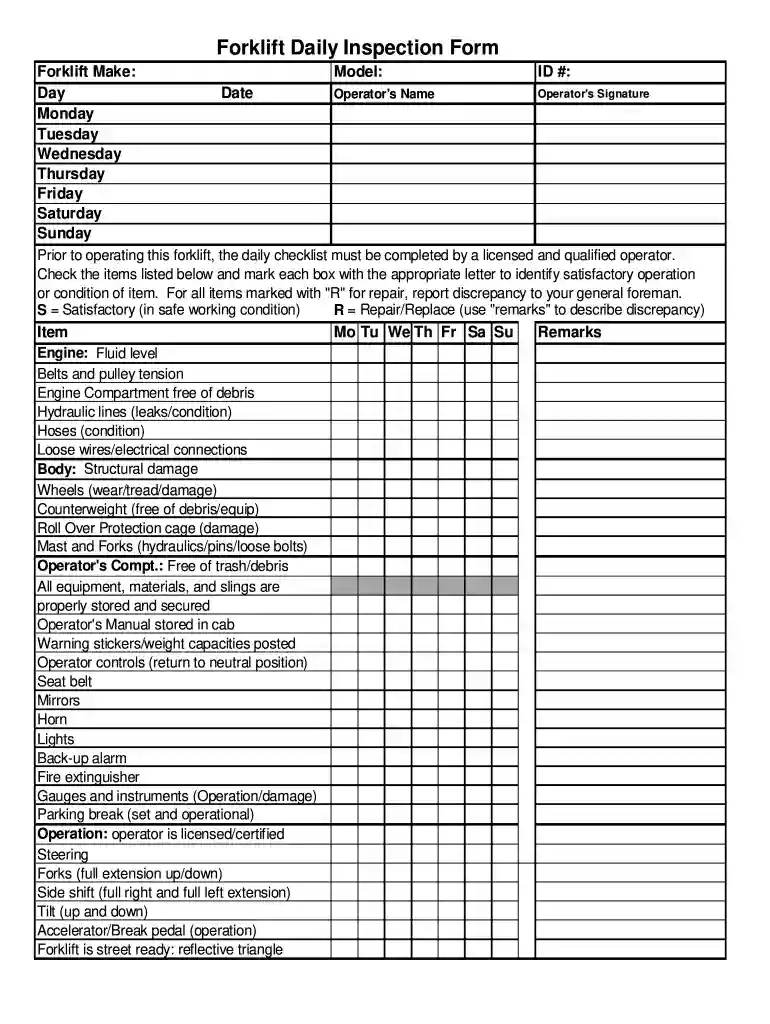
The monthly forklift inspection form PDF is crafted to ensure that licensed operators perform necessary safety and compliance checks before using forklift equipment. It serves as a comprehensive checklist that guides operators through critical aspects of forklift safety, including physical condition, operational controls, and safety features.
This form includes several essential elements that must be evaluated during each inspection cycle. Operators are responsible for reviewing:
By systematically checking these components, operators reinforce safety protocols designed to protect both the operator and nearby personnel.
Effective completion of the monthly forklift inspection form pdf requires a well-defined process. Below are the steps operators should follow:
Completing each step thoroughly ensures that the form serves its purpose effectively, ultimately enhancing workplace safety.
Many organizations emphasize the significance of periodic forklift inspections for several reasons:
Each of these factors underscores the critical role that the forklift inspection form plays in workplace safety and compliance.
Over time, specific issues tend to arise more frequently during inspections. Understanding common pitfalls can prepare operators for what to look for:
Recognizing these common issues can enhance proactive maintenance strategies, further promoting safety and operational efficiency.
Maintaining documentation related to inspections is critical for compliance with safety regulations. Important points to consider include:
Following these documentation practices bolsters compliance and provides valuable insights into fleet management.
Leveraging technology can streamline the forklift inspection process significantly. Considerations include:
Employing digital tools not only increases efficiency but also fosters better record-keeping practices.
Operators must be adequately trained to understand their responsibilities concerning the completion of the monthly forklift inspection form. Training should cover:
Thorough training equips operators with the knowledge to perform inspections effectively and fosters a commitment to safety within the team.
At DocHub, your data security is our priority. We follow HIPAA, SOC2, GDPR, and other standards, so you can work on your documents with confidence.
This equipment is a relatively complicated apparatus. During installation, operation, maintenance or service, individuals may be exposed to certainRead more
FORKLIFT INSPECTION PROGRAM. This sample program is provided to assist you as an employer in developing programs tailored to. your own operation. We encourageRead more
Forklift Operators Daily Checklist. Inspection Performed by: Week beginning. 20. Note: This check must be made by the truck operator daily at the start of theRead more


