




01. Edit your wheelchair checklist template online
Type text, add images, blackout confidential details, add comments, highlights and more.

Type text, add images, blackout confidential details, add comments, highlights and more.

Draw your signature, type it, upload its image, or use your mobile device as a signature pad.

Send wheelchair inspection checklist via email, link, or fax. You can also download it, export it or print it out.
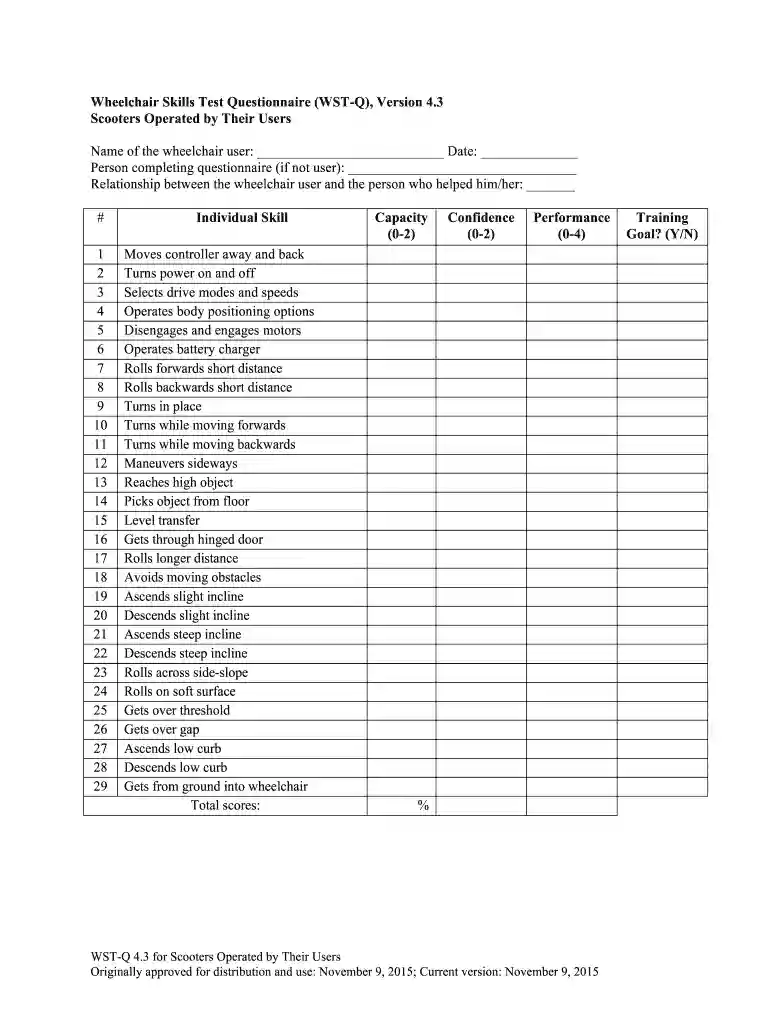
The power wheelchair training checklist serves as a comprehensive guide for users and trainers to assess the competencies required for safely operating power wheelchairs. It outlines essential skills, safety protocols, and operational procedures that users must master. This checklist is crucial for ensuring that individuals are adequately prepared to navigate their environments safely while using power wheelchairs.
The checklist typically includes:
This checklist serves as both a training tool and an assessment tool, helping trainers evaluate user proficiency and readiness for independent use.
The effectiveness of a power wheelchair training checklist is determined by the specific elements included. Key components ensure comprehensiveness and relevance in training scenarios. The following elements are typically featured:
Each of these elements contributes to a holistic overview of what it takes to operate a power wheelchair confidently and safely.
Successfully completing the power wheelchair training checklist involves a structured approach to ensure that all necessary skills and knowledge areas are covered. The process can be broken down into several steps:
Initial Assessment:
Training Sessions:
Practical Application:
Evaluation:
Feedback and Adjustment:
This step-by-step structure ensures that users not only complete the checklist but also gain the confidence and competence necessary to use their power wheelchairs effectively.
The practical application of the power wheelchair training checklist can vary based on individual circumstances and settings. Below are examples demonstrating how the checklist is employed:
Rehabilitation Centres: Professionals in rehabilitation settings often use the checklist to guide new users through the training process. This enhances their transition from dependent mobility to independent living.
Home Care Settings: Caregivers utilize the checklist to provide fundamental training to power wheelchair users in home environments, ensuring safety and familiarity with the home layout.
Community Programs: Non-profit organizations and community programs may implement the checklist as part of their outreach initiatives, training seniors or individuals with disabilities in safe mobility practices.
These scenarios highlight the versatility of the power wheelchair training checklist across various contexts and towards diverse user populations.
Certain legal factors must be considered when utilizing the power wheelchair training checklist to ensure compliance with regulatory standards. From understanding liability to following safety regulations, these factors include:
Health and Safety Regulations: Compliance with local and federal health and safety laws, especially those governing the use of mobility aids and their trials.
Insurance Requirements: Some insurance providers may require documented proof of training before fund reimbursement for mobility devices.
Documentation Standards: Maintaining proper records of training sessions and evaluations for future reference or legal purposes may be mandated by specific institutions or organizations.
Understanding these elements allows users and trainers to navigate the legal landscape confidently, ensuring that all training activities align with necessary regulations.
Yes, a typed name is recognized as a valid electronic signature when you create it on your document utilizing a compliant solution like DocHub. Simply import your power wheelchair assessment checklist to our editor, click Sign in the top tool pane → Create your signature → Type your name in the appropriate tab, and decide how it will look on your document.
If you are looking for a state-specific wheelchair checklist sample, you can find it in our DocHub Forms & Templates catalog. Use the search field, key in your form’s name, and search through the results for your state. You may also filter out irrelevant results while searching our catalog by groups.
At DocHub, your data security is our priority. We follow HIPAA, SOC2, GDPR, and other standards, so you can work on your documents with confidence.
POWER MOBILITY SKILLS CHECKLIST. Instructions: Check the appropriate box to indicate whether the child is able to complete the skill independently with ageRead more
9* Demonstrates ability to drive wheelchair with indirect supervision? 10 Demonstrates the ability to drive wheelchair between two people? 11 Demonstrates theRead more
and training opportunities and that includes cardio and strength training equip- ment, lockers, and showers. Regular Occupants: Number of habitual users ofRead more


