




01. Edit your affidavit of identity texas online
Type text, add images, blackout confidential details, add comments, highlights and more.

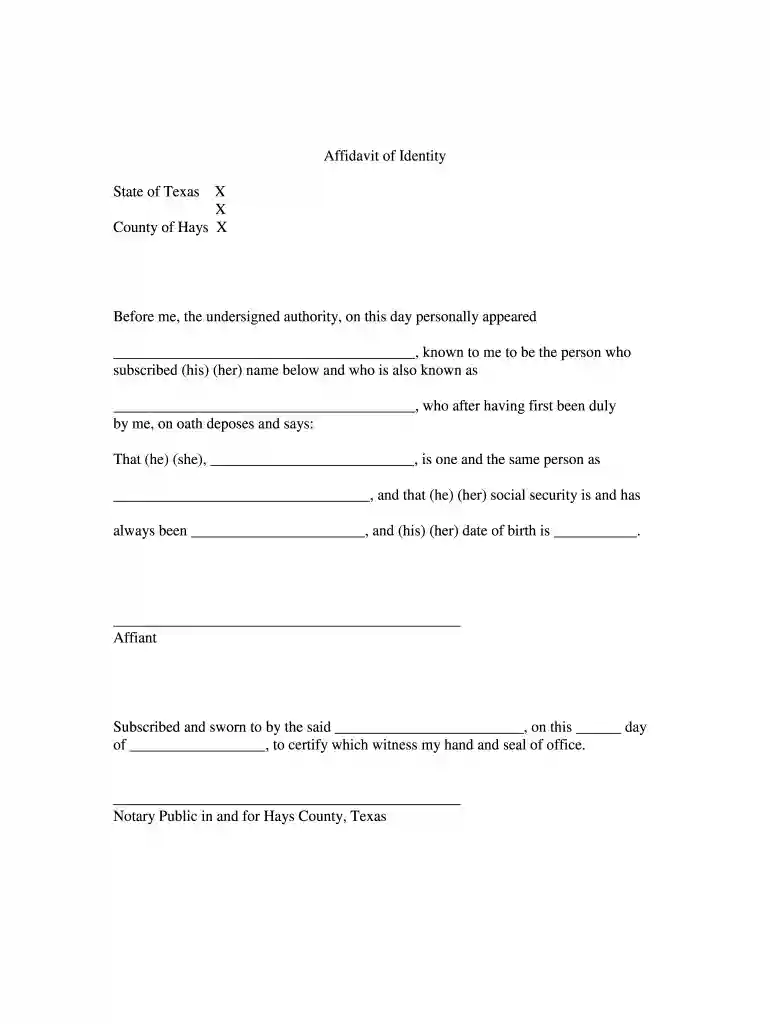
Type text, add images, blackout confidential details, add comments, highlights and more.

Draw your signature, type it, upload its image, or use your mobile device as a signature pad.

Send affidavit of identity form texas via email, link, or fax. You can also download it, export it or print it out.
The affidavit of identity form in Texas is a legal document used to affirm that the individual presenting it is the same person as another entity named within the document. It typically includes significant personal details such as the affiant's full name, social security number, date of birth, and physical address. Additionally, this form is often notarized to ensure authenticity and establish credibility. It is used in various situations where proof of identity is required, such as when applying for government services or establishing accounts.
The affidavit of identity form is commonly utilized by individuals in Texas facing challenges regarding their identity verification. This includes:


Understanding the fundamental components of the affidavit of identity form is crucial for effective completion. The critical elements typically include:
Completing the affidavit of identity form involves several key steps:
The affidavit of identity form is legally binding and can be used in various settings, such as:
There may be similar forms or variations tailored for specific circumstances, including:
By understanding and utilizing the affidavit of identity form correctly, users in Texas can navigate identity verification challenges more effectively.
At DocHub, your data security is our priority. We follow HIPAA, SOC2, GDPR, and other standards, so you can work on your documents with confidence.
The Security Fund may be in the form of an irrevocable standby letter of credit substantially in the form of Exhibit G Form of Letter of Credit (a Letter.Read more
This affidavit is valid for two years from the date of notarization. Additions or changes to this affidavit are not valid. (A) Individuals Full Name. First.Read more
The affidavit is to be used as a last resort when the Medicaid applicant or recipient is unable to provide other documentation of citizenship or identity.Read more


