




01. Edit your cabinet order form online
Type text, add images, blackout confidential details, add comments, highlights and more.

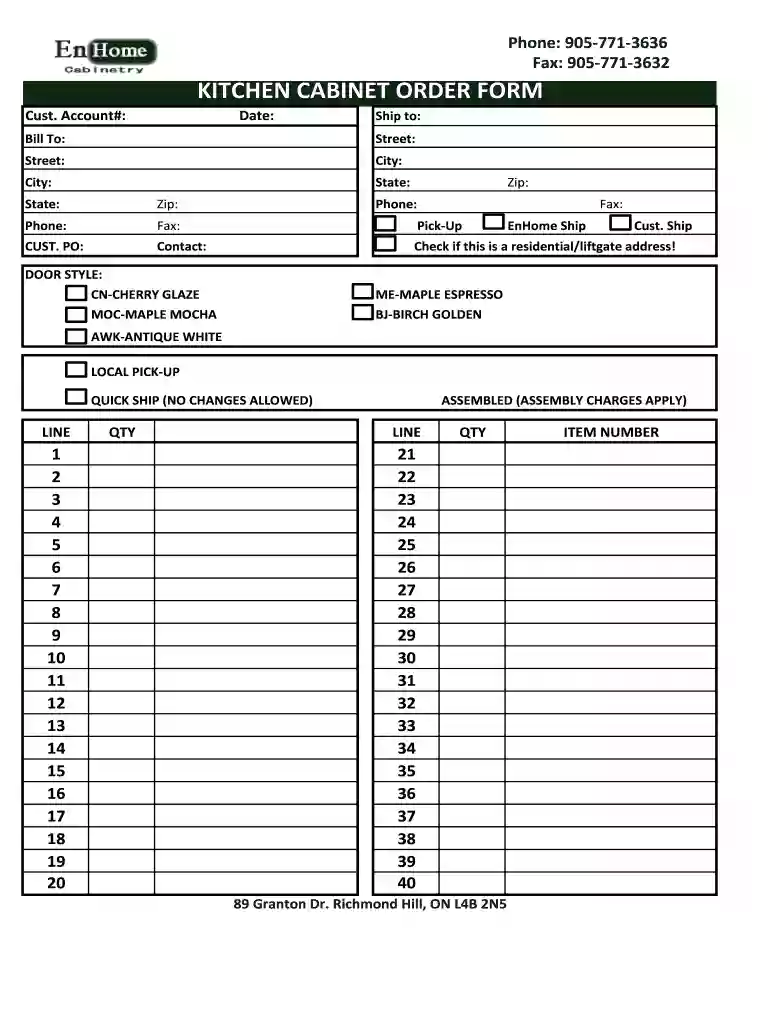
Type text, add images, blackout confidential details, add comments, highlights and more.

Draw your signature, type it, upload its image, or use your mobile device as a signature pad.

Send kitchen cabinet order form template via email, link, or fax. You can also download it, export it or print it out.
A kitchen cabinet order form is a structured document that serves as an official request for the purchase of kitchen cabinets. It is designed to collect important information from the customer, including details about the cabinet styles, dimensions, finishes, and any additional accessories or assembly options. For contractors, manufacturers, and retailers, having a clear order form is crucial for accurately processing orders and ensuring customer satisfaction.
Including these elements in the order form minimizes errors and improves efficiency in the overall ordering process.
Completing the kitchen cabinet order form requires attention to detail to ensure all necessary information is provided accurately. Users can follow these steps:
By following these steps, customers can ensure that their cabinet order is processed correctly and efficiently.
Several key components must be included in a kitchen cabinet order form to ensure clarity and comprehensive communication:
Including these elements not only streamlines the ordering process but also enhances customer satisfaction by delivering exactly what they expect.
The kitchen cabinet order form is employed in various scenarios, particularly in the cabinetry and home improvement industries:
This versatility in usage highlights the kitchen cabinet order form’s importance across various sectors in the home improvement market.
Understanding practical examples of how a kitchen cabinet order form is utilized can provide valuable insights:
Scenario One: Home Renovation: A homeowner renovating their kitchen uses a kitchen cabinet order form to specify the types and finishes of cabinets required for their new layout. They indicate custom measurements and additional features like pull-out drawers, ensuring the final order meets all design specifications.
Scenario Two: Contractor Bulk Order: A contractor collecting orders from multiple clients completes a kitchen cabinet order form for each client, detailing sizes, styles, and finish preferences. This form standardizes requests to the cabinet manufacturer, allowing for efficient processing and reduced errors.
Scenario Three: Online Retailing: An online cabinetry retailer offers a kitchen cabinet order form filled out by customers selecting their desired cabinets. The form captures shipping information and payment details, enabling seamless transactions that enhance the customer experience.
These examples illustrate diverse applications of the kitchen cabinet order form, emphasizing its relevance in various purchasing contexts.
At DocHub, your data security is our priority. We follow HIPAA, SOC2, GDPR, and other standards, so you can work on your documents with confidence.
Custom architectural woodwork, millwork, and fixtures, including wood custom fixture tops. (except kitchen cabinet tops, bathroom vanity tops, and plasticsRead more
In order for cabinets to work properly and look right, they must be installed level, plumb, and flush with each other. 2. The wall behind the cabinetsRead more


