




01. Edit your driver assessment form template online
Type text, add images, blackout confidential details, add comments, highlights and more.

Type text, add images, blackout confidential details, add comments, highlights and more.

Draw your signature, type it, upload its image, or use your mobile device as a signature pad.

Send downloadable driver assessment form via email, link, or fax. You can also download it, export it or print it out.
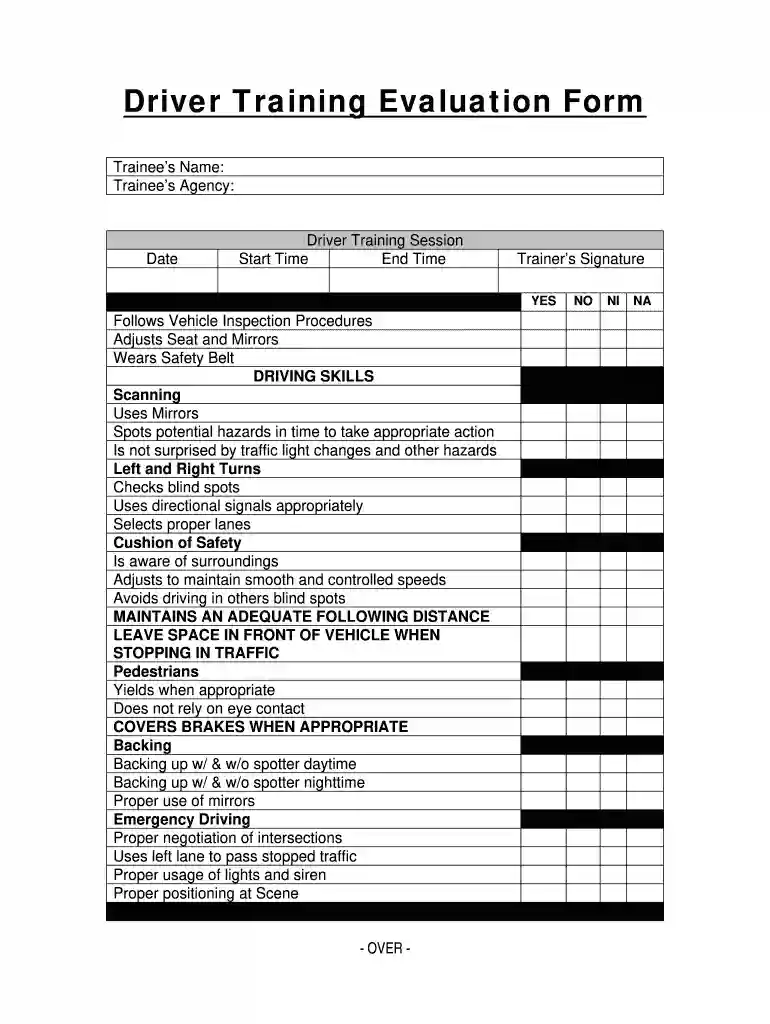
The Driver Training Evaluation Form is a structured document designed to assess the driving skills and knowledge of trainees, particularly within the context of the Larchmont VAC. This form serves as a comprehensive tool for trainers to evaluate various aspects of a driver’s performance, ensuring that safety and competency standards are met before advancing to full licensure or further training.
Vehicle Inspection Procedures: The form typically includes sections that require trainees to demonstrate their understanding of vehicle maintenance and pre-operational checks. This ensures that they can identify any potential issues that could affect safety on the road.
Driving Skills Assessment: Key components evaluate practical driving skills in controlled scenarios, where trainers can observe and rate the trainee’s control of the vehicle, adherence to traffic laws, and ability to react to unforeseen circumstances.
Knowledge of Local Roads and Regulations: An understanding of local street layouts and legal requirements is critical. This form allows trainers to assess a trainee’s familiarity with the area, enhancing their preparedness for real-world driving.
The Driver Training Evaluation Form comprises several crucial elements that collectively provide a comprehensive evaluation framework. Understanding these key components is essential for effective use.
Sections for Evaluation: The form typically includes dedicated sections for vehicle inspection, driving maneuvers (like parking and lane changes), and road awareness. Each section is structured to facilitate detailed observation and input.
Rating System: A standardized rating scale (e.g., 1 to 5) allows trainers to quantify performance across various categories. This numeric system offers a clear overview of strengths and weaknesses, guiding further training.
Comments Field: Space for trainers to add personalized comments helps provide context to ratings, offering insights into specific areas needing improvement and reinforcing successful skills.
Completing the Driver Training Evaluation Form effectively requires several steps to ensure a thorough assessment. Following these guidelines will help trainers maximize the utility of the form.
Prepare the Trainee: Before beginning the evaluation, ensure that the trainee is aware of the skills being tested and the overall purpose of the assessment.
Conduct Vehicle Inspections: Start with a hands-on vehicle inspection, where the trainee demonstrates their ability to perform necessary checks. The trainer should assess this performance using the designated section of the form.
Evaluate Driving Skills: Engage the trainee in a controlled driving session, observing their handling of different driving scenarios such as turns, stops, and maneuvers. Use the rating system to evaluate their performance.
Document Observations: Throughout the assessment, make detailed notes regarding the trainee’s performance in the comments field, especially for behaviors that do not fit neatly into rating categories.
Review and Provide Feedback: Once the evaluation is completed, review the results with the trainee, emphasizing areas of strength and those that require further development. This step enhances learning and accountability.
The Driver Training Evaluation Form must adhere to legal standards and regulations to ensure its validity and enforceability in the assessment process. Understanding these legal parameters is crucial for professionals in the field.
Liability Considerations: Trainers should be aware of liability issues that may arise from the evaluation process. Proper documentation through this form provides not only accountability but also a form of protection against potential claims.
Compliance with State Regulations: Each state may have specific laws governing driver training, including required evaluations. It is essential to ensure that the form used complies with local regulations, which may affect its use in official training programs.
Data Protection Laws: Handling trainees' personal information during evaluations must align with privacy laws governing data protection. Secure storage and sharing practices are important to maintain confidentiality.
The versatility of the Driver Training Evaluation Form allows it to be utilized in various contexts and situations within driver training programs. Here are illustrative examples of its application:
Driving Schools: At a driving school, trainers use the form to evaluate multiple students simultaneously during a cohort session. Each student receives tailored feedback based on their individual performance.
Corporate Driver Training Programs: Companies that provide driver training for employees may implement the form to evaluate their readiness before allowing employees to operate company vehicles. The form can help identify training needs specific to company policies.
State Licensing Evaluations: In some regions, driving examiners may use a standardized version of the evaluation form to ensure consistency in assessing applicants for driver’s licenses. This helps streamline the licensing process while assuring safety standards are upheld.
Each example illustrates how the form adapts to different environments while retaining its core purpose of evaluating driving competency.
At DocHub, your data security is our priority. We follow HIPAA, SOC2, GDPR, and other standards, so you can work on your documents with confidence.


