Definition and Meaning of the First Aid Report Form
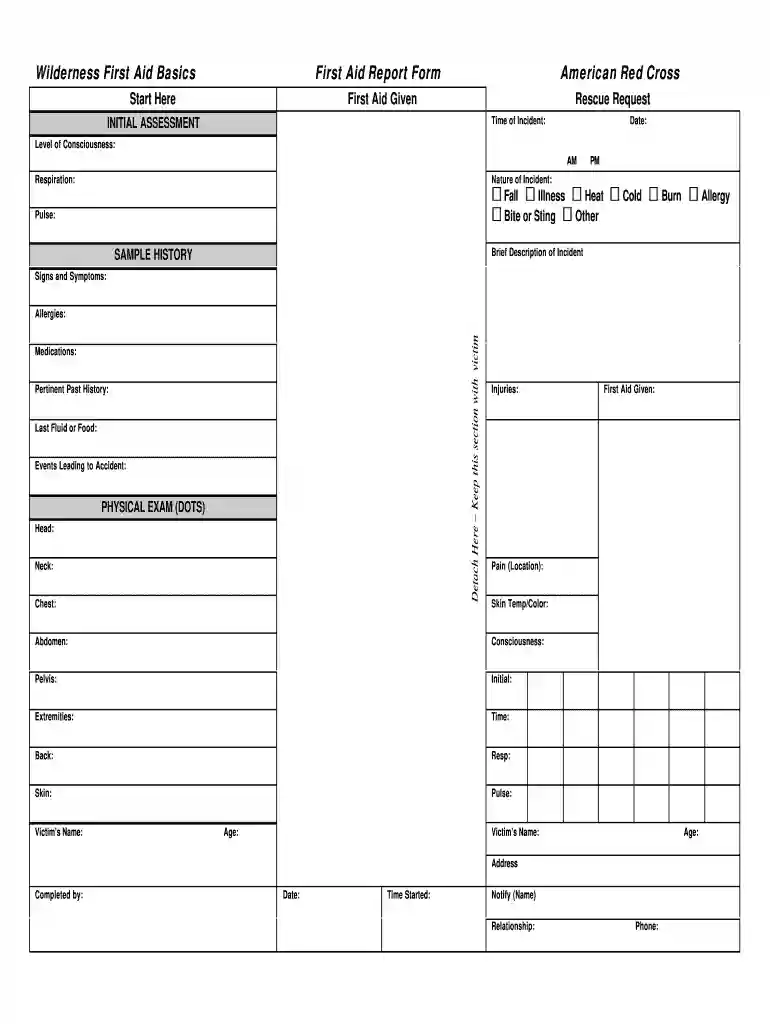
The first aid report form is a crucial document used to record details of incidents where first aid has been administered. This report serves as an official record for various purposes, including legal, medical, and workplace safety requirements. It typically includes essential information about the victim, the nature of the incident, the treatment provided, and the personnel involved in administering aid.
Purpose of the Report
- Legal Protection: In the event of disputes or claims regarding the incident, having a documented report can provide legal protection for first aiders and organizations.
- Medical Records: Healthcare providers can use the information in the report to understand the victim's condition better and follow up with the appropriate care.
- Data for Safety Improvements: Organizations can analyze aggregated first aid reports to identify patterns or areas for improvement in safety protocols.
Key Components
- Victim's Information: Full name, age, and contact information.
- Incident Details: Date, time, location, and a description of what occurred.
- Treatment Administered: Specifics about the first aid provided and any materials or methods used.
- Witnesses and First Aiders: Names and contact information for those who witnessed the incident or provided help.
How to Use the First Aid Report Form
Using the first aid report form effectively requires a clear understanding of its structure and intent. Each section must be filled out accurately to ensure comprehensive documentation.
Steps to Utilize the Form
- Gather Information: Before starting the report, collect all relevant details from witnesses and any involved parties.
- Complete All Sections:
- Input victim’s data accurately.
- Describe the incident in detail, emphasizing critical points such as environment and circumstances.
- Document the treatment steps taken, including any follow-up care suggestions.
- Review for Completeness: Ensure that no sections are left empty and that all pertinent details are included.
- Distribute as Necessary: Share the report with relevant parties, such as supervisors, HR departments, or legal advisors, as required.
Example Scenario
An employee slips and falls at work. The first aid report form should document:
- The employee's name and contact information.
- Details of the fall, including witnesses and conditions (e.g., wet floor).
- The first aid provided (e.g., ice pack, elevation of legs).
Key Elements of the First Aid Report Form
Understanding the essential elements that comprise the first aid report form is vital for effective use. Each element plays a critical role in ensuring accurate reporting and effective communication about the incident.
Main Sections to Include
- Incident Identification:
- Report number
- Date and time of occurrence
- Victim’s Details:
- Personal information
- Medical history or allergies, if known
- Description of Incident:
- Nature of injury or illness
- How and why it occurred
- First Aid Treatment:
- What treatment was given on-site
- Any referrals to medical services
- Signatures:
- Signatures of the first aider and witnesses, affirming the accuracy of the report.
Importance of Each Element
- Incident Identification: Facilitates easy tracking and retrieval of reports.
- Victim's Details: Fosters personalized care and follow-up, ensuring no further health issues arise.
- Description of Incident: Offers context important for future safety improvements.
- First Aid Treatment: Documents care provided, which may be critical for ongoing medical care.
Important Terms Related to First Aid Report Form
Familiarity with key terminology can help enhance understanding of the first aid report form's purpose and its usage in various contexts.
Common Terms
- First Aider: The individual who provides initial care to a person in need.
- Incident Report: A formal record of an unusual event or accident; often used interchangeably with first aid report.
- Triage: The process of determining the priority of treatment based on the severity of the condition.
- Follow-Up: Post-first aid care that may involve further medical attention or monitoring of the victim's condition.
Contextual Usage
- Understanding these terms ensures accurate communication among first aiders, medical professionals, and organizational personnel. For instance, proper knowledge of triage can guide first aiders in prioritizing care effectively during emergencies.
Legal Use of the First Aid Report Form
The first aid report form serves not only as a health document but also has legal implications, particularly in workplaces and public settings.
Legal Considerations
- Documentation of Care: The report can serve as a legal document that shows due diligence was exercised in administering aid.
- Liability Protection: Accurate records can help protect first aiders and organizations from potential legal claims related to the care provided.
- Compliance with Regulations: Many organizations are required by law to maintain accurate first aid records under regulations such as OSHA for workplace safety.
Examples of Legal Use
- If an injured party seeks compensation or files a lawsuit, the first aid report can provide evidence regarding the incident and the response taken.
- Businesses may be required to present such documentation during safety audits or inspections either from OSHA or other regulatory bodies, showcasing compliance with safety regulations and standards.
Primary Users
- Workplaces: HR departments and safety officers maintain records of incidents for compliance and training.
- Health Care Providers: Hospitals and clinics record details of incidents requiring immediate medical attention.
- Educational Institutions: Schools and universities use the form to document health-related issues among students.
- Community Organizations: Groups providing first aid services (e.g., Red Cross, St. John Ambulance) implement these reports for training and service evaluation.
Contextual Application
- In a workplace setting, the safety officer may use the reports to review incidents periodically, fostering a culture of safety and response preparedness. In educational contexts, school nurses and administrative staff manage student care and document incidents for both immediate responses and broader health oversight efforts.
Examples of Using the First Aid Report Form
Practical examples can help illustrate how the first aid report form is applied in real scenarios, enhancing understanding of its importance.
Case Studies
- Workplace Injury: An employee trips over a loose carpet. The first aid report is filled out to document the incident, treatment administered, and witness accounts. This record is then used for safety reviews.
- Sports Event Incident: A player sustains an ankle injury during a match. The first aid report captures details of the incident and treatment, contributing to future training and safety measures within the team.
- School Setting: A student faints during class. The form is utilized to record the event, ensuring proper follow-up care and tracking any recurring health issues.
Benefits of Real-Life Examples
- Documenting actual cases illuminates the consequences and procedures surrounding first aid responses, emphasizing the need for accuracy and thoroughness in reporting. This practice not only fosters immediate safety improvements but also prepares for potential legal inquiries or health assessments later.