




01. Edit your ihsa volleyball lineup sheet online
Type text, add images, blackout confidential details, add comments, highlights and more.

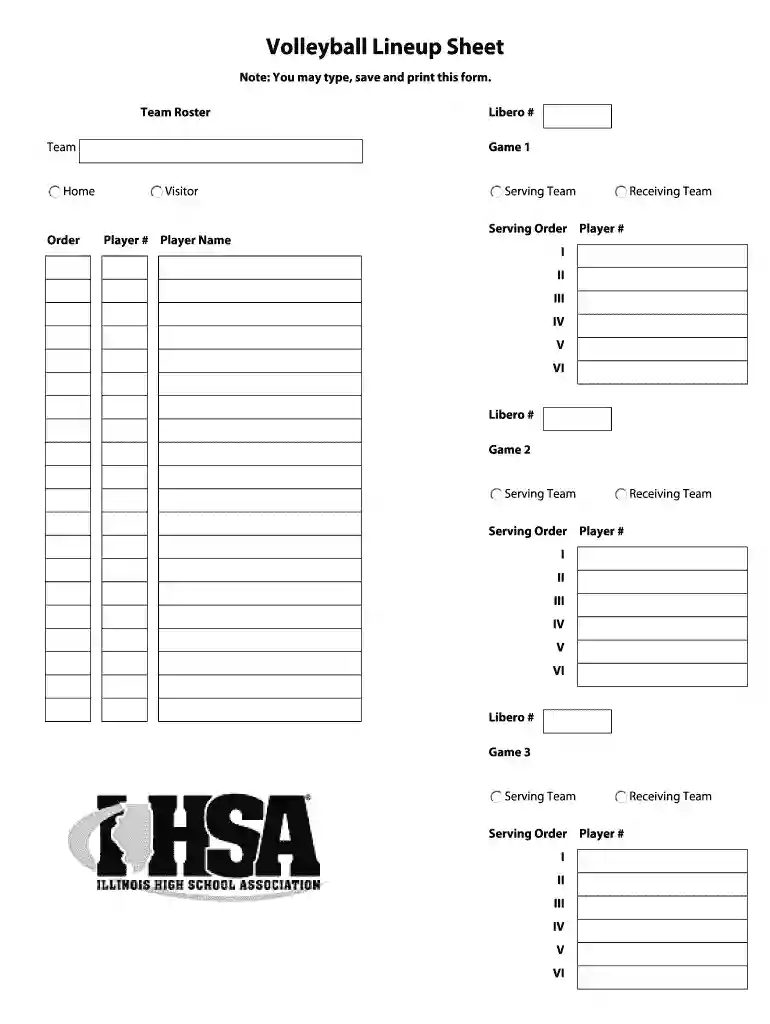
Type text, add images, blackout confidential details, add comments, highlights and more.

Draw your signature, type it, upload its image, or use your mobile device as a signature pad.

Send nfhs volleyball lineup sheet via email, link, or fax. You can also download it, export it or print it out.
A volleyball lineup sheet is a crucial document that teams use to organize their player roster and establish positions for matches. This form plays an essential role in competitive play across various levels, including high school and middle school leagues, aligning with guidelines set forth by organizations such as the National Federation of State High School Associations (NFHS) and the Illinois High School Association (IHSA).
The structure of a volleyball lineup sheet generally includes several key elements necessary for effective team organization:
Team Information:
Player Roster:
Lineup Order:
Additional Notes:
These components ensure clarity and facilitate smoother game management by providing all stakeholders with the information necessary for effective in-game decisions.
Filling out a volleyball lineup sheet correctly is essential for compliance with league rules and efficient game execution. Here are the steps involved:
Gather Player Information:
Designate Positions:
Determine the Lineup Order:
Incorporate Libero Information:
Review for Accuracy:
Several versions of volleyball lineup sheets exist to cater to various needs of teams and leagues:
Editable Volleyball Lineup Sheets:
Printable Templates:
Electronic Formats:
NFHS and IHSA Variants:
Different leagues may have variations in their volleyball lineup sheet requirements:
High School vs. Middle School:
League-Specific Guidelines:
Accurate completion of the volleyball lineup sheet aids in various aspects of competition:
Referee Reference:
Team Strategy:
Statistical Tracking:
Proper use and understanding of the volleyball lineup sheet can significantly impact a team’s performance and compliance with league rules, ultimately supporting a smoother and more organized sporting experience.
At DocHub, your data security is our priority. We follow HIPAA, SOC2, GDPR, and other standards, so you can work on your documents with confidence.
Team roster team check one: You may type, save and print this form. Also included is a detailed overview of how to set up your lineup, and tips for optimizing.
1. ▫ Lineups are due to the second referee no later than two minutes prior to the end of the timed prematch warmup (7-1Read more


