
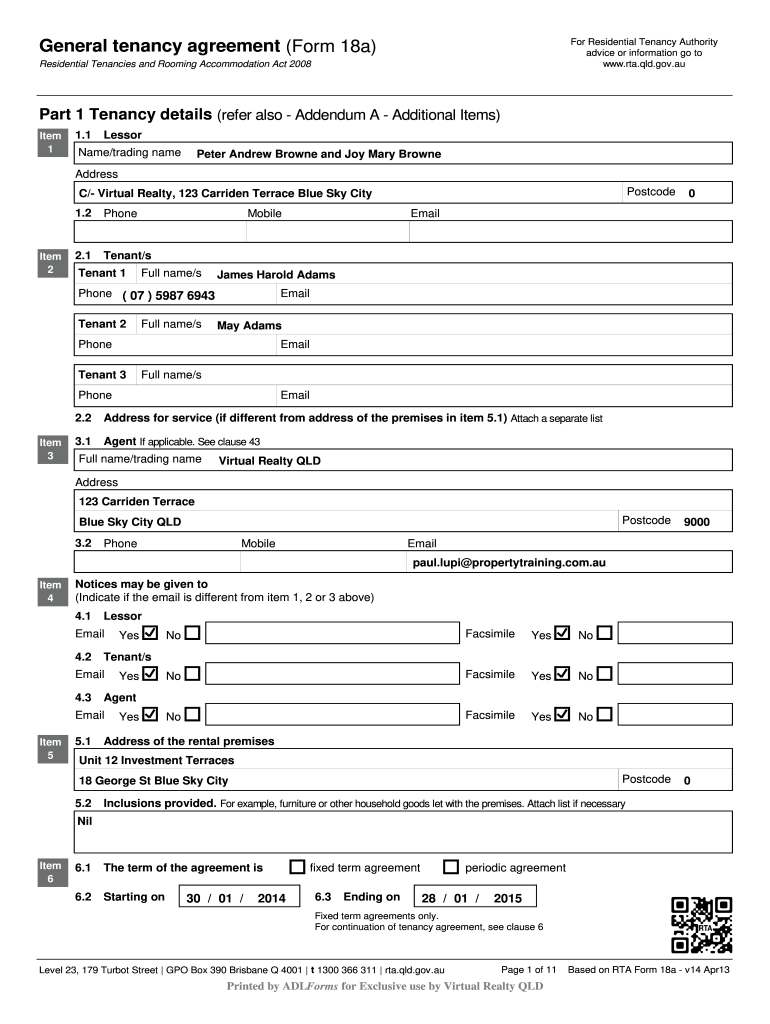







Definition and Purpose of the General Tenancy Agreement (Form 18a)
A General Tenancy Agreement (Form 18a) is a crucial rental document under the Residential Tenancies and Rooming Accommodation Act in Australia, specifically tailored for regulating tenancy arrangements. It sets forth the rights and responsibilities of both lessors and tenants within a rental agreement. Typically used in various leasing scenarios, this document serves to clearly outline expectations regarding rent payments, property maintenance, and termination procedures.
The General Tenancy Agreement includes fundamental details such as:
- Tenant and Lessor Information: Names and contact details of both parties.
- Property Details: Full address and description of the rental property.
- Lease Duration: Specifies the term of the tenancy, whether fixed or periodic.
- Rental Amount: The amount to be paid, the due dates, and acceptable payment methods.
Having this agreement in place not only fosters a harmonious landlord-tenant relationship but also provides a legal framework to address disputes, ensuring that all parties are aware of their obligations.
How to Use the General Tenancy Agreement (Form 18a)
Utilizing the General Tenancy Agreement effectively involves several critical steps:
-
Preparation: Before drafting the agreement, ascertain all necessary information, including the terms of tenancy, rent, and specific maintenance obligations. Open communication between the lessor and tenant is essential for transparency.
-
Completion: Fill out the form accurately, ensuring all sections are addressed. Important fields include:
- Tenant’s and landlord’s full names and addresses.
- Detailed rental terms including commencement and expiration dates.
- Specific conditions regarding the property, such as rules about pets or property modifications.
-
Review: Both parties should thoroughly review the completed agreement to ensure clarity and mutual understanding. Engaging a legal professional can help confirm that the document meets all legal standards.
-
Signing: Both the lessor and tenant need to sign the agreement. Electronic signatures may be acceptable, provided they comply with local regulations.
-
Distribution: Provide copies of the signed agreement to both parties for their records. It’s recommended that both retain a copy for reference throughout the tenancy.
-
Adherence and Updates: Both parties should adhere to the terms laid out in the agreement. Any amendments should be documented in writing and signed by both parties to maintain legal validity.
This systematic approach not only ensures compliance with the law but also protects the rights of both the landlord and tenant, fostering a positive rental experience.
Obtaining the General Tenancy Agreement (Form 18a)
Acquiring the General Tenancy Agreement can be accomplished in various ways:
- Online Resources: Many government websites offer downloadable templates of the Form 18a. These resources often include guidance on completing the form correctly.
- Real Estate Agents: Licensed real estate agents often provide this form as part of their leasing services, ensuring that the document is tailored to current legal standards.
- Legal Professionals: Solicitors or legal advisors specializing in real estate can either provide the form or assist in drafting a customized tenancy agreement that reflects the specific requirements of both parties.
- Government Offices: Local government housing offices can supply physical copies of the form along with information on the associated laws regulating tenancy agreements in your area.
Regardless of the method used to obtain the General Tenancy Agreement, ensuring it is current and compliant with local regulations is vital for its effectiveness in protecting all parties involved.
Key Elements Typically Included in the General Tenancy Agreement (Form 18a)
Understanding the key components of the General Tenancy Agreement is essential for both lessors and tenants. Here are some fundamental elements typically included:
-
Tenant and Lessor Details: Includes complete names, addresses, and contact information for both parties.
-
Property Description: A detailed description of the rental property, including any shared areas, amenities, and their respective conditions.
-
Rental Amount and Payment Schedule: Specifies the total rent amount, payment frequency (weekly, fortnightly, or monthly), and acceptable payment methods, such as bank transfer or checks.
-
Duration of Tenancy: Indicates whether the tenancy is fixed-term or periodic and outlines the start and end dates.
-
Maintenance Obligations: Defines responsibilities regarding property upkeep, including repairs and adherence to safety regulations.
-
Termination of Agreement: Lays out conditions under which either party can terminate the tenancy, notice periods required, and procedures for vacating the property.
-
Special Conditions: May include clauses related to pets, smoking, or alterations to the property, which require mutual agreement.
The comprehensive nature of these elements ensures clarity in the landlord-tenant relationship, minimizing the likelihood of disputes and enhancing rental stability.
Legal Use of the General Tenancy Agreement (Form 18a)
The General Tenancy Agreement is a legally binding document that must adhere to specific regulations established by state and federal laws within the U.S. This legal framework establishes the foundation for a rental relationship, protecting both the tenant’s and lessor's rights.
-
Enforceability: The agreement must comply with applicable housing laws to be enforceable in a court of law. This includes adherence to fair housing practices and local legislation specific to rental agreements.
-
Modification Rights: Both parties have the ability to amend the agreement, provided any changes are documented, mutually agreed upon, and signed by both parties.
-
Dispute Resolution: Should disputes arise regarding any terms of the agreement, the document serves as a reference point for mediation or court proceedings, clarifying the obligations and rights of each party.
-
Content Limitations: Certain terms cannot be enforced if they contradict state laws; for example, additional fees or obligations imposed on tenants that exceed regulatory limits may be rendered void.
Understanding the legal context of the General Tenancy Agreement provides reassurance and clarity for both landlords and tenants, ensuring that all actions taken are within the bounds of the law.




