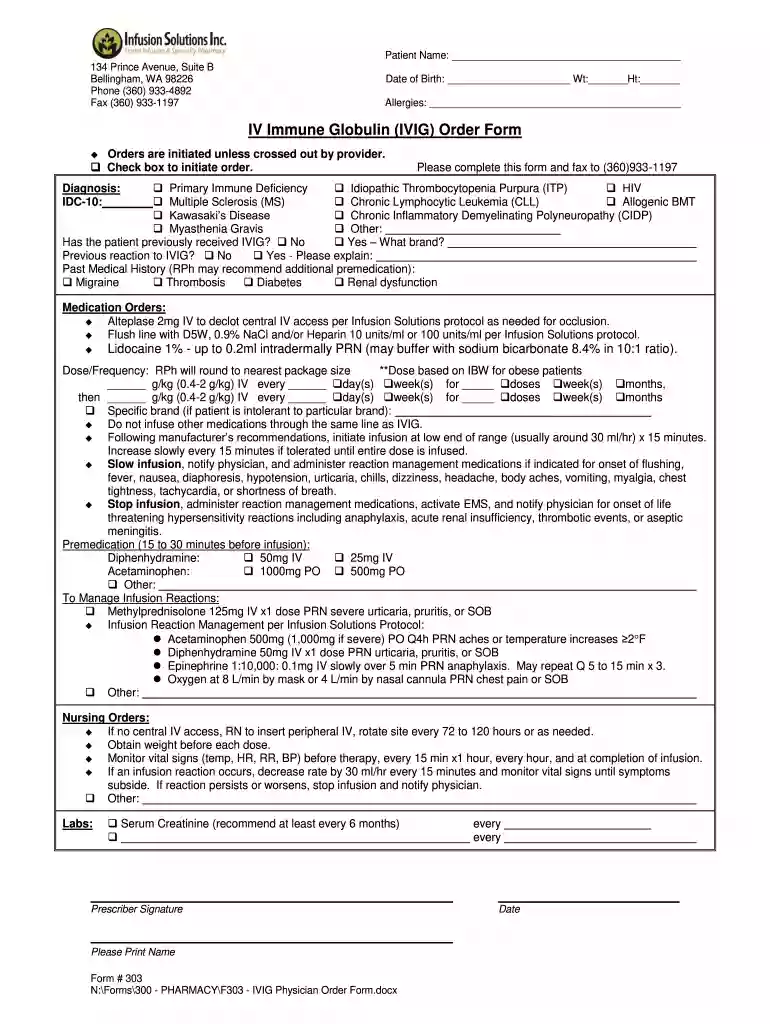
Definition and Meaning of the Infusion Form IV Form
The infusion form IV form serves as a crucial document in the medical field, primarily used for prescribing and administering intravenous (IV) therapies. It compiles essential patient details, medical histories, and specific directives for the administration of infusion therapies like IV Immune Globulin (IVIG). This form streamlines the communication between healthcare providers, ensuring that all necessary information is efficiently captured and easily accessible.
Key Components of the Infusion Form IV Form
- Patient Information: Includes the patient's name, date of birth, medical record number, and contact information.
- Medical History: Details pre-existing conditions, medications, and prior treatments related to IV therapy.
- Infusion Orders: Specifies the type of infusion, dosage, and frequency, ensuring clarity in treatment protocols.
- Monitoring Requirements: Describes necessary observations during the infusion process to safeguard patient health.
Steps to Complete the Infusion Form IV Form
Completing the infusion form IV form involves several critical steps that ensure accurate and comprehensive data entry. Healthcare providers or authorized personnel typically fill out this form.
- Gather Patient Information: Collect all required patient details, including personal information, medical history, and current medications.
- Identify Indications for Therapy: Justify the need for IV infusion by noting relevant medical conditions and prior treatments that led to this decision.
- Specify Infusion Details: Clearly outline the type of infusion medication, dosage, administration route, and infusion schedule in allocated sections.
- Include Monitoring Parameters: Determine and state the nursing and medical staff requirements for monitoring the patient throughout the infusion process.
- Review for Accuracy: Ensure all information is correct and complete. Any insufficiencies might lead to delays or complications in treatment.
How to Use the Infusion Form IV Form
The infusion form IV form is utilized mainly in clinical settings involving IV administration. This form is critical for ensuring effective patient care and adherence to established medical protocols.
- Prescribing Infusions: Physicians fill out the form to prescribe IV treatments, detailing medication type, dosage, and required infusion duration.
- Patient Education: Use the form to inform patients about their treatment plan, including the purpose of the infusion and potential side effects.
- Continuity of Care: The form ensures seamless communication between different healthcare staff (nurses, pharmacists, and physicians) involved in the patient's care. It acts as a record that informs those administering the treatment of the prescribed plan.
Important Terms Related to the Infusion Form IV Form
Understanding key terms is essential for effectively using the infusion form IV form in medical settings. Familiarity with these terms enhances communication among healthcare providers and improves patient comprehension.
- IVIG (Intravenous Immunoglobulin): A blood product administered via IV to treat various immune deficiencies and autoimmune diseases.
- Infusion Rate: Refers to the speed at which medication is delivered intravenously, often measured in milliliters per hour (mL/hr).
- Premedication Protocols: Guidelines outlining necessary medications to be administered prior to the infusion to minimize adverse reactions.
- Adverse Reactions Monitoring: The process of observing the patient for any unfavorable effects that may arise during or shortly after the infusion.
Legal Use of the Infusion Form IV Form
Legal compliance is paramount in the use of the infusion form IV form. This form must adhere to various healthcare regulations to protect patient rights and ensure safe treatment delivery.
- HIPAA Compliance: Ensures patient confidentiality is maintained, and all patient information shared within the form aligns with privacy regulations.
- ESIGN Act Adherence: Validates electronic signatures where applicable, ensuring that consent to treatment is legally binding.
- State Regulations: Must align with state-specific guidelines governing the administration of medications, particularly controlled substances.
Example Scenarios for Using the Infusion Form IV Form
Practical examples illustrate how the infusion form IV form is effectively utilized in clinical environments:
- Scenario One: A patient with chronic autoimmune disease requires IVIG treatment. The physician fills out the infusion form IV form, detailing the medical history, infusion specifics, and monitoring requirements. The nursing staff uses this comprehensive information to administer the treatment while vigilantly observing for reactions.
- Scenario Two: In a hospital setting, a nurse prepares for a patient’s first IV infusion. Using the completed infusion form IV form, they ensure the medication is correctly prepared (dilution, rate) and confirm necessary premedications are administered on schedule.
Each example reaffirms the significance of the infusion form IV form in streamlining patient care and fostering effective communication among healthcare professionals.