




01. Edit your free printable patient assessment forms online
Type text, add images, blackout confidential details, add comments, highlights and more.

Type text, add images, blackout confidential details, add comments, highlights and more.

Draw your signature, type it, upload its image, or use your mobile device as a signature pad.

Send first aid assessment template via email, link, or fax. You can also download it, export it or print it out.
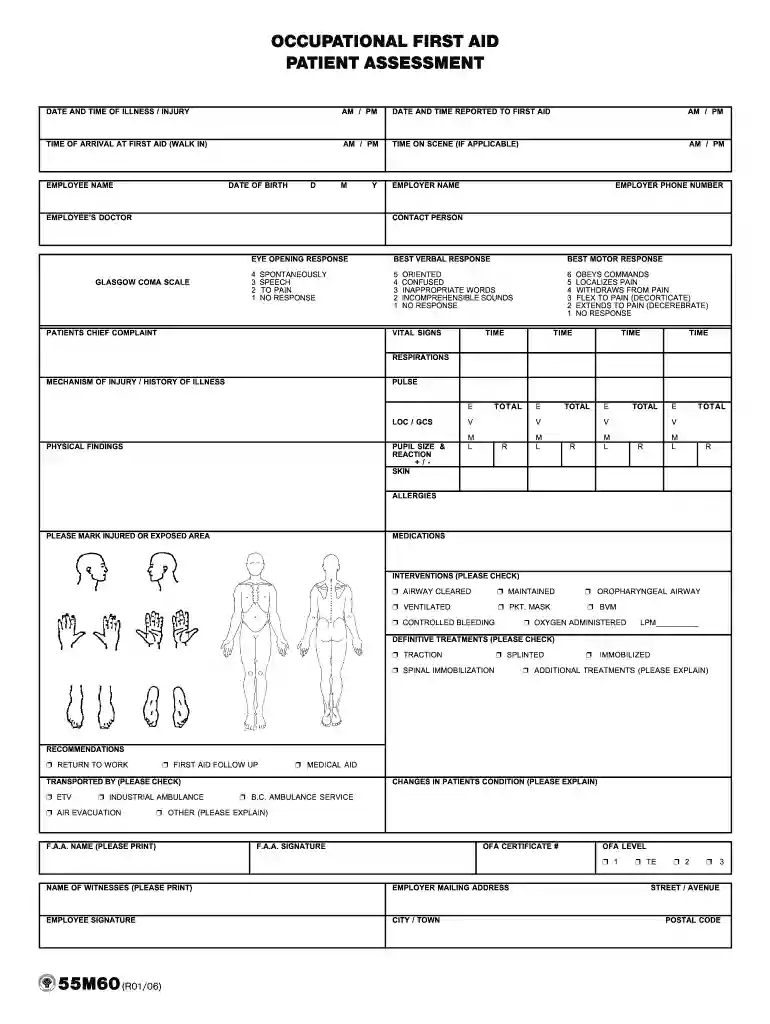
The first aid patient assessment form is a vital tool in the healthcare sector, especially for first responders and healthcare professionals, enabling them to record critical patient information efficiently and accurately. This document facilitates the organized collection of assessment data that can influence immediate care decisions and future treatment.
Understanding the essential elements of the first aid patient assessment form is crucial for effective documentation. This form generally includes several sections that detail the patient's condition and history.
Patient Information: This section collects basic patient data such as name, age, gender, and contact information. It is vital for identifying the patient and tracing medical history.
Incident Details: Key information about the date, time, and location of the incident provides context for the assessment. It helps healthcare providers understand the circumstances surrounding a patient’s injury or medical condition.
Vital Signs: Recording essential signs, including heart rate, respiratory rate, blood pressure, and temperature, offers a snapshot of the patient's physiological state, guiding further medical intervention.
Glasgow Coma Scale (GCS) Scores: This assessment tool evaluates a patient's level of consciousness through eye, verbal, and motor responses. Documenting GCS scores helps determine the severity of head injuries and other conditions affecting consciousness.
Chief Complaints: It's crucial to note the primary reasons for the patient's visit or emergency situation. This information can guide immediate treatment plans and priorities.
Physical Findings: Descriptive details of the patient's condition observed during the assessment, such as visible injuries or signs of distress, are vital for a comprehensive understanding of the patient's state.
The first aid patient assessment form can be employed in various settings, including workplace incidents, public events, or general healthcare environments. Proper utilization involves:
Prompt Completion: The form should be filled out as soon as possible after the assessment to ensure accuracy. Delays can result in forgotten details or inaccuracies.
Clear Documentation: Use clear, concise language and standardized terms to enhance understanding among multiple healthcare providers.
Training on Use: First responders and healthcare personnel must receive training on effectively completing the assessment form, emphasizing the importance of each section.
Review and Update: In cases where the patient moves or changes condition, it's essential to review and update the form to reflect new information accurately.
Given that the first aid patient assessment form contains sensitive health information, security and compliance with laws such as HIPAA are fundamental.
Data Protection: Implementing strong security measures, such as encryption, can protect patient information during storage and transmission.
Consent: Ensure that proper consent is obtained if required, especially if the information is shared beyond immediate care purposes.
The first aid patient assessment form is applied in various real-world scenarios where timely and accurate information can save lives. For example:
In a workplace setting, an employee experiencing chest pain would require immediate assessment. Completion of the form facilitates rapid communication of vital signs and symptoms to emergency medical services.
During community events, trained volunteers may use the assessment form to record injuries from unforeseen incidents, ensuring that all necessary details are available for further treatment.
While the basic structure of the first aid patient assessment form remains consistent, variations may exist based on specific organizational needs or legal requirements.
Occupational Health Settings: Forms may include additional sections focused on occupational health and safety regulations, documenting specific exposure scenarios.
Pediatric Assessments: Forms designed for pediatric first aid may use age-appropriate language and measurement standards for vital signs, catering specifically to children.
By ensuring the use of a standardized first aid patient assessment form, healthcare professionals can improve care quality, enhance patient safety, and streamline communication among healthcare teams.
At DocHub, your data security is our priority. We follow HIPAA, SOC2, GDPR, and other standards, so you can work on your documents with confidence.
Sample History. Signs / Symptoms: Allergies: Medications: Past History. Last Intake: Events: * Patient Assessment Findings. Time. * Treatments, InterventionsRead more
patients assessment and treatment [246]. Delayed morbidities of posterior urethral injuries include strictures, incontinence and erectile dysfunction, allRead more


