






Definition & Meaning of the NPO Narrative Report Form
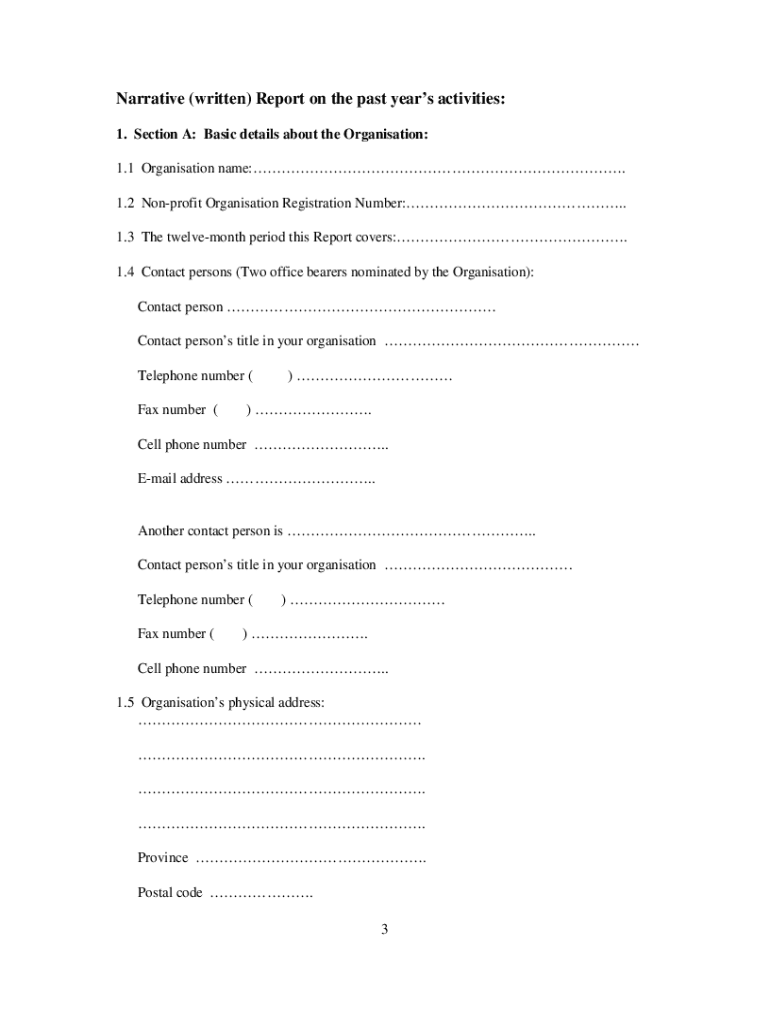
The NPO narrative report form is a structured document used by registered nonprofit organizations in the United States to report on their activities, achievements, and financial status to government authorities or donors. This report typically includes qualitative and quantitative data that reflect the organization’s mission, objectives, performance metrics, and compliance with applicable regulations.
The form is integral for transparency and accountability, serving as a communication tool to inform stakeholders about the use of funds, project outcomes, and future plans. By detailing the organization’s successes and challenges, the narrative report contributes to building trust and credibility with funding bodies and the public.
Key Components of the NPO Narrative Report
- Organizational Overview: A brief description of the nonprofit, including its mission statement, history, and target population.
- Program Results: A summary of programs and services offered, along with their outcomes and impact on the community.
- Financial Performance: Overview of income, expenses, and funding sources, ensuring compliance with financial reporting standards.
- Challenges and Solutions: Reflection on obstacles encountered during the reporting period and strategies employed to address them.
- Future Plans: Insights into upcoming projects, goals, and how the organization plans to enhance its impact.
How to Use the NPO Narrative Report Form
Utilizing the NPO narrative report form involves several critical steps that ensure effective communication of your organization’s work and its impact over the reporting period. First, organizations must gather all relevant data before beginning the report. This includes program outcomes, financial statements, and participant feedback.
Step-by-Step Usage Instructions
-
Collect Data:
- Gather quantitative metrics (e.g., number of beneficiaries served, funds raised).
- Compile qualitative insights from surveys or interviews with stakeholders.
-
Fill Out Sections:
- Clearly address each section of the form, adhering to any specified guidelines or word limits.
- Use straightforward language to enhance readability.
-
Review and Edit:
- Ensure that the report is concise, focused, and free from jargon that may confuse the reader.
- Seek feedback from team members to ensure completeness and clarity.
-
Submit On Time:
- Be mindful of submission deadlines to avoid penalties and ensure compliance with regulations.
Steps to Complete the NPO Narrative Report Form
Completing the NPO narrative report form requires careful attention to detail and adherence to any guidelines provided by oversight entities, such as the Department of Social Development. A thorough understanding of the required information can significantly streamline the completion process.
Detailed Completion Steps
-
Read Instructions:
- Start by carefully reviewing the instructions accompanying the form to ensure compliance with state-specific requirements.
-
Outline Your Report:
- Create an outline based on the sections of the form to organize your content logically.
-
Draft Each Section:
- Begin writing the report by addressing each component in detail. Ensure the narrative addresses organizational impact effectively.
-
Use Supportive Data:
- Incorporate relevant statistics and qualitative data to support your claims about the organization’s achievements and challenges.
-
Edit and Finalize:
- Proofread for clarity, accuracy, and adherence to format. Consider multiple revisions to enhance the overall quality of the report.
Important Terms Related to the NPO Narrative Report Form
Familiarity with key terminology related to the NPO narrative report form can aid users in understanding and effectively navigating the reporting process. Below are essential terms that are frequently encountered in discussions surrounding nonprofit reporting.
Key Terminology
- Stakeholders: Individuals or groups with an interest in the organization’s activities, including funders, beneficiaries, and community members.
- Compliance: Adherence to regulatory standards set by governing bodies regarding nonprofit operations and reporting.
- Program Evaluation: The systematic assessment of a program’s effectiveness in achieving its goals.
- Impact Measure: Metrics that assess the tangible outcomes of organizational activities on the target population.
Legal Use of the NPO Narrative Report Form
The legal framework surrounding nonprofit organizations mandates the completion of narrative reports to maintain compliance with state law and federal regulations. Understanding this legal context is crucial for nonprofits to operate responsibly.
Legal Framework Overview
- Regulatory Bodies: Various state departments oversee nonprofit compliance, including the IRS and state-level charity regulators.
- Compliance Requirements: Filing accurate and timely narrative reports is essential for maintaining nonprofit status and good standing.
- Consequences of Non-compliance: Failure to submit required reports can result in penalties, loss of tax-exempt status, and decreased funding opportunities.
Who Typically Uses the NPO Narrative Report Form?
The NPO narrative report form is utilized by various stakeholders within nonprofit organizations, ensuring a comprehensive reflection of the organization’s activities and impact. Identifying the primary users can clarify how different roles contribute to the report's completion and submission.

Primary Users of the Form
- Nonprofit Directors: Responsible for overseeing the report’s content and ensuring it aligns with the organization’s mission.
- Financial Officers: Ensure accurate financial data is reported, providing a clear overview of the organization’s economic health.
- Program Managers: Offer insights into program outcomes and challenges, contributing qualitative data for the narrative.
- Board Members: Review the report to ensure it meets governance standards and adequately reflects the organization’s activities.
Examples of Using the NPO Narrative Report Form
Understanding practical applications of the NPO narrative report form can enhance its effectiveness. Here are illustrative scenarios that demonstrate how organizations can create impactful reports.
Practical Application Scenarios
- Annual Reporting: A community health organization uses the form to report on its outreach programs, detailing the number of patients served and highlighting success stories from beneficiaries.
- Grant Applications: A nonprofit seeking funding incorporates the narrative report as part of its grant proposal, showcasing past achievements and outlining plans for future programs.
- Stakeholder Presentations: The form is used to prepare materials for an annual meeting with key stakeholders, providing a comprehensive review of the organization’s activities and impact over the previous year.
Each of these scenarios underscores the versatility of the NPO narrative report form in promoting transparency and accountability across various aspects of nonprofit operation and governance.