






Definition & Meaning of React to Contact - The Company Leader
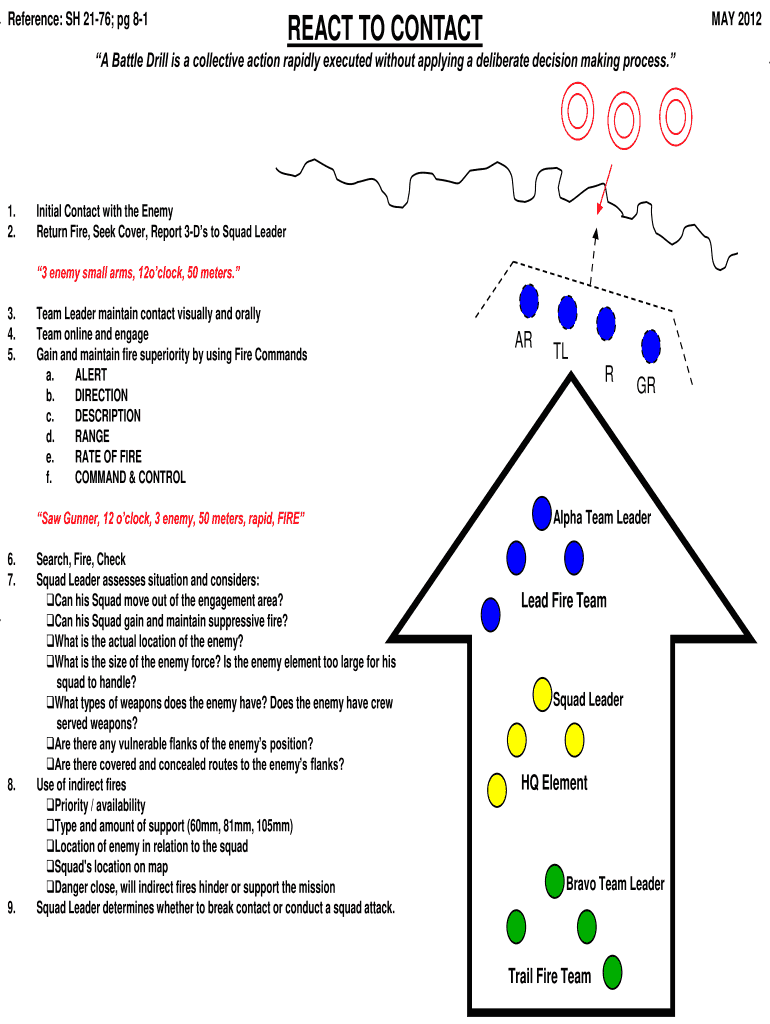
React to contact refers to a tactical response by military units when encountering enemy forces. This critical battle drill is designed to maintain the unit's operational capability while effectively neutralizing threats. An understanding of this procedure not only helps reinforce the soldiers' readiness but also guides team leaders in executing coordinated responses under stress. The drill emphasizes quick decision-making, adherence to command structure, and the application of learned formations and tactics to ensure safety and mission success.
Characteristics of React to Contact
It's essential to identify several key characteristics that define the react to contact drill:
- Immediate Response: The drill necessitates a swift reaction to emerging threats. Troops must quickly assess the situation and engage appropriately without hesitation.
- Clear Communication: Effective communication is vital in guiding soldiers through the drill. Signals must be understood by all members to ensure coordinated action.
- Fire Superiority: Gaining and maintaining fire superiority is a critical objective. Units are trained to return fire to suppress enemy actions.
- Situational Awareness: Soldiers must continually assess the operational environment, understanding enemy positions and adapting their tactics accordingly.
By understanding these characteristics, military personnel are better equipped to implement the drill effectively.
Steps to Execute the React to Contact Drill
Executing the react to contact drill involves several organized steps that promote efficiency and effectiveness in response:
- Observation: Identifying the enemy’s location and strength is the first step. Soldiers need to maintain a high degree of situational awareness.
- Communication: Once contact is made, immediate communication must occur. This includes relaying information about the threat and confirming that all squad members are aware.
- Establishing Fire Superiority: Fire should be returned swiftly, aiming to suppress the enemy. This might involve using various weapons systems.
- Assuming Defensive Positions: Soldiers should take cover and assume a defensive posture to protect themselves while continuing to engage the enemy.
- Conducting Maneuvers: Once fire superiority is established, the unit can maneuver, either to flank the enemy or to break contact safely.
- Consolidation and Assessment: After the threat has been handled, a thorough assessment must take place to evaluate the outcome and identify any lessons learned.
Each of these steps reinforces the importance of structured response and disciplined execution during high-pressure scenarios.
Importance of Fire Superiority in React to Contact
Fire superiority is indispensable in the react to contact drill. Understanding its significance can greatly impact outcome success. Here’s why:
- Disruption of Enemy Action: Introducing immediate fire against the enemy forces can disrupt their plans, making it difficult for them to coordinate any further sustained attack.
- Safety for Friendly Forces: By establishing a strong position of fire, the risk to friendly troops is minimized. This allows unit members to engage effectively while being protected.
- Control of the Battlefield: Gaining fire superiority allows one unit to dominate a specific area, enabling other units to maneuver or provide support where needed.
Ultimately, the higher the fire superiority, the better the chances of successfully executing the react to contact drill.
Common Scenarios and Adaptations for React to Contact
Understanding various scenarios in which the react to contact drill may be applied helps reinforce its adaptability:
- Ambush Situations: In cases where a unit is ambushed, immediate return fire is crucial. This scenario necessitates quick assessment and pivots in strategy.
- Urban Environments: Operating in an urban setting requires more nuanced responses. Civilians may be present, and clear communication is vital to avoid collateral damage.
- Night Operations: Limited visibility requires heightened situational awareness and potentially altered tactics, as sound and movement may be the only indicators of enemy presence.
Each scenario presents unique challenges that soldiers must navigate while implementing the react to contact drill effectively.
Training and Preparation for Effectiveness
Training plays a vital role in ensuring soldiers can execute the react to contact drill under various conditions. Key training components include:
- Simulation Exercises: Conducting drills in controlled environments helps units prepare for real-life situations. Repeated practice reinforces behaviors and decision-making processes.
- Use of Technology: Incorporating modern technology, such as simulation software or virtual reality environments, can enhance training accuracy and realism.
- After-Action Reviews: Reviewing performance post-exercise allows troops to identify strengths and weaknesses, thereby improving future execution.
Ultimately, regular training and preparatory measures contribute significantly to the effectiveness of the react to contact drill within military operations.
Leadership Responsibilities During React to Contact
The role of leadership is pivotal during the react to contact drill. Leaders are responsible for:
- Decision-Making: They must weigh the situation rapidly and determine the best course of action in response to enemy contact.
- Communication Clarity: Leaders should provide clear commands and ensure they are heard and understood by all unit members during crises.
- Adaptability: Flexibility in approach is crucial. Leaders must be prepared to modify tactics based on real-time developments on the battlefield.
By addressing these leadership responsibilities, units can achieve better outcomes during critical engagements with the enemy.