
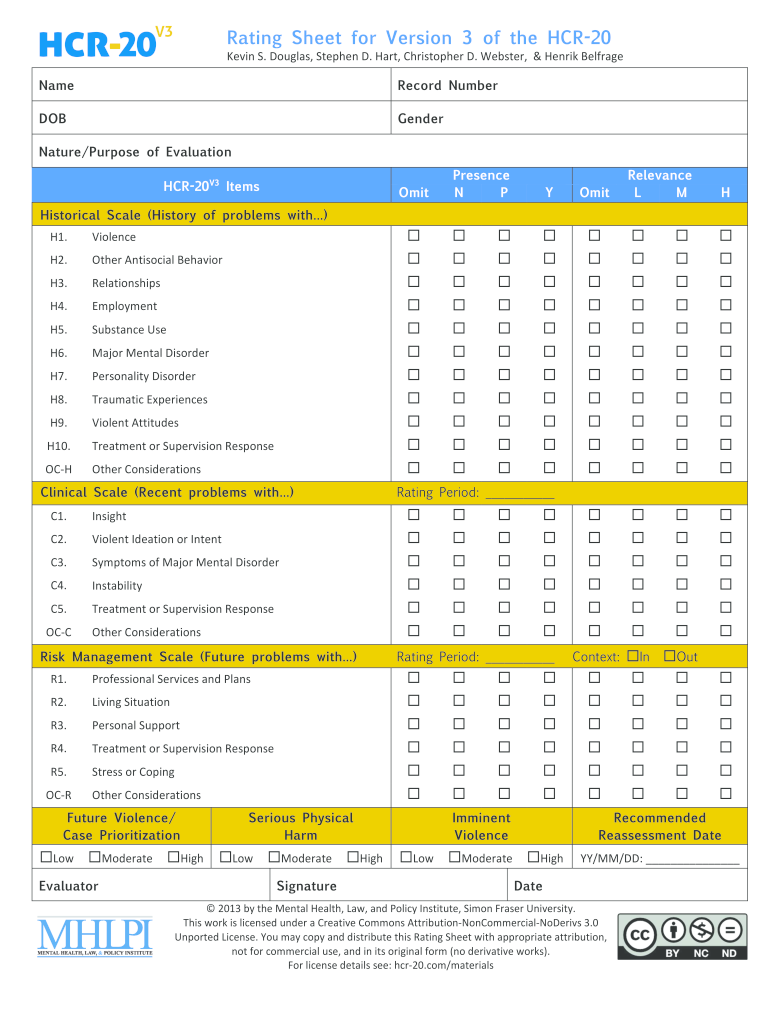







Definition and Purpose of the HCR-20 PDF
The HCR-20 is a widely recognized tool designed for assessing the risk of violence and antisocial behaviors in individuals. It consists of a structured form used by mental health professionals, law enforcement, and other organizations involved in risk assessment. The HCR-20 v3 (Version 3) updates the criteria used to evaluate historical, clinical, and risk management factors specific to each individual, helping practitioners make informed decisions regarding interventions and management.
- Purpose: The primary aim of the HCR-20 is to identify individuals who are at heightened risk for future violent behavior. This involves a comprehensive evaluation of past behaviors, mental health issues, and situational factors influencing risk levels.
- Key Features:
- Historical Scale: Considers past violence, age at first violent incident, history of offenses, and other relevant historical data.
- Clinical Scale: Assesses current mental health status, including substance abuse, personality disorders, and treatment history.
- Risk Management Scale: Focuses on factors that can mitigate or exacerbate risks, acting as a guide for future management efforts.
How to Access the HCR-20 PDF
Obtaining the HCR-20 PDF is essential for professionals aiming to assess risk in individuals effectively. It can typically be acquired through the following methods:
- Official Websites: Access the most current version from reputable sources, including university research centers or professional organizations that specialize in psychological assessments.
- Direct Purchase: Some platforms may require a fee for the latest HCR-20 v3 manual PDF, which usually includes guidance on its use and interpretation.
- Professional Associations: Many psychological and psychiatric associations provide access to assessment tools for their members, including the HCR-20.
Ensure to download from verified sites to guarantee the integrity and authenticity of the document.
Steps to Fill Out the HCR-20 PDF
Completing the HCR-20 PDF involves a thorough understanding of its structure and the specific criteria required. The following steps outline the completion process:
- Personal Information: Gather and record personal data, including the individual's name, age, and relevant identifiers.
- Historical Scales: Evaluate and document the individual’s historical behaviors. Mark the prevalence of violent and antisocial behaviors in the respective section.
- Clinical Scales: Assess the individual’s mental health condition by looking into current psychiatric diagnoses and treatment history. It is important to be as specific as possible while filling this section.
- Risk Management Scale: Identify and detail various risk factors present in the individual’s life, including social, environmental, and peer influences that may impact their behavior.
- Review and Finalize: Double-check all entries for accuracy and completeness. Ensure necessary signatures are obtained for authorization if required.
This systematic approach helps ensure that all relevant factors are considered, enhancing the quality of the risk assessment.
Key Elements of the HCR-20 PDF
The HCR-20 PDF includes several significant elements that are crucial for effective risk assessment:
- Comprehensive Evaluation: The form encompasses three distinct scales—historical, clinical, and risk management—that cover various domains critical for assessing risk.
- Scoring Guidelines: Clear instructions for scoring each item are included, allowing clinicians to evaluate risk factors systematically and objectively.
- Documentation Space: Ample space is provided for clinicians to make detailed notes regarding the individual’s behaviors and circumstances that could affect risk levels.
- Interpretation Protocols: The HCR-20 PDF often includes guidance on interpreting scores and using them to inform management plans.
These elements work together to create a robust framework for understanding an individual’s risk of violence and providing targeted interventions.
Legal Considerations and Compliance for Using HCR-20 PDF
Utilizing the HCR-20 PDF involves understanding the legal implications surrounding its use, particularly in the context of risk assessment in forensic settings:
- Confidentiality: It's essential to maintain the privacy of individuals assessed using the HCR-20, adhering to legal standards regarding confidentiality and data protection.
- Informed Consent: Before conducting assessments, practitioners must obtain informed consent from the individual being evaluated whenever possible, especially in cases involving sensitive information.
- Regulatory Compliance: Ensure that the use of the HCR-20 aligns with local, state, and federal regulations governing psychological assessments and the sharing of clinical information.
Adhering to these legal considerations is vital for ensuring ethical and responsible practice within the field of risk assessment.
Examples of HCR-20 PDF Applications
The HCR-20 PDF can be employed in various scenarios, serving as a vital tool for mental health professionals and organizations. Some examples of its applications include:
- Criminal Justice Settings: Used to assess individuals who have committed violent offenses during parole evaluations, enabling authorities to make informed decisions about supervision levels.
- Mental Health Facilities: Assists in developing treatment plans for individuals with histories of violent behavior, ensuring a multifaceted approach to care.
- Clinical Research: Provides a structured tool for researchers studying violence prediction, offering standardized measurements that enhance the validity of findings.
Understanding these applications underscores the tool's versatility and significance across different sectors that address violence risk assessment.




