






Definition & Meaning
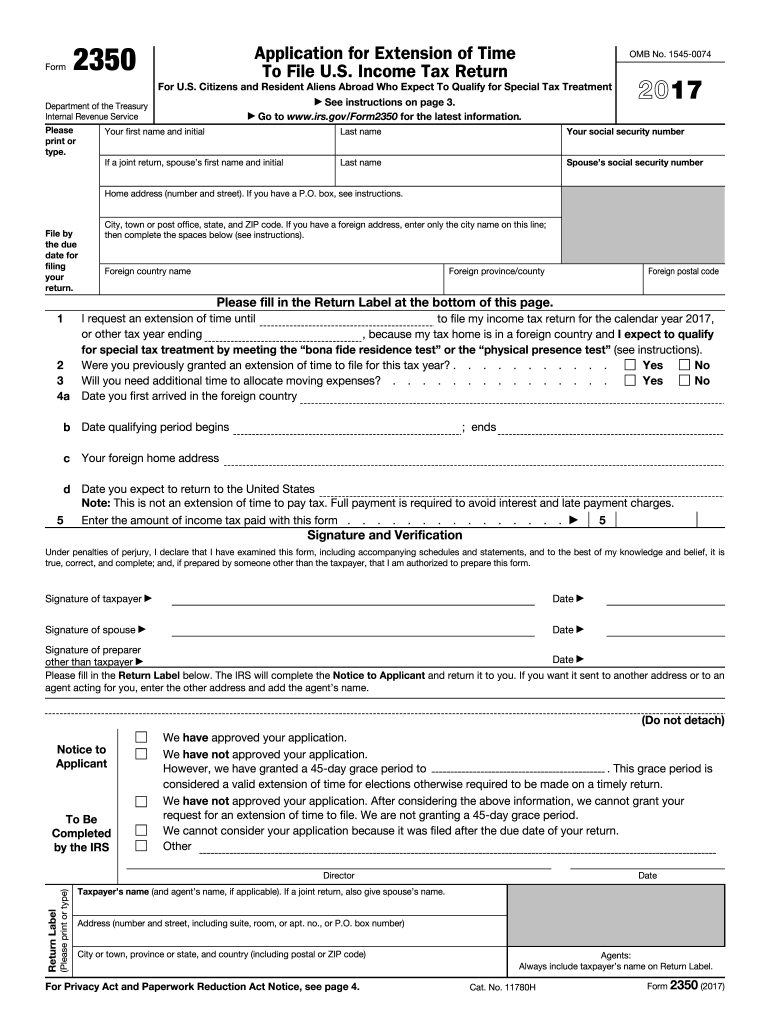
Form 2350, titled "Application for Extension of Time To File U.S. Income Tax Return," is specifically designed for U.S. citizens and resident aliens living abroad. This form applies to those who anticipate meeting specific conditions that allow for special tax treatment. The primary goal of Form 2350 is to request an extended filing period for a U.S. income tax return, not to extend the payment of any taxes owed. Taxpayers use this form to provide details about their residency status, explain their reasons for needing more time, and learn about penalties that may be incurred for late payments. This extension is particularly crucial for individuals working overseas who may have complex tax situations.
How to Use the Form 2
Using Form 2350 involves several precise steps to ensure proper submission. Taxpayers must first download the form from the IRS website or obtain a paper version. Next, they should gather the necessary personal information and documentation required to complete the form accurately. The form requires details such as name, address, and information about income and expenses while living abroad. Completing the form involves specifying the reason for the extension request and projecting eligibility for foreign tax credits or the exclusion of foreign earned income. Once filled out, taxpayers can submit the form electronically via the IRS e-file system or by mailing a paper copy to the appropriate IRS office. It's essential to keep a copy for personal records.
Steps to Complete the Form 2
- Gather Required Information: Before starting, collect essential documentation like your passport, foreign tax statements, and U.S. income records.
- Download the Form: Access the 2017 version of Form 2350 from the IRS website.
- Provide Personal Details: Fill in your name, Social Security Number, and current address. Ensure that these details match your tax records.
- Justify the Extension: Clearly outline why you need the extension, focusing on factors like foreign tax credits and the exclusion of foreign earned income.
- Sign and Date the Form: Ensure your signature and the date are correct to validate the application.
- Submit the Form: Depending on your preference, either mail the completed form to the IRS or submit it via e-file.
Why Should You File Form 2
Filing Form 2350 allows taxpayers who live abroad to align their tax filing with their unique income circumstances, potentially minimizing errors and avoiding penalties. For individuals with complex international financial situations, such as owning property overseas or having foreign employment income, this extension offers additional time to gather and organize supporting documentation. It's particularly useful for those awaiting tax information from foreign employers or governments, who may furnish these records after the standard U.S. tax filing deadline.
Key Elements of the Form 2
- Taxpayer Information: Essential details like name, address, and Social Security Number.
- Reason for Extension Request: Clearly describe why additional time is needed.
- Tax Eligibility: Information about qualifications for foreign earned income exclusions or tax credits.
- Deadline for Submission: The form must be submitted by the original tax filing deadline to be valid, typically April 15th.
- Signatures: Both taxpayer and any representative, if applicable, must sign and date the form.
Eligibility Criteria
To qualify for the extension provided by Form 2350, applicants must demonstrate that they are U.S. citizens or resident aliens living abroad. They must expect to qualify for specific tax treatments that require a timeline extension, such as the foreign earned income exclusion. Applicants must not intend to reside in the U.S. during the extended period and must have significant tax outcomes contingent upon foreign residency status. Individuals must also provide clear justification for needing the added time beyond usual extensions.


Penalties for Non-Compliance
Failing to file Form 2350 when additional time is needed can lead to severe financial repercussions. If taxes owed are not fully paid by the original due date, interest starts accruing immediately. Additionally, late filing and late payment penalties can be imposed. A late filing penalty is typically 5% of the owed balance for each month or part of a month that the return is late, capping at 25%. Without an approved extension, the IRS also may disallow expected foreign income exclusions or tax credits, leading to higher overall tax liabilities.
Form Submission Methods (Online / Mail)
Form 2350 can be submitted either electronically or via traditional mail. Electronic submission through the IRS e-file system offers immediate confirmation of receipt, ensuring taxpayers meet filing requirements on time. This method is recommended for efficiency and prompt processing. Alternatively, mailing a paper form requires sending it to the appropriate IRS address, depending on the applicant's residency and the accompanying forms or payments involved. Regardless of the submission method, maintaining a copy of the form and any related receipts is crucial for personal records.
Taxpayer Scenarios: Self-Employed and Retired Individuals
Self-employed individuals abroad, who often encounter more intricate income considerations and deductions, benefit significantly from Form 2350. The extension provides necessary breathing room to organize income and expense reports, calculate potential foreign tax credits, and ensure compliance with both U.S. and foreign regulations. Similarly, retired individuals living abroad who may receive various forms of income, such as pensions or social security, can leverage the extension to handle tax complexities specific to their situation, such as double taxation agreements. The form allows both groups to avoid hurried filings that may lead to errors or missed opportunities for optimizations.