
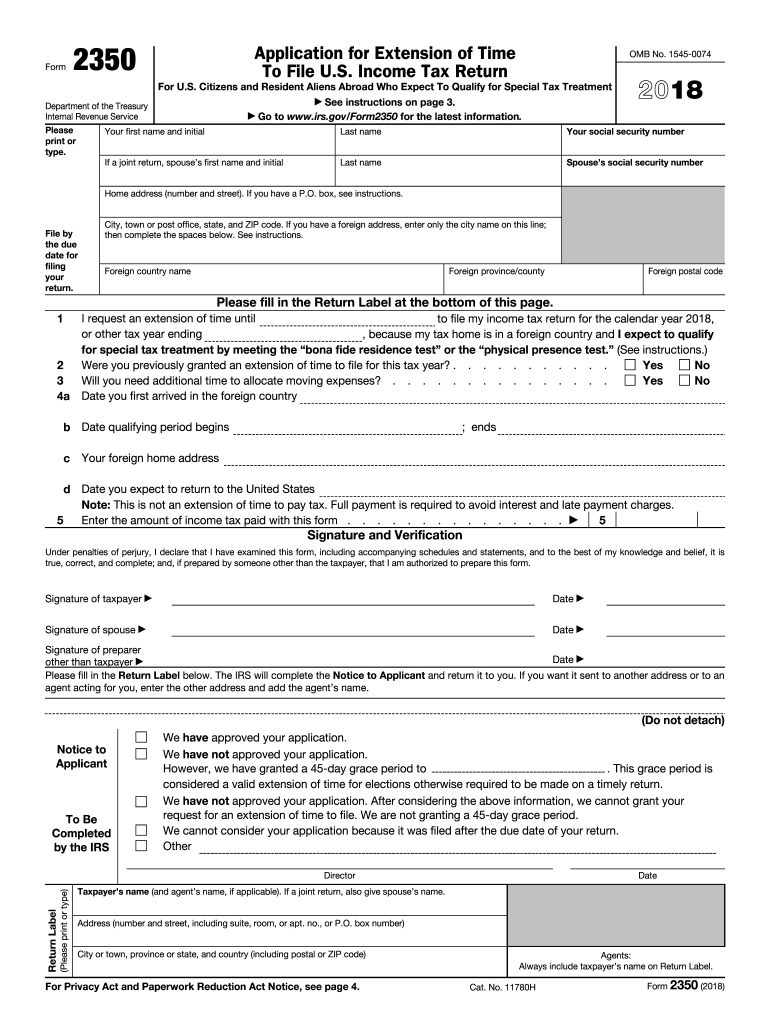







Definition and Purpose of IRS Form 2350
IRS Form 2350 is an application specifically designed for U.S. citizens and resident aliens who are residing overseas and need additional time to file their federal income tax returns. This form is particularly relevant for taxpayers who expect to qualify for the foreign earned income exclusion, the foreign housing exclusion, or the foreign housing deduction. It's important to note that while Form 2350 can extend the filing deadline, it does not extend the time to pay any taxes due. Therefore, taxpayers should estimate their tax liability and pay any owed amount to avoid penalties.
Eligibility Criteria for IRS Form 2350
Taxpayers looking to use IRS Form 2350 must meet specific eligibility criteria. Primarily, applicants must be U.S. citizens or resident aliens living outside the United States, expecting to meet either the bona fide residence test or the physical presence test. These tests determine eligibility for the special tax treatments associated with living abroad. Importantly, applicants should anticipate qualifying for these exclusions or deductions after the regular filing date of their tax return. If you do not meet these criteria, filing Form 2350 might not be applicable, and you should explore other filing options.


How to Obtain IRS Form 2350
IRS Form 2350 can be obtained in several ways to ensure accessibility for taxpayers. You can download it directly from the official IRS website, which offers the form in a PDF format that is easy to print and fill out manually. Alternatively, the form can be accessed and completed using tax preparation software like TurboTax or QuickBooks, which can streamline the process by pre-filling some information if your tax data is already there. If you prefer a paper copy and do not have internet access, the form can also be requested by calling the IRS directly or visiting an IRS office.
Steps to Complete IRS Form 2350
-
Download and Print the Form: Start by downloading IRS Form 2350 from the IRS website or accessing it through tax software.
-
Personal Information: Enter your name, address, Social Security number, and other identifying details.
-
Reason for Extension: Clearly outline the reasons you expect to meet the eligibility criteria for special tax treatments and why an extension is necessary.
-
Tax Year: Specify the tax year for which the extension is being requested.
-
Foreign Address: If applicable, provide details of your foreign residence address.
-
Estimated Tax Payment: Calculate and indicate any estimated tax payment to be submitted with the form.
-
Signature: The form must be signed and dated before submission.
Filing Deadlines and Important Dates
The typical deadline for filing Form 2350 is April 15 for most taxpayers, aligning with the standard tax filing deadline. However, those residing abroad automatically receive a two-month extension, making the new deadline June 15. For taxpayers meeting the form's criteria, submitting Form 2350 before this date could extend the filing time to October 15. It's crucial to adhere to these timelines to avoid any late filing penalties and ensure that the extension does not lapse due to missed deadlines.
Penalties for Non-Compliance
Filing IRS Form 2350 does not extend the time for payment of taxes owed. Failure to pay any taxes due by the initial deadline can result in penalties and interest charges on the outstanding amount. The penalty for late payment is typically 0.5% of the unpaid taxes for each month or part of a month the tax remains unpaid, up to 25% of the unpaid tax. Additionally, not filing the extension by its deadline or meeting eligibility requirements can void the request, making the taxpayer liable for filing penalties as well.
Important Terms Related to IRS Form 2350
-
Bona Fide Residence Test: A requirement indicating that a taxpayer is a bona fide resident of a foreign country for an uninterrupted period that includes a full tax year. This test is crucial for eligibility.
-
Physical Presence Test: A test that requires the taxpayer to be physically present in a foreign country for at least 330 full days during a 12-month period.
-
Foreign Earned Income Exclusion: A provision that allows taxpayers to exclude a portion of their foreign earnings from U.S. taxation.
-
Foreign Housing Exclusion/Deduction: Provisions that offer tax benefits related to housing costs incurred while living abroad.
Integration with Tax Software
For those utilizing digital solutions to manage their tax returns, IRS Form 2350 is often compatible with popular tax software like TurboTax and QuickBooks. These platforms can incorporate the form into your overall tax filing process, ensuring accuracy and saving time by importing your previous year's tax data where applicable. They also provide step-by-step guidance, which can help avoid errors in calculation and improve the chances of a successful extension request. Using such software might also offer additional insights into managing foreign earned income exclusions and other related deductions.




