







Definition and Meaning of IRS Gov Extension
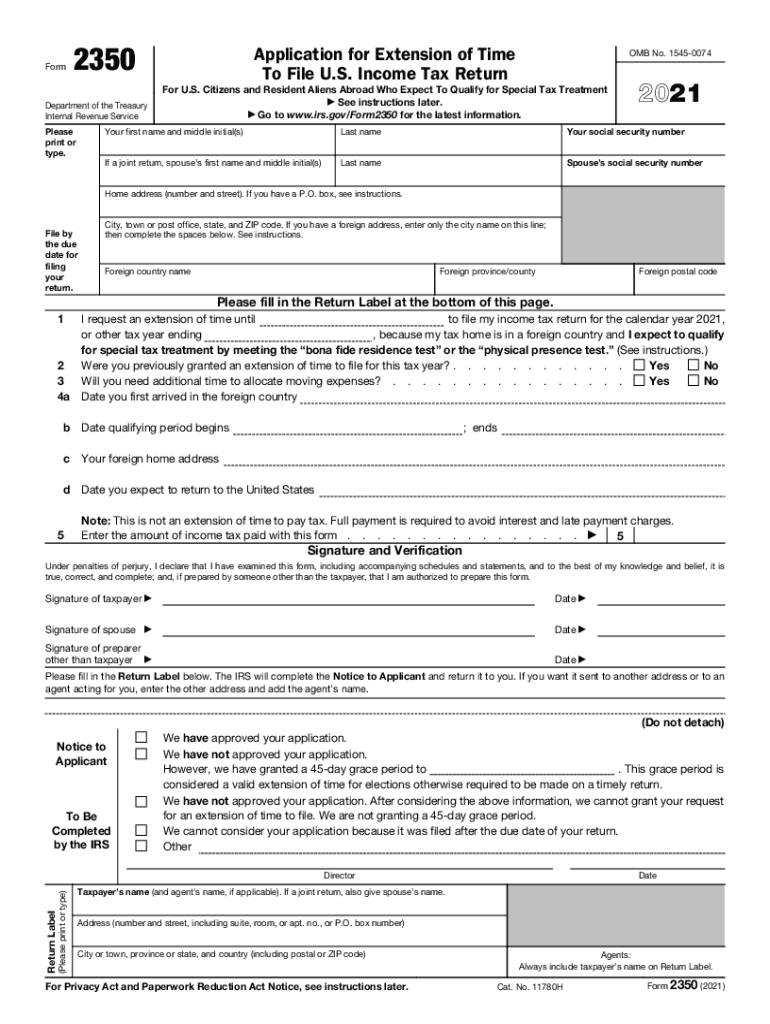
The IRS gov extension refers to the official process by which taxpayers can request additional time to file their U.S. income tax returns. It is a valuable tool for individuals and businesses needing more time to gather the necessary paperwork and complete their tax filings accurately. While the extension allows for a delay in submitting the tax return, it's important to note that this does not extend the deadline for paying any taxes owed, which are still due by the original filing deadline. Form 2350, specifically designed for U.S. citizens and resident aliens living abroad, is one such example offering special tax treatment to eligible filers.
Steps to Complete the IRS Gov Extension Form
-
Gather Necessary Information: Start by collecting all required details, such as personal identification information, income sources, and specific reasons why you are requesting an extension. This information will be crucial in accurately filling out the form.
-
Access the Correct Form: For expatriates and those needing special tax treatment, locate Form 2350 from the IRS website or through authorized tax software platforms. Ensure it's the correct version for the current tax year to avoid processing delays.
-
Fill Out the Form: Carefully input the gathered information into the form, ensuring all sections are accurately completed. This includes providing comprehensive explanations if required to justify the extension request.
-
Review and Verify: Double-check all entries for accuracy and completeness. Ensure your Social Security Number or taxpayer identification aligns with IRS records to facilitate seamless processing.
-
Submit the Form: Choose your preferred submission method—electronically via the IRS website, through approved tax software, or by mailing a hard copy to the specified IRS address. Use certified mail if opting for a paper submission to retain proof of submission.
How to Obtain the IRS Gov Extension
To obtain the IRS gov extension, taxpayers must proactively submit the necessary form before the original tax return due date. This is typically April 15 for most filers, though it can vary based on individual circumstances, like living abroad or experiencing a federally declared disaster. Filing electronically through IRS e-file services or using tax preparation software is recommended for faster processing. For those who prefer traditional methods, downloading the form from the IRS website and mailing it with a postmark by the due date is also a viable option.
Important Terms Related to IRS Gov Extension
- Extension Deadline: The new date by which the tax return must be filed once the extension is granted.
- Automatic Extension: A general six-month extension available to all taxpayers who file Form 4868 by the original tax deadline.
- Tax Payment Deadline: The unchanged deadline for paying any owed taxes, typically by April 15, even if an extension is granted for filing.
- Expatriate Taxation: Special provisions available for U.S. citizens and residents living abroad, often involving Form 2350 for tailored extensions.
- Filing Status: The taxpayer's categorization (e.g., single, married filing jointly) which affects both tax obligations and extension eligibility.
Legal Use of the IRS Gov Extension
The legal use of an IRS gov extension is aligned with compliance to federal tax laws, offering taxpayers a legitimate method to delay filing without penalties. While the extension grants additional time to submit tax documents, it does not adjust the payment deadline nor exempt individuals from interest accruing on unpaid taxes. It emphasizes transparency and accuracy in taxation, helping prevent hasty submissions that might lead to errors or audits.
Filing Deadlines and Important Dates
- Standard Filing Deadline: April 15 for most taxpayers, unless it falls on a weekend or holiday, in which case the deadline shifts to the next business day.
- Extension Deadline: October 15 is the new deadline for taxpayers granted an extension after filing Form 4868 by the original cut-off date.
- Quarterly Tax Payment Deadlines: Remain unchanged and are critical for self-employed individuals or those making estimated payments throughout the year to avoid penalties.
Penalties for Non-Compliance
Failure to adhere to tax filing and payment deadlines, even with an IRS gov extension, can result in significant penalties. The IRS imposes fees primarily for late filing and late payments, ranging from 0.5% to 25% of the total tax owed. Interest accrues daily until the full amount is settled. Engaging with accurate and timely submissions helps taxpayers avoid these additional charges, promoting fiscal responsibility.
Taxpayer Scenarios and Use Cases


Self-Employed Individuals
For self-employed individuals, managing diverse income streams often leads to complex tax situations. The IRS gov extension can alleviate the pressure of immediate filing during peak business seasons, allowing thorough recordings of expenses and income.
Retirees
Retirees might project their annual income inaccurately due to variable retirement fund distributions. Using an extension grants them added time to adjust their submissions, preventing errors in taxation due to fluctuating income.
Students
Students balancing education and part-time income can benefit from extensions if they face difficulties gathering necessary documentation promptly. This ensures that all educational credits or deductions are fully applied.
In summary, the IRS gov extension facilitates meticulous and accurate tax filings for various taxpayers facing both predictable and unexpected delays. By following structured steps and understanding the associated terms and deadlines, individuals can effectively leverage extensions without incurring penalties.




