Definition & Meaning
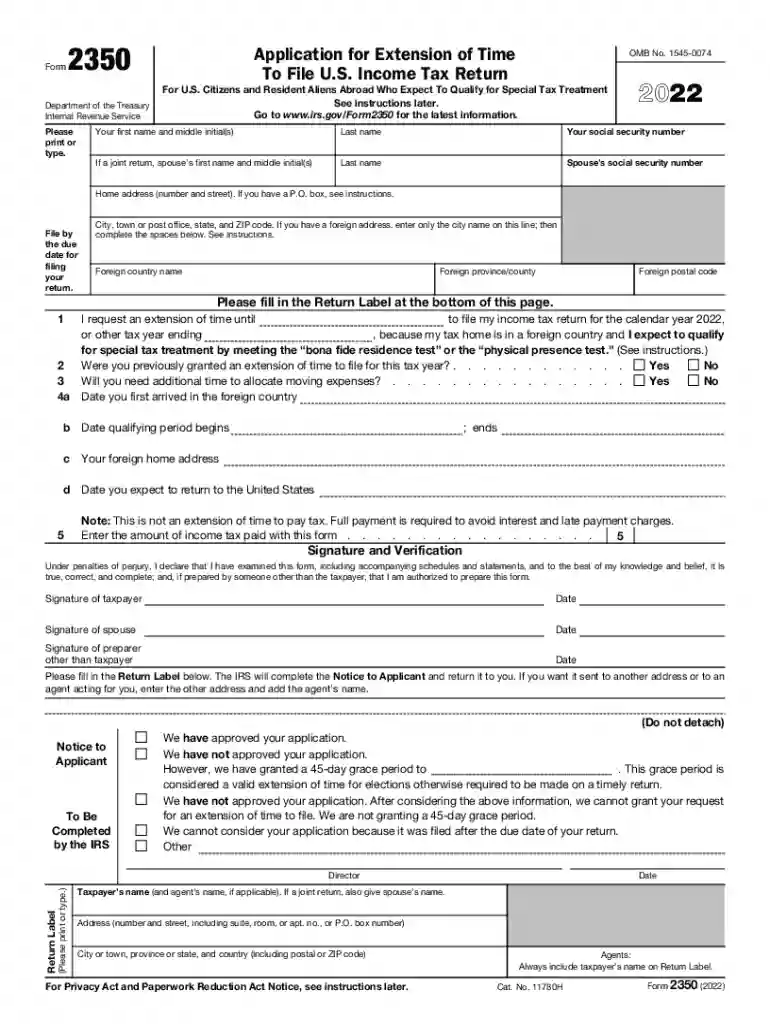
Form 2350, officially known as the "Application for Extension of Time To File U.S. Income Tax Return," is specifically designed for U.S. citizens and resident aliens living abroad. This form is essential for those who expect to meet certain qualifications for special tax treatment, given their international residency status. It allows for an extension of time to file individual income tax returns, without granting an extension for tax payment.
Essential Purpose
- Extension for Filing: Form 2350 provides additional time for qualified individuals to organize and submit their tax documents, ensuring they meet necessary residency or physical presence requirements abroad.
- Exclusivity for Particular Individuals: The form is intended exclusively for those who qualify under specific expatriate criteria, aligning tax obligations with their unique living circumstances.
Key Considerations
- No Extension for Payment: Importantly, submitting Form 2350 does not extend the time to pay taxes due. Payments must still be sent by the original due date to avoid interest and penalties.
- Qualification Requirements: Eligibility involves qualifying for special tax provisions through compliance with residency or physical presence tests.
How to Use the 2022 Form 2350
The utilization of Form 2350 involves understanding its structure and required information.
Step-by-Step Use
- Determine Eligibility: Ensure that you meet the criteria for using Form 2350 based on your international residency and income conditions.
- Complete Personal Information: Fill out the required personal details, including your full name, address, and Social Security Number.
- Provide Reason for Extension: Clearly state the justification for requesting an extension, typically related to qualifying for certain international tax benefits.
- Submit Supporting Documentation: Attach relevant documents if needed to verify your residency or tax situation abroad.
Practical Scenarios
- Example 1: An expatriate needing time to establish residency abroad for tax purposes could utilize Form 2350 to align tax filing requirements with their international status.
- Example 2: A resident alien ensuring they meet physical presence testing conditions may apply for this extension to incorporate their overseas income and expenses.
Steps to Complete the 2022 Form 2350
Accurately completing Form 2350 necessitates a thorough understanding of its segments and respective instructions.
Core Sections
- Part I: Identification: Include personal details like your name, SSN, and overseas address.
- Part II: Taxpayer Requests: Describe your situation and explain why this extension aligns with your tax planning.
- Part III: Additional Details: If applicable, include explanations for any unique circumstances influencing your filing timeline.
Instructions
- Access the Form: Obtain Form 2350 through the IRS website or authorized tax software.
- Fill Out Required Fields: Complete all sections diligently, ensuring no errors in personal data or explanations.
- Review and Sign: Double-check for accuracy, then sign the form to confirm the validity of your application.
- Mail or Submit Electronically: Send the completed form either via mail or through electronic submission platforms, as specified by IRS guidelines.
Detailed Review
- Importance of Accuracy: Mistakes in the application can lead to delays or denials, emphasizing the necessity for precise entries and thorough verification.
- Documentation Support: Provide any additional evidence required to substantiate your eligibility for the extension.
Target Audience
- Expatriates: Individuals living and working abroad seeking extensions to ensure alignment with U.S. tax obligations.
- Resident Aliens: Those meeting specific physical presence or residency criteria looking for extra time to consolidate their tax documents.
Frequent Use Cases
- Scenario 1: A professional relocated overseas for work requiring additional time to comply with both U.S. and foreign income tax requirements.
- Scenario 2: Retirees living abroad who must manage multiple sources of overseas income while maintaining U.S. tax responsibilities.
Primary Requirements
- Qualifying for Special Tax Benefits: Must expect to meet either the bona fide residence test or the physical presence test for claiming future tax benefits.
- Income Level Consideration: Specific income thresholds may apply to those seeking an extension.
Considerations
- Preparation for Tests: Assess current residency or presence status against IRS definitions to confirm eligibility.
- Future Projections: Anticipate future scenarios that might impact your tax status to justify the extension request.
Example Criteria
- Residency: Intention to live in a foreign country for an uninterrupted period that qualifies under the IRS standards.
- Work and Income: Employment conditions and foreign income influencing tax obligation deadlines.
IRS Guidelines
The guidelines provided by the IRS offer comprehensive directives on utilizing Form 2350 effectively.
Key Instructions
- Filing Channels: Use authorized e-filing platforms or mail to submit your application, ensuring secure delivery verified by uploading or postal proof.
- Timing: Adhere to stipulated deadlines, particularly for filing and payment obligations, to avoid financial penalties.
Enhancements
- Official Resources: Consult IRS publications and resources for expanded understanding and clarification on form use.
- Customer Support: Leverage IRS support channels if discrepancies or questions arise during the filing process.
Penalties for Non-Compliance
Failure to adhere to Form 2350 guidelines or meet subsequent tax obligations can lead to several penalties.
Consequences
- Interest on Late Payments: Interest accumulates on any unpaid tax amounts from the original due date.
- Penalties for Errors: Submitting false information or filing incorrectly may result in penalization under IRS regulations.
Mitigation
- Proactive Measures: Ensure accurate information and timely submission by planning filing activities ahead of deadlines.
- Communication with IRS: Stay informed on exceptional circumstances that might warrant penalty abatement or relief.
Filing Deadlines / Important Dates
Awareness of critical deadlines associated with Form 2350 ensures timely application and conformity to the U.S. tax calendar.
Key Dates
- Regular Tax Deadline: Historically, federal tax returns must be filed by April 15.
- Extension Deadlines: Specific extensions might offer additional months beyond the original filing date; exact timelines depend on individual circumstances.
Planning
- Annual Review: Each tax year, reassess your status and requirements for using Form 2350 to ensure compliance.
- Documentation Timeline: Schedule periodic check-ins to accumulate necessary documentation, reducing last-minute pressures.