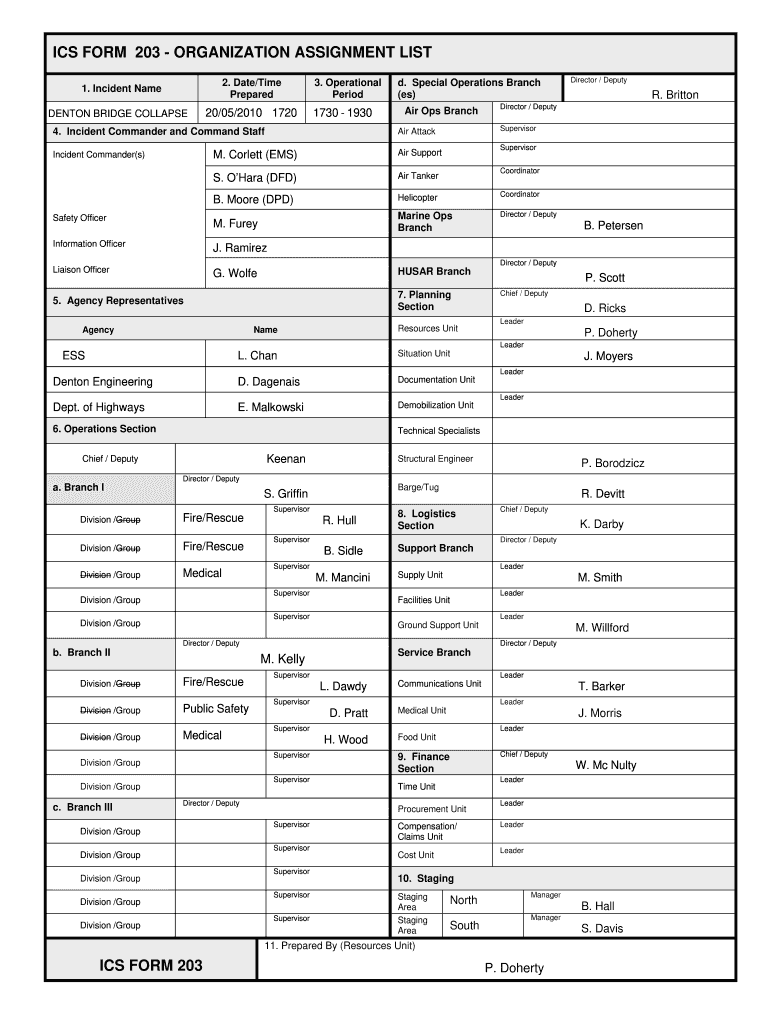







Definition and Meaning of ICS 203 Sample
The ICS 203 sample is a critical incident management form used within the framework of the Incident Command System (ICS). This document details the organization assignment list for ongoing incidents, providing a structured overview of the roles and responsibilities of the incident management team. It serves to clarify the command structure, specify key personnel, and outline their operational duties, ensuring efficient coordination during emergency situations.
The ICS 203 form typically includes essential information such as:
- Incident Name: Identifies the specific incident being managed.
- Operational Period: Designates the time frame during which the assignments are in effect.
- Incident Commander: Lists the leader responsible for overseeing the entire incident response.
- Staff Positions: Details various roles, such as section chiefs and agency representatives, that play vital parts in the incident management structure.
Understanding the ICS 203 sample is especially important for emergency responders, as it enables clear roles, minimizes confusion, and enhances cooperation among different entities involved in incident management.
Important Terms Related to the ICS 203 Sample
Familiarity with key terms associated with the ICS 203 form is essential for effective usage. Here are several important terms to understand:
- Incident Command System (ICS): A standardized management approach for handling emergencies that allows for a coordinated response by multiple agencies.
- Operational Period: The specified timeframe for which the current operational plan is applicable, typically covering a 24-hour cycle.
- Incident Action Plan (IAP): A plan containing the objectives, strategies, and specific actions for managing the incident during a designated operational period.
- Command Staff: Individuals that assist the Incident Commander and include roles such as Public Information Officer, Safety Officer, and Liaison Officer.
- Unified Command: A structure that allows various agencies and organizations to work together without losing their authority.
By understanding these terms, individuals and organizations can navigate the ICS framework effectively, ensuring a swift and strategic response during incidents.
Steps to Complete the ICS 203 Sample
Completing the ICS 203 sample requires attention to detail and an understanding of the incident's organizational structure. The following steps outline the process for filling out this form accurately:
- Identify Key Information: Begin by adding the incident name, date, and operational period to the form.
- Assign Roles: List the individuals responsible for specific roles within the incident command structure. Include their positions, contact information, and agency affiliations.
- Detail Responsibilities: Clearly define the responsibilities for each position listed. This includes outlining tasks and objectives that each member will focus on during the operational period.
- Review for Accuracy: Check all entries for accuracy and completeness. Ensure that all roles are filled and that the information reflects the current status of the incident response.
- Distribute the Form: Once completed, distribute the ICS 203 to all relevant parties, ensuring everyone involved is informed of their duties and reporting structure.
Utilizing this systematic approach aids in the effective management of incidents, thereby enhancing overall response effectiveness.
How to Use the ICS 203 Sample
The ICS 203 sample can be utilized in various emergency management scenarios to streamline response efforts. Here's how to effectively use this form:
- In Initial Response Phases: At the onset of an incident, the ICS 203 sample becomes a tool for emergency responders to quickly organize their response teams and clarify roles.
- In Coordination with Other Agencies: The ICS 203 form facilitates communication between different agencies by outlining specific command structures and responsibilities, thus enhancing multi-agency collaboration.
- Updating Operations: The ICS 203 should be reviewed and updated regularly throughout the incident. As personnel change or new information becomes available, the form should reflect these adjustments to maintain an accurate organizational chart.
- Training and Drills: Use the ICS 203 sample in training scenarios or drills to familiarize emergency personnel with the ICS structure, reinforcing roles and responsibilities.
By actively incorporating the ICS 203 form into incident management practices, agencies can ensure a more organized and efficient response to emergency situations.
Examples of Using the ICS 203 Sample
Practical applications of the ICS 203 sample demonstrate its utility across various incidents. Here are a few scenarios:
- Natural Disasters: During a hurricane response, the local emergency management agency can employ the ICS 203 sample to designate key personnel, such as the Incident Commander and branch officers overseeing shelter operations and resource coordination.
- Public Health Emergencies: In a pandemic, public health officials use the ICS 203 to structure their response teams, assigning roles like testing site managers and contact tracers, which clarifies the chain of command for effective resource distribution and communication.
- Fire Response: In wildland fire management, incident commanders use the ICS 203 to outline roles, including operations and logistics sections, ensuring frontline teams have clear direction and support resources.
These examples illustrate the ICS 203 form's versatility in various emergency situations, enhancing cooperation and clarity among all responders.
Who Typically Uses the ICS 203 Sample
The ICS 203 sample is primarily used by individuals and organizations involved in emergency management. Key users include:
- Incident Commanders: Responsible for overseeing the overall incident response and directing resources effectively.
- Emergency Management Agencies: Local, state, and federal agencies involved in disaster response use the ICS 203 to align their efforts during crises.
- Fire and Rescue Services: Personnel within fire departments utilize the form to coordinate response efforts to fires and rescue missions.
- Public Health Officials: During health crises, public health departments leverage the structure provided by the ICS 203 to organize their teams effectively.
- Non-Governmental Organizations (NGOs): Agencies providing support during incidents, such as the American Red Cross, use the form to clarify roles during response and recovery operations.
These individuals and entities rely on the ICS 203 sample to facilitate effective communication, streamline organizational structure, and ensure comprehensive incident management.