






Definition and Meaning of the Arkansas Affidavit of Reconstruction
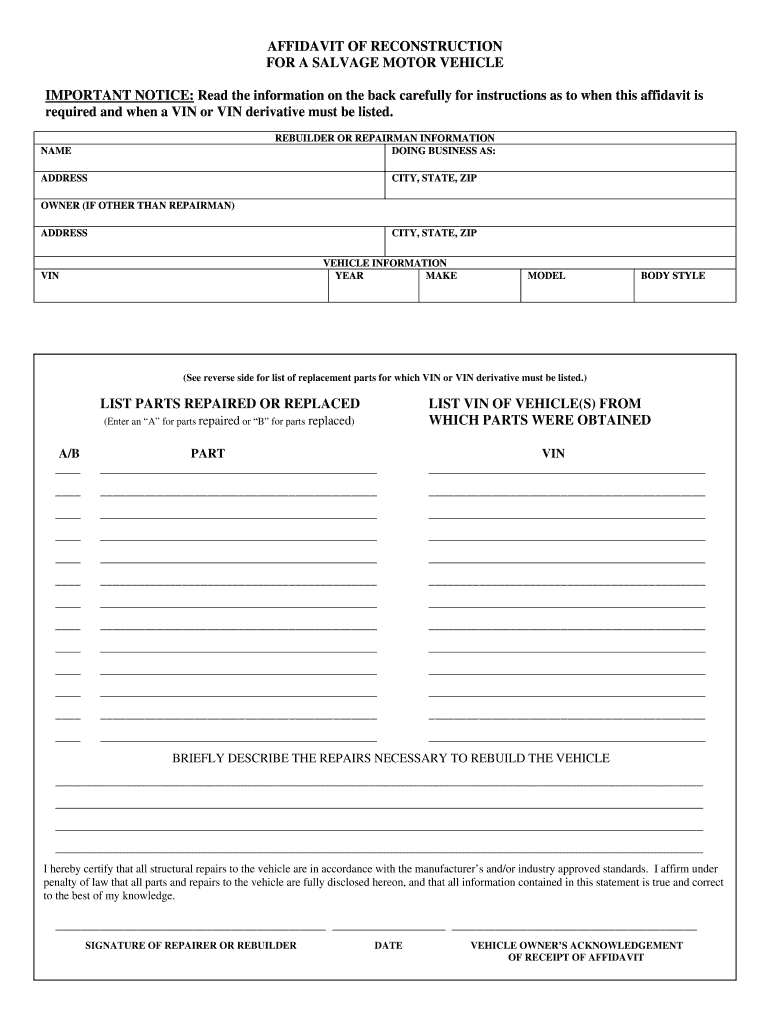
The Arkansas Affidavit of Reconstruction is a legal document required for the reconstruction of salvage motor vehicles in the state of Arkansas. This affidavit serves to confirm that a vehicle, which has previously been declared a total loss or salvage, has undergone necessary repairs and has been restored to a safe operational condition. The form provides a detailed account of the repairs performed, the parts that were replaced or repaired, and the rebuilder's information, which must be provided to obtain a rebuilt title.
This document is essential for vehicle owners looking to re-register their vehicles after substantial repairs, as it formalizes the acknowledgment of restoration. Vehicles without this affidavit cannot be issued a 'REBUILT' title, which is crucial for legally operating the vehicle on public roads. The affidavit is typically submitted to the Arkansas Department of Finance and Administration (DFA) once all required repairs have been completed.
Key Elements of the Arkansas Affidavit of Reconstruction
The Arkansas Affidavit of Reconstruction consists of several important sections, each designed to gather specific information related to the vehicle and the repair process. These elements include:
- Rebuilder's Information: This section requires details about the individual or business that rebuilt the vehicle, ensuring they are qualified to perform such work.
- Vehicle Details: Information such as the make, model, year, Vehicle Identification Number (VIN), and current condition must be accurately documented.
- Parts Repaired or Replaced: A comprehensive list must be provided, detailing any parts that were fixed or changed during the reconstruction process.
- Certifications: This may include required certifications from the rebuilder, indicating that all repairs were made in accordance with state regulations and safety standards.
- Signatures: Both the rebuilder and the vehicle owner must sign the affidavit to validate its contents and affirm their agreement.
These elements work together to create a thorough record documenting compliance with state laws and safety standards, paving the way for the issuance of a rebuilt title.
Steps to Complete the Arkansas Affidavit of Reconstruction
Completing the Arkansas Affidavit of Reconstruction involves a series of important steps. Each step must be undertaken with care to ensure that the document is filled out correctly and submitted appropriately:
-
Gather Required Information: Collect all necessary documentation, including previous salvage title details and any repair invoices.
-
Fill Out the Form: Accurately enter details about the vehicle, including the VIN, make, model, and year. Additionally, provide information about the rebuilder, including their business name and contact information.
-
Document Repairs: Clearly list all parts repaired or replaced during the reconstruction, including those that were sourced either new or used.
-
Obtain Required Signatures: Ensure that both the rebuilder and the vehicle owner sign the affidavit to authenticate it.
-
Submit the Affidavit: Submit the completed affidavit to the Arkansas Department of Finance and Administration, along with any associated fees and documentation requested.
Successful completion of these steps will facilitate the collection of a 'REBUILT' title, enabling legal road use of the reconstructed vehicle.
Legal Use of the Arkansas Affidavit of Reconstruction
The Arkansas Affidavit of Reconstruction is a legal requirement for individuals looking to have their salvage vehicles deemed safe and operational. It goes hand-in-hand with state laws governing the registration and titling process of rebuilt vehicles.
Failure to comply with these regulations can result in severe legal repercussions, including fines and penalties for operating an unregistered vehicle. Additionally, the absence of the affidavit might bar the owner from obtaining necessary insurance for the vehicle, limiting its usability.
Understanding the legal implications of this affidavit reinforces the importance of adhering to Arkansas regulations when reconstructing salvage vehicles and ensures that vehicle owners can legally operate their vehicles on public roads.
Important Terms Related to the Arkansas Affidavit of Reconstruction
Several terms are frequently associated with the Arkansas Affidavit of Reconstruction, essential for understanding the context and processes involved:
- Salvage Title: A title issued for vehicles that have been declared a total loss by an insurance company.
- Rebuilt Title: The designation given to a vehicle that has been repaired and certified as roadworthy after being previously labeled as salvage.
- Rebuilder: An individual or business authorized to repair salvage vehicles, often requiring state licensing or certification to operate legally.
Familiarity with these terms is crucial for anyone involved in the re-registration of a rebuilt vehicle, ensuring effective communication and adherence to legal standards.
Who Typically Uses the Arkansas Affidavit of Reconstruction?
The Arkansas Affidavit of Reconstruction is primarily utilized by vehicle owners and rebuilders involved in the restoration of salvage motor vehicles. Key users include:
- Private Vehicle Owners: Individuals who have purchased salvage vehicles and wish to restore them for personal use.
- Automotive Repair Businesses: Professional rebuilders specializing in reconstructing salvage vehicles, ensuring compliance with state regulations.
- Insurance Companies: Insurers may need the affidavit to process claims and determine the vehicle’s title and registration status.
Understanding the typical users of this affidavit helps to clarify the context in which it is required and the broader implications for vehicle ownership and repair in Arkansas.