





Definition and Meaning
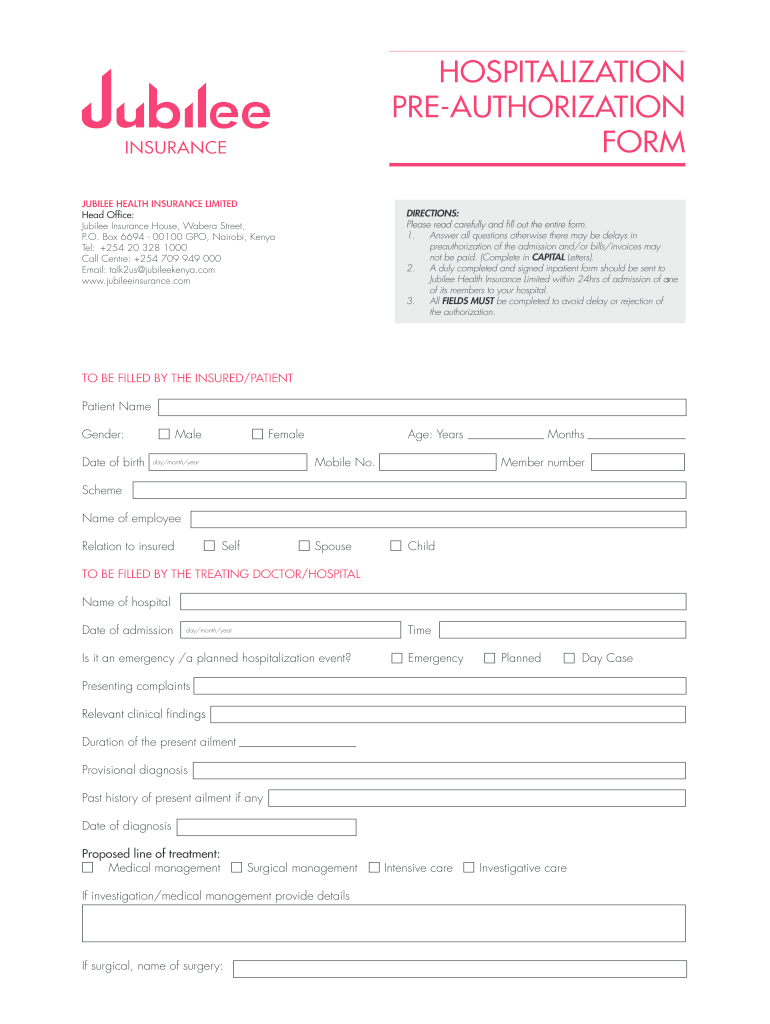
The Hospitalization Pre-Authorization Form is a crucial document used primarily by patients and healthcare providers to secure preliminary approval for hospital admissions from insurance companies. This form ensures that the medical treatment planned aligns with the patient's insurance policy, facilitating smoother financial transactions later. It outlines vital details such as the patient's personal information, the reason for hospitalization, and specific treatment procedures. In essence, this form acts as a preemptive strategy to avoid unexpected medical expenses, verifying that the proposed medical services qualify for coverage under the patient's insurance policy.
How to Obtain the Hospitalization Pre-Authorization Form
Healthcare providers and patients can acquire the Hospitalization Pre-Authorization Form through various channels. Typically, insurance companies provide these forms directly on their websites, accessible only to their policyholders. A patient can log into their insurance portal, where they can download and print the form as needed. Alternatively, healthcare providers often have these forms readily available in their administrative offices, streamlining the process for incoming patients. Moreover, some health systems and insurance agencies offer the option to request the form via email or fax, ensuring accessibility for those without internet access.
Steps to Complete the Hospitalization Pre-Authorization Form
-
Gather Required Information: Before starting, collect essential data, including personal information, insurance policy details, and anticipated medical procedures.
-
Complete Patient Information: Fill out sections detailing the patient's full name, address, insurance membership number, and contact details.
-
Specify Healthcare Provider Details: Include the name, address, and contact information of the healthcare provider recommending the hospitalization.
-
Detail Medical Necessity: Describe the purpose of hospitalization, outlining symptoms, diagnosis, and proposed treatments or procedures.
-
Add Insurance Information: Provide complete insurance details, including policy number and insurer's contact information.
-
Review and Sign: Double-check for accuracy before signing. Often, both the patient and the healthcare provider must provide signatures.
-
Submit the Form: Send the completed form via the preferred method—electronically through the insurer's portal, by mail, or in-person submission to ensure timely processing.
Key Elements of the Hospitalization Pre-Authorization Form
- Patient Identification Information: Includes the patient's full name, policy number, and contact details.
- Healthcare Provider Information: Details about the recommending or treating physician/hospital.
- Scheduled Procedures Description: Comprehensive breakdown of the planned treatments and their medical justifications.
- Proposed Dates of Admission: Specific dates when hospitalization and procedures will occur.
- Signature and Consent Lines: Areas for acknowledgment by both the patient and healthcare provider.
Who Typically Uses the Hospitalization Pre-Authorization Form
The form is primarily utilized by health insurance policyholders who anticipate upcoming non-emergency hospital admissions. It is typically prepared by healthcare professionals, such as doctors or administrative staff at hospitals and clinics. Additionally, insurance company representatives involved in claims and policy verification processes frequently interact with this form to verify coverage.


Legal Use of the Hospitalization Pre-Authorization Form
The form ensures legal compliance and financial transparency between patients, healthcare providers, and insurance companies. By obtaining prior authorization, stakeholders confirm that the planned medical services meet the necessary criteria for insurance coverage. This process mitigates the risk of claim denials due to lack of coverage, and it adheres to the regulatory requirements established by U.S. health insurance laws, including those mandated by the Affordable Care Act.
State-Specific Rules for the Hospitalization Pre-Authorization Form
While the general purpose and content of the form remain consistent, certain states may impose additional requirements or variations. For instance, some states may require additional patient consent or additional disclosures related to specific treatments. Healthcare providers must be aware of these variations to ensure compliance. Insurance companies often update policyholders with pertinent changes to local legislation, providing necessary guidance for completing the form accurately according to state-specific mandates.
Required Documents for Submission
- Completed Hospitalization Pre-Authorization Form: Fully filled detailing all relevant patient and procedure information.
- Copies of Insurance Card: Front and back copies to verify insurance coverage details.
- Doctor's Notes or Referral Letter: Documentation that supports the medical necessity for the planned treatments.
- Additional Medical Records, if Required: Depending on the situation, additional documents such as previous test results or imaging may be required to substantiate the need for hospitalization.