






Definition and Purpose of a Bank Verification Letter
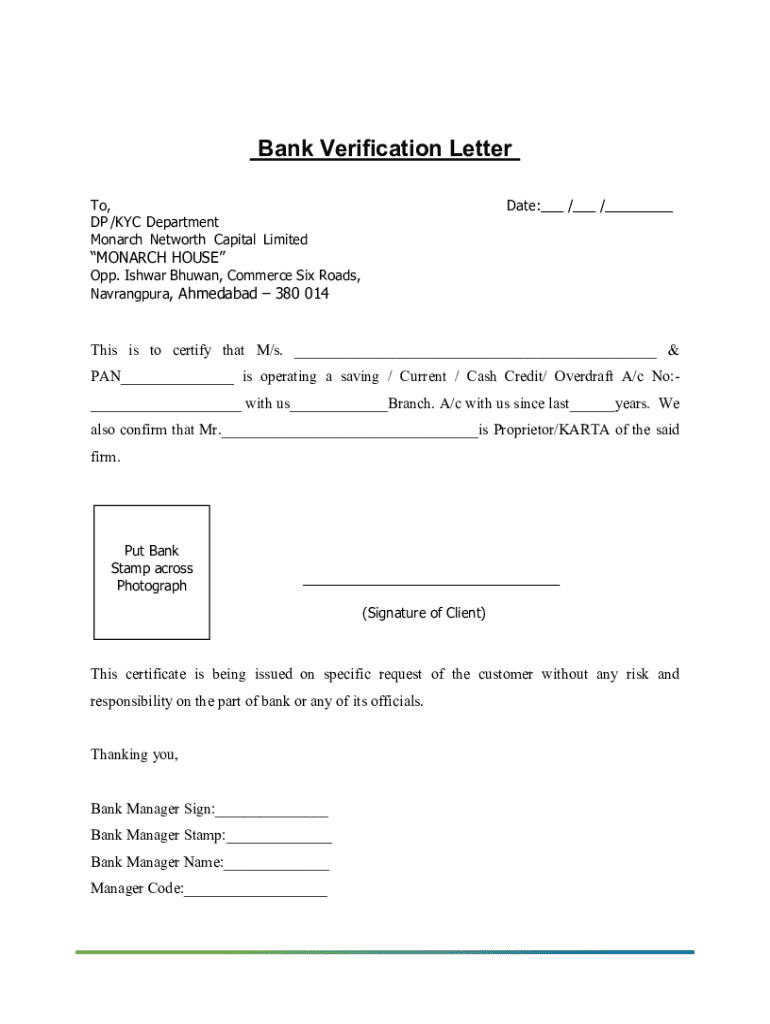
A Bank Verification Letter is a formal document issued by a bank that verifies the existence of an account held by an individual or entity. This letter confirms the account holder's financial standing and generally includes details like the account number, the account type, and the name of the account holder. It may also attest to the account holder's financial stability or creditworthiness. These letters are often employed in scenarios where individuals must substantiate their financial viability or history, such as leasing a property, applying for a loan, or engaging in high-value transactions.
Features of a Bank Verification Letter
- Account Details: Typically includes the account holder's name, account number, account type, and date of account opening.
- Financial Endorsement: May indicate the balance or average balance over a specified period to confirm stability.
- Issued by Bank: Officially issued on bank letterhead, providing authenticity and credibility.
Practical Examples
- Loan Applications: Used to assure lenders of the applicant's financial credibility.
- Real Estate Transactions: Helpful in proving financial resources when purchasing or leasing property.
- Corporate Purposes: For businesses, helps in verifying company revenue to potential partners or investors.
How to Utilize the Bank Verification Letter
Using a Bank Verification Letter appropriately can play a critical role in various financial transactions. Individuals and businesses commonly utilize these letters to provide evidence of financial health.
Procedures for Effective Utilization
- Request from Your Bank: Contact your bank and provide the necessary information for them to prepare the letter.
- Evaluate Requirements: Understand what specific details are required based on the requesting party's demands (e.g., balance statements, contact information).
- Submit to Recipient: Deliver the letter to the requesting entity by their preferred method, whether by mail, email, or in person.
Real-World Application
- Visa Applications: Used as proof of financial support.
- Negotiating Terms: In business, used to negotiate better terms by verifying one's financial status.
How to Obtain a Bank Verification Letter
The process of obtaining a Bank Verification Letter is typically straightforward but varies by bank. Here's how you can secure one for your needs.
Steps to Secure a Letter
- Contact Your Bank: Reach out to customer service or your bank's relationship manager to initiate the request.
- Provide Necessary Information: Supply required details such as the account number, validation period, and any specific financial information the letter should include.
- Specify Delivery Method: Decide how you would like to receive the letter—via mail or pickup at a branch.
- Authorization and Fees: You may be required to provide authorization for the release of financial information and pay a fee.
Timing Considerations
- Processing Time: Allow a few days for processing, as the time may vary based on bank protocols and workload.
- Urgent Requests: Some banks may offer expedited services for urgent requests, often at an additional cost.
Steps to Complete the Bank Verification Letter
Comprehending the process of completing a Bank Verification Letter is crucial to ensure its accuracy and reliability.
Instructions for Completion
- Review Information: Carefully check the letter details to ensure they match your bank records precisely.
- Confirm Financial Figures: Verify that the financial figures are up-to-date and accurate.
- Confirm Bank Details: Ensure that all bank personnel involved in the certification are accurately documented, including their titles and contact information.
Advice for Businesses
- Dual Signatories: For corporate accounts, consider having signatures from more than one bank official for added credibility.
Importance of a Bank Verification Letter
Bank Verification Letters serve several purposes, making them a vital tool in various professional and personal transactions.
Key Reasons for Use
- Trust Building: Establishes trust between parties in uncertain financial transactions.
- Regulatory Compliance: Helps in meeting compliance requirements for financial disclosures.
Scenarios Benefiting from the Letter
- Large Purchases: Gives sellers confidence in the buyer’s purchasing power.
- International Transactions: Ensures foreign parties of credibility.
Typical Users of the Bank Verification Letter
The Bank Verification Letter is utilized by a range of individuals and organizations for diverse reasons.
Common Users
- Individual Account Holders: For personal financial assessments and transactions.
- Corporations and Businesses: To verify company accounts in financial dealings.
- Government and Regulatory Agencies: To validate financial stability during assessments or audits.

Use Cases
- Startups: New businesses might use these letters to verify funds for initial investment rounds.
- Educational Institutions: Verifying financial background of students applying for financial aid abroad.
Legal Implications and Use of the Bank Verification Letter
Understanding the legal framework surrounding a Bank Verification Letter ensures its proper application and compliance with applicable laws.
Legal Framework
- ESIGN Act Compliance: Letters may be digitally signed, making them legally binding if done in accordance with the ESIGN Act.
- State Regulations: Different states might have specific requirements regarding the use and acceptance of such letters.
Legal Scenarios
- Contractual Obligations: Used to meet contract requirements for financial health confirmation.
- Dispute Resolution: Can serve as legal evidence in financial disputes.
Key Elements to Include in the Bank Verification Letter
In crafting or reviewing a Bank Verification Letter, certain critical elements must be included to ensure its validity and usefulness.
Essential Components
- Specific Account Information: Details about the account including type, number, and opening date.
- Current Financial Status: Clear statement of financial status or average balance over a period.
- Bank Authorization Details: Information regarding bank officials who endorse and sign the letter.
Considerations for Detailed Documentation
- Additional Financial Data: Include further financial metrics if requested by the recipient to meet specific needs.
- Authorized Signatories: Use bank officials’ signatures to authorize and validate claims.