



Definition and Meaning
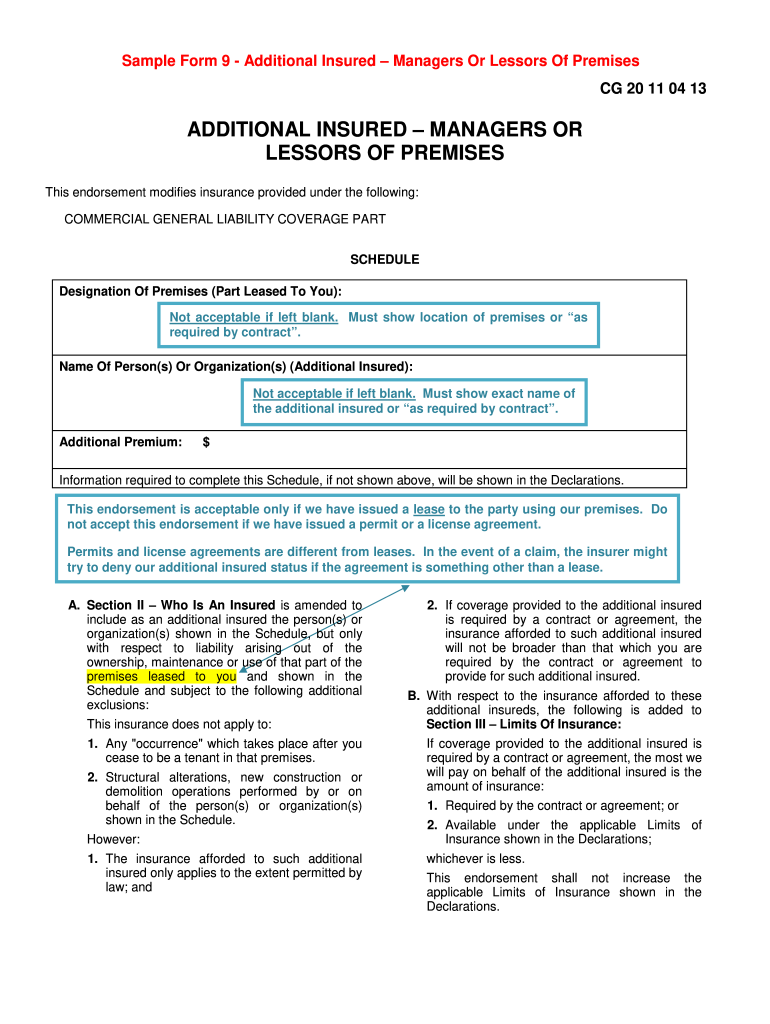
The "Additional Insured Managers Or Lessors Of Premises" endorsement is a specific insurance policy amendment that provides coverage to additional parties who manage or lease premises. This inclusion is crucial for situations where liability claims arise from incidents occurring on a property managed or leased by an individual or business that is not the primary policyholder. By naming managers or lessors as additional insureds, the endorsement ensures these parties are protected under the existing policy, mitigating their risk exposure in various scenarios.
Coverage Explanation
- Primary Policyholder: The initial holder of the insurance policy, typically the owner of the property.
- Additional Insured: Managers or lessors added to the policy to share in its coverage.
- Common Situations: Protects against claims resulting from accidents or damages occurring on the leased property.
How to Use the Additional Insured Managers Or Lessors Of Premises
Incorporating this endorsement into an insurance policy requires careful consideration of the parties involved and the specific terms. Typically, it is utilized in commercial real estate arrangements where landlords or property management companies want to ensure that they, or their representatives, are covered under the tenant’s insurance.
Steps to Use the Endorsement
- Identify Relevant Parties: Determine which managers or lessors should be included as additional insureds.
- Communicate with Insurers: Engage with the primary insurer to establish the terms and conditions under which the endorsement will be applied.
- Policy Amendment: Jointly amend the insurance policy to formally include the additional insureds.
Steps to Complete the Additional Insured Managers Or Lessors of Premises
Filling out the necessary documentation to implement this endorsement involves precise steps to ensure comprehensive coverage and legal compliance.
Completing the Form
- Accurate Information: Provide correct details for the managers or lessors to be named.
- Outline Coverage: Clearly define the scope and limitations of coverage within the policy.
- Review and Sign: Ensure all parties review the terms and provide signatures to finalize.
Key Elements of the Form
Understanding the critical components that must be included in the "Additional Insured Managers Or Lessors Of Premises" form is crucial for accurately executing the endorsement.
Essential Fields
- Party Names: Full legal names of both primary policyholder and additional insured.
- Policy Details: Specifics of the insurance policy, including unique identifiers.
- Scope of Coverage: Detailed description of the types of liabilities and scenarios covered.
Why Should You Include Additional Insured Managers or Lessors of Premises
Including additional insureds presents significant benefits, particularly in complex property arrangements, by extending coverage and reducing potential liability.
Benefits
- Risk Mitigation: Reduces financial exposure for named additional insureds.
- Peace of Mind: Provides assurance to participating parties against unforeseen incidents.
- Legal Compliance: Ensures adherence to legal stipulations and contractual obligations.
Who Typically Uses the Additional Insured Managers or Lessors of Premises
This endorsement is commonly applied in commercial real estate, property management, and lease agreements, where multiple parties have vested interests in a property.

Common Users
- Landlords: To include property managers as insured parties.
- Tenants: To add leasing agents or lessors.
- Property Managers: For legal protection in managing multiple properties.

Legal Use of the Additional Insured Managers or Lessors of Premises
The endorsement must be legally valid and comply with state-specific insurance laws and regulations.
Compliance Factors
- Contractual Agreements: Must align with pre-existing lease or management contracts.
- State Regulations: Varying state laws may influence how the endorsement is enacted and enforced.
State-Specific Rules for the Additional Insured Managers or Lessors of Premises
Different states have unique regulations regarding insurance endorsements, affecting how additional insureds are integrated into policies.
Variations by State
- Regulatory Compliance: States may require specific language or limitations within the endorsement.
- Insurance Standards: The level of coverage required can vary widely based on jurisdiction.
Examples of Using the Additional Insured Managers or Lessors of Premises
Real-world applications of this endorsement highlight its practicality in diverse scenarios involving property management and leasing.
Practical Cases
- Commercial Properties: Used by businesses renting office spaces to protect both themselves and landlords.
- Retail Leases: Applied in shopping mall agreements to cover store managers.
- Multi-Unit Residential: Ensures building managers are insured under tenant policies.