






Definition & Meaning
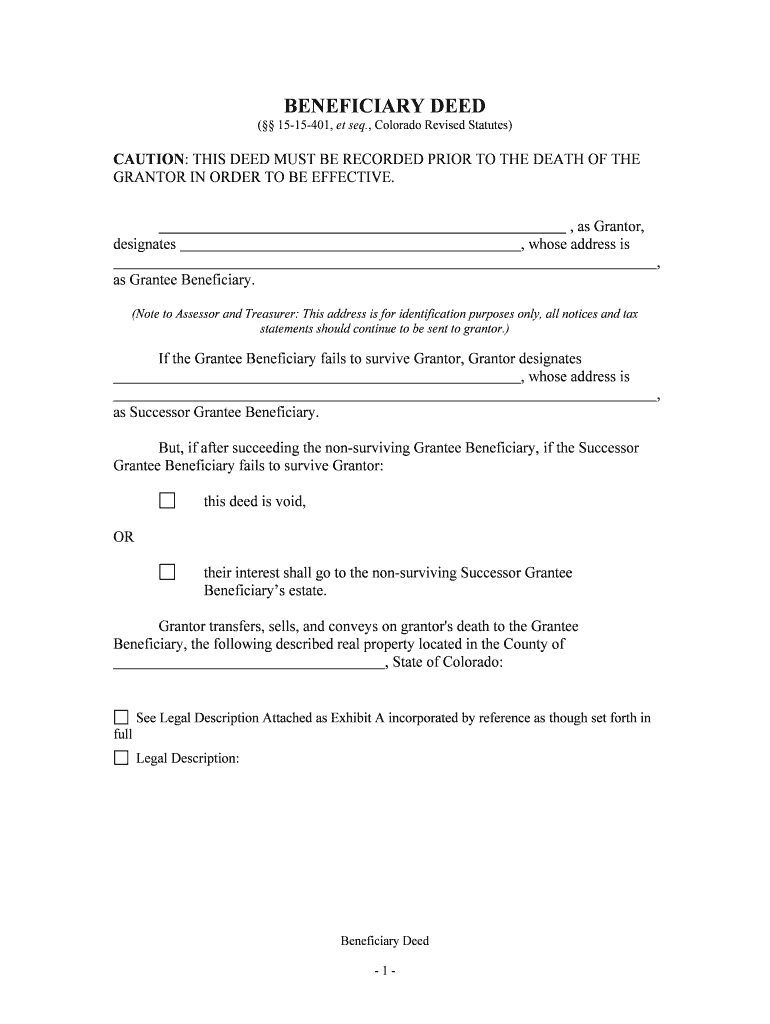
A Colorado Beneficiary Deed, also known as a "Transfer on Death Deed," is a legal instrument that allows property owners in Colorado to designate beneficiaries who will inherit real estate upon the owner's death. Unlike a traditional will, this deed enables a direct transfer of property, bypassing the probate process. This ensures a smoother and quicker transition of assets to the designated beneficiaries. It is crucial to understand that the deed must be recorded before the grantor's death to be effective, as required by the Colorado Revised Statutes.
Key Elements of the Colorado Beneficiary Deed
The Colorado Beneficiary Deed must include specific elements to be valid. These include:
- Grantor Information: Full name and address of the property owner(s) transferring the property.
- Beneficiary Designation: The name(s) of the beneficiary(ies) who will receive the property upon the grantor’s death.
- Legal Description: Precise legal description of the property being transferred.
- Signature Requirements: The deed must be signed by the grantor and acknowledged before a notary public.
- Recording: The deed has to be recorded in the county where the property is located to be effective.
These elements ensure the deed's enforceability, safeguarding both the grantor's intentions and the beneficiary's rights.
How to Use the Colorado Beneficiary Deed
To use a Colorado Beneficiary Deed, the property owner should follow these steps:
- Prepare the Deed: Gather necessary information, including the legal description of the property and beneficiary details.
- Consult with a Professional: While not mandatory, consulting with an attorney can help ensure the deed meets all legal requirements.
- Complete the Deed: Fill out all relevant sections, ensuring accuracy and completeness.
- Notarize: Sign the deed in the presence of a notary.
- Record the Deed: File it with the county clerk and recorder's office in the county where the property is located.
Proper execution and recording are vital to ensure the deed is recognized legally.
State-Specific Rules for the Colorado Beneficiary Deed
Colorado law has unique stipulations concerning beneficiary deeds:
- Revocation: Grantors can revoke the deed anytime during their lifetime by recording a revocation document.
- No Consideration Needed: Unlike other deeds, no monetary exchange or consideration is required.
- No Effect on Ownership During Lifetime: The grantor retains full control and ownership of the property until death.
Adhering to these rules ensures the smooth transfer of property and avoids potential legal disputes.
Steps to Complete the Colorado Beneficiary Deed
- Identify Property Details: Collect the property's full legal description and any relevant parcel numbers.
- Select Beneficiaries: Clearly state the beneficiary's full name and address. Multiple beneficiaries must be specified precisely.
- Draft the Deed: Use a legally accepted format for drafting the deed.
- Get the Deed Notarized: Ensure the grantor's signature is notarized to verify authenticity.
- Record the Deed: Submit the notarized deed to the corresponding county recorder for official documentation.
Completing these steps methodically ensures a legally binding transfer of real estate.
Legal Use of the Colorado Beneficiary Deed
This form of deed serves significant legal functions:
- Avoids Probate: Direct transfer of property without court involvement upon the grantor's death.
- Flexible Estate Planning: Allows changes or revocation of the deed until the grantor’s death.
- Privacy: Maintains the privacy of the property transfer, as probate records are public documents.
These legal advantages simplify estate management for both the grantor and beneficiaries.
Important Terms Related to Colorado Beneficiary Deed
Understanding key terms associated with the deed is crucial:
- Grantor: The property owner who executes the deed.
- Beneficiary: The individual(s) designated to receive the property upon the grantor’s death.
- Probate: Legal process of distributing a deceased person's estate, which the beneficiary deed aims to bypass.
- Revocation: The act of canceling the beneficiary designation via a recorded document.
These terms form the core framework of how the deed operates within estate planning.
Examples of Using the Colorado Beneficiary Deed
Real-world examples demonstrate the deed's application:
- Single Grantor to Multiple Beneficiaries: A single homeowner names several children as beneficiaries, ensuring equal property division.
- Spousal Transfers: Couples use the deed to ensure property passes to the surviving spouse directly, circumventing probate.
- Revocations: A grantor decides to change the designated beneficiary, recording a revocation and a new beneficiary deed to reflect updated wishes.
These scenarios underline the deed's versatility in estate planning.
Who Typically Uses the Colorado Beneficiary Deed
This deed is utilized primarily by:
- Homeowners: Individuals owning residential properties keen on efficient estate transitions.
- Real Estate Investors: Those holding investment properties wishing to secure asset transfer without probate complexities.
- Elderly Individuals: Seniors simplifying their estate plans to minimize future legal burdens on heirs.
By catering to diverse needs, the deed provides a robust tool for strategic estate planning.