Definition & Meaning
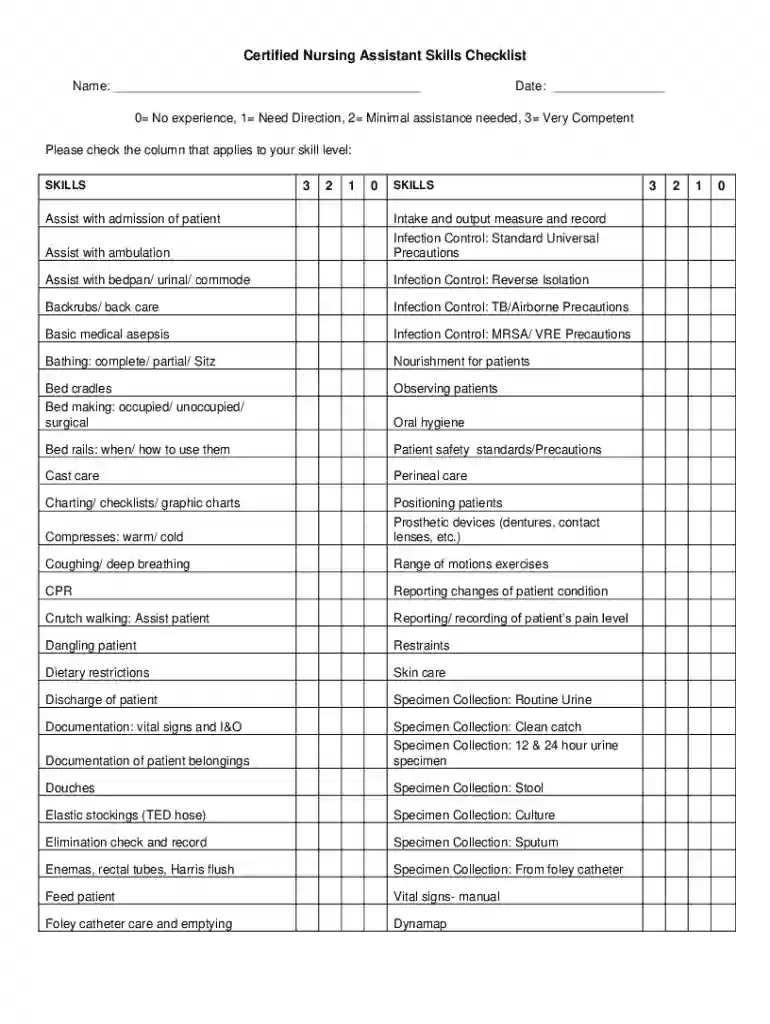
The Certified Nursing Assistant (CNA) Skills Checklist is a detailed form used to evaluate the competencies of a Certified Nursing Assistant. This checklist covers a broad array of skills that CNAs are expected to perform in their roles. It includes both technical skills and interpersonal abilities, reflecting the holistic nature of patient care. The checklist serves as a benchmark for ensuring that healthcare professionals maintain a high standard of practice and adhere to established healthcare protocols.
Key Elements of the Certified Nursing Assistant Skills Checklist
Several key elements are covered in the CNA Skills Checklist to ensure comprehensive evaluation of a nursing assistant's capabilities:
- Patient Care Skills: Includes tasks such as bathing, feeding, dressing, and mobility assistance.
- Safety and Infection Control: Evaluates understanding of proper hygiene practices and emergency protocols.
- Communication Abilities: Assesses effective interaction with patients, families, and healthcare teams.
- Documentation Proficiency: Involves accurate recording and reporting of patient information.
- Technical Skills: Includes familiarity with medical equipment and basic health monitoring.
How to Use the Certified Nursing Assistant Skills Checklist
Utilizing the CNA Skills Checklist involves several important steps to ensure accurate assessment:
- Preparation: Gather all necessary information about the nursing assistant's scope of practice and role requirements.
- Observation: Directly observe the CNA in their work environment to evaluate the practical application of their skills.
- Documentation: Record observations systematically on the checklist, noting both strengths and areas requiring improvement.
- Feedback: Provide constructive feedback to the CNA, emphasizing continuous improvement and professional development.
Steps to Complete the Certified Nursing Assistant Skills Checklist
Completing the CNA Skills Checklist requires a structured approach:
- Review the Checklist: Familiarize yourself with each skill area and criteria for assessment.
- Conduct Observations: Perform real-time evaluations in various clinical settings to capture authentic performance.
- Record Assessments: Use the checklist to mark proficiency levels for each skill, using a predefined rating system.
- Provide Supportive Feedback: Engage with the nursing assistant to discuss findings and agree on development plans.
- File the Checklist: Maintain records for future reference and continuous monitoring of competency levels.
State-Specific Rules for the Certified Nursing Assistant Skills Checklist
Various states may introduce unique elements or emphasize different aspects based on local regulations:
- Differing Compliance Standards: States might have specific rules regarding patient ratios or supervision requirements.
- Varying Scope of Practice: Some states allow CNAs to perform additional tasks like medication administration.
- Updated Legal Requirements: Regular updates may impact the checklist to align with evolving healthcare statutes.
Important Terms Related to Certified Nursing Assistant Skills Checklist
Familiarity with certain terms enhances the understanding and application of the checklist:
- Scope of Practice: Defines the procedures, actions, and processes that a CNA is legally permitted to perform.
- Proficiency Levels: Grading scale used to assess skill execution—from novice to expert.
- Patient-Centered Care: Healthcare approach focusing on individual patient needs and preferences.
Digital vs. Paper Version
With advancements in technology, CNAs may complete the checklist in digital format:
- Digital Advantages: Easier storage, retrieval, and sharing among educational institutions and healthcare facilities.
- Paper Format: Traditional method still prevalent in some areas; beneficial in facilities with limited electronic resources.
- Compatibility Considerations: Checklists in digital forms can be integrated with systems like DocHub for seamless modifications and annotations.