




01. Edit your form online
Type text, add images, blackout confidential details, add comments, highlights and more.

Type text, add images, blackout confidential details, add comments, highlights and more.

Draw your signature, type it, upload its image, or use your mobile device as a signature pad.

Send it via email, link, or fax. You can also download it, export it or print it out.
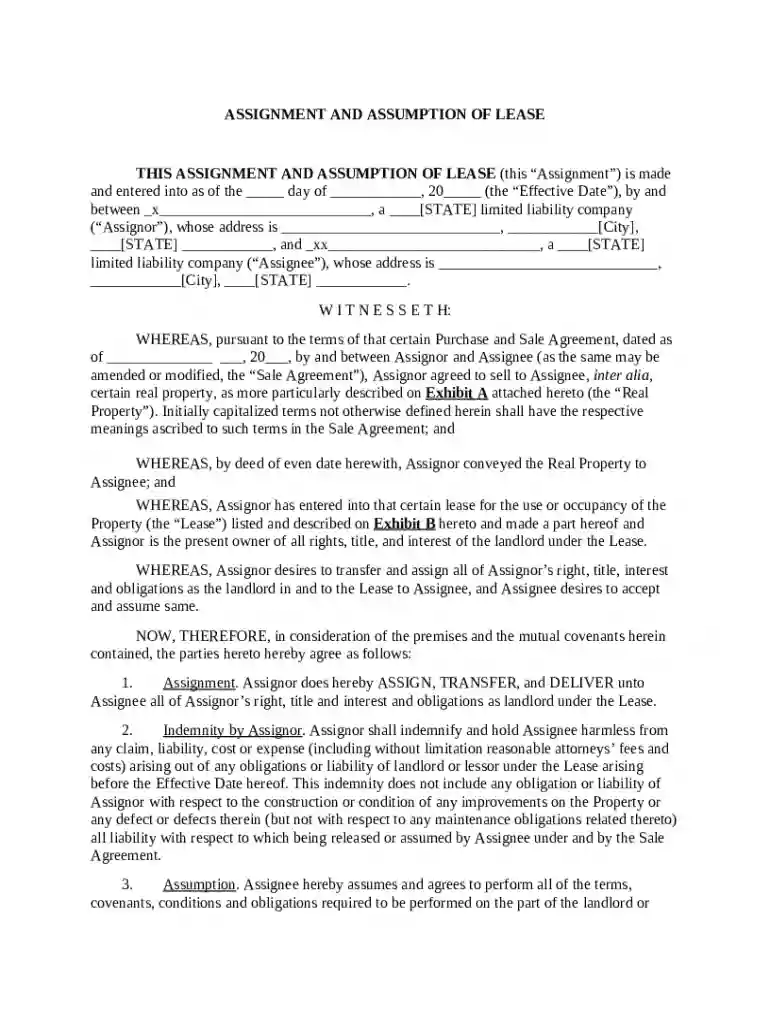
An assignment and assumption of lease is a legal document used in real estate to transfer lease rights and obligations from one party to another. This process involves "assigning" the existing lease to a new tenant, who assumes the role of the original lessee. The original tenant, known as the assignor, passes both the benefits and responsibilities of the lease agreement to the assignee, the new tenant. This document ensures the lease terms are legally binding for the new party and maintains continuity of the contract for the landlord.
The primary importance of this form lies in its ability to facilitate the smooth transition of lease obligations. This document allows tenants who must relocate or alter their business operations to exit a lease agreement legally, without breaking the contract. For landlords, it provides assurance that the lease continues with a new responsible party. The seamless transition can prevent property vacancies and ensure a steady rental income, a crucial factor in commercial leasing.
Real estate professionals, businesses undergoing mergers, acquisitions, or relocations, and individuals needing to move before lease expiration often use this form. It is also used by investors who sell properties with tenants in place and need to ensure lease obligations continue smoothly under new management. Ensuring the correct use of this form is vital for maintaining contractual rights and responsibilities between all involved parties.


This form is legally binding once executed and primarily used under real estate law. The legal standing requires satisfaction of all original lease terms regarding assignments, and compliance with statutory regulations. Each party must fully understand their rights and obligations. Professional legal advice is recommended to ensure that the agreement meets all legal standards and secures enforceability.
Consider a scenario where a business is sold, and the existing lease on the business premises needs to transfer to the new owner. The original business owner (assignor) signs an assignment and assumption agreement with the new business owner (assignee). Simultaneously, the landlord consents to this change, ensuring the seamless continuation of lease terms under the new ownership, preventing financial disruptions.
Laws governing the assignment and assumption of leases can vary across states, particularly concerning the necessity of landlord consent and statutory notice periods. For instance, some states might include a presumption of the landlord's consent if they do not respond within a certain timeframe after being notified of the assignment. Understanding and complying with these state-specific requirements is essential to ensure the validity of the lease transfer.
At DocHub, your data security is our priority. We follow HIPAA, SOC2, GDPR, and other standards, so you can work on your documents with confidence.


