







Definition & Meaning
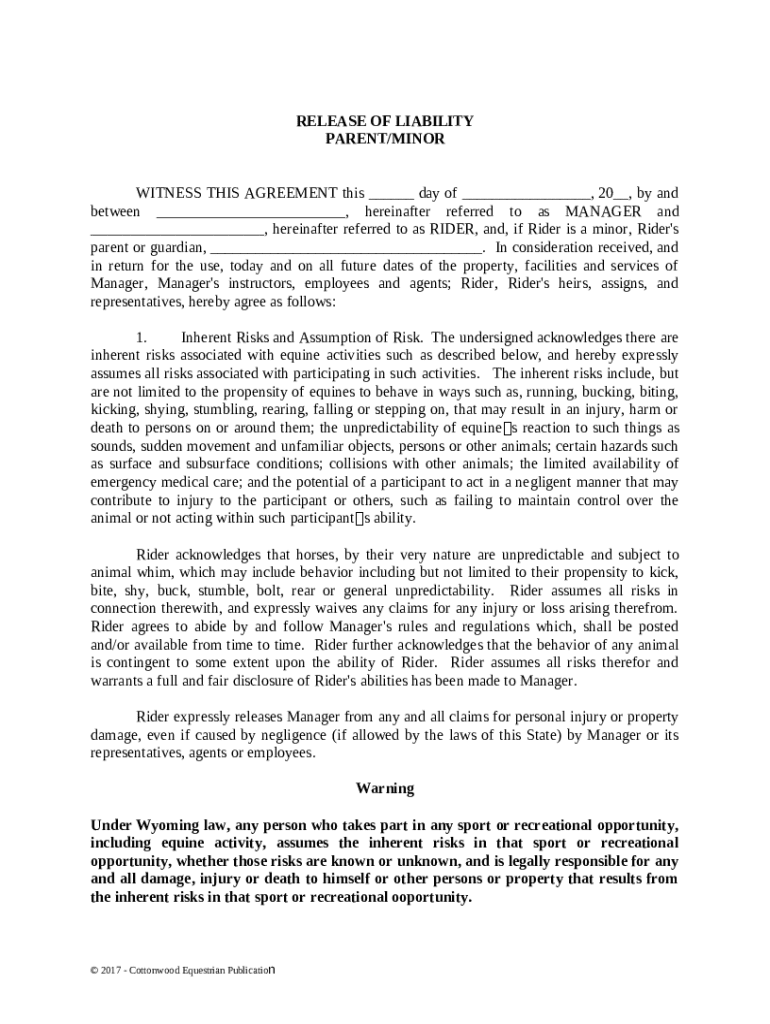
The "Release of Liability for Equestrian Activities" is a legal document used to protect equestrian facilities and instructors from potential lawsuits. It acknowledges the inherent risks involved in equestrian activities and ensures that participants are aware of these dangers. This document often requires the signature of participants or their guardians, confirming that they understand and accept the risks associated with horse riding and related activities.
Importance of Understanding the Document
- Risk Acknowledgment: The form ensures that participants recognize the risks involved in horse riding, which can include falls, injuries, or accidents.
- Legal Protection: By signing the release, participants agree not to hold the equestrian facility or instructors liable for injuries or damages incurred during activities.
- Informed Consent: It signifies that participants have been informed about the risks and have given their consent to proceed.
How to Use the Release of Liability for Equestrian Activities
The use of this form is essential for both participants and operators of equestrian activities. It serves as a formal agreement and is an integral part of risk management protocols.
Pre-Activity Requirement
- Documentation: Participants must fill out and sign the release before participating in any equestrian activities.
- Verification: Operators should verify that all information is correctly filled and signatures are obtained.
Ongoing Use
- Record Keeping: Keep completed forms on file for an appropriate duration, usually several years, depending on state laws.
- Regular Updates: If activities change or new risks are identified, update the form accordingly and obtain new signatures.
Steps to Complete the Release of Liability for Equestrian Activities
Completing this form involves several key steps to ensure that it is legally binding and comprehensive.
- Participant Information: Enter the name, address, and contact details of the participant.
- Guardian Details: For minors, include information and signature of a parent or guardian.
- Activity Description: Clearly outline the specific activities to which the release applies.
- Risk Acknowledgment: Include a detailed description of the potential risks involved.
- Signature: Ensure all required parties sign the document. Digital signatures are acceptable if permitted by the state.
Verification and Submission
- Witness Signatures: Depending on jurisdiction, a witness may need to sign the form to validate it.
- Submission: Submit the completed form to the equestrian activity provider or retain it according to standard procedure.
Key Elements of the Release of Liability for Equestrian Activities
A comprehensive release form must include several critical components to be effective.
Essential Elements
- Detailed Risk Information: Clearly stated risks specific to equestrian activities.
- Legally Binding Language: Use language that is understandable yet legally robust.
- Participant and Witness Signatures: Signatures must be present for the form to be valid.
Additional Considerations
- Medical Information: Optional fields for participants to disclose any medical conditions that could impact their safety.
- Emergency Contact Details: Include contact information for emergencies.
Legal Use of the Release of Liability for Equestrian Activities
Understanding how this document is used legally can provide further protection for both parties involved.
Compliance with State Laws
- State Variations: Familiarize with specific state regulations that might affect the enforceability of the release.
- Regular Reviews: Regularly review and update the form to comply with evolving legal standards.
Ensuring Binding Agreements
- Legal Consultation: Consult with legal professionals to ensure the document meets the necessary legal requirements.
- Enforceability: Ensure that the form is enforceable in the intended jurisdiction by including relevant legal clauses.
State-Specific Rules for the Release of Liability for Equestrian Activities
Recognition of state-specific regulations can be critical for the form's validity.
Understanding Differences
- Jurisdictional Requirements: Different states have unique requirements which may influence the content or format of the release.
- Local Legal Advice: Seek legal advice to understand region-specific rules that might affect liability releases.
Typical Variations
- Age of Majority: The required processes may differ based on the participant's age and the state's definition of a legal adult.
- Activity-Specific Risks: States may mandate additional disclosure of risks for certain types of equestrian activities.
Examples of Using the Release of Liability for Equestrian Activities
Real-world scenarios emphasize the practical application and importance of this document.
Real-World Applications
- Horse Riding Schools: These facilities routinely use such forms to safeguard against potential claims.
- Personal Trainers: Independent horse riding instructors can leverage releases to protect their businesses.
Notable Instances
- Event Hosting: Organizers of equestrian events often require participants to sign releases before competing.
- Tourist Activities: Facilities offering equestrian tours typically use these forms for liability protection.
Who Typically Uses the Release of Liability for Equestrian Activities
Knowing who commonly uses these forms can aid in understanding their significance and necessity.


Primary Users
- Equestrian Facilities: Stables and training centers primarily use these documents for standard operations.
- Horse Riding Instructors: Individuals providing lessons or guidance often implement liability releases.
Other Beneficiaries
- Event Coordinators: Those organizing equestrian events find such forms crucial for participant management.
- Corporate Entities: Businesses offering equestrian experiences as team-building activities may employ these releases.




