







Definition & Meaning
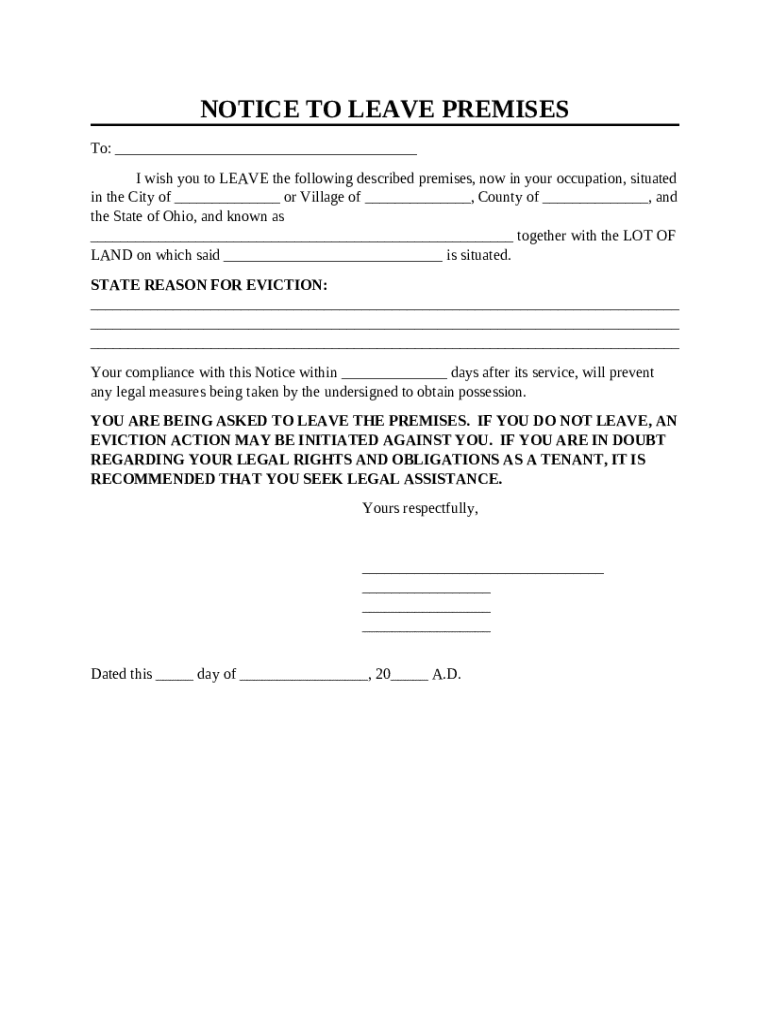
A "Notice to Leave Premises" is a formal document often used in landlord-tenant relationships to communicate the requirement for a tenant to vacate a rental property. This notice serves as a legal precursor to eviction proceedings, should they become necessary, by clearly stating the reasons for the required departure, such as violations of lease terms, non-payment of rent, or other contractual breaches. The notice is designed to ensure that tenants are afforded their due process rights and informed of the impending eviction action, allowing them time to address the landlord's concerns or prepare to vacate the property.
Common Reasons for Issuance
- Non-payment of Rent: The tenant has failed to pay rent within the agreed time frame.
- Lease Violations: Specific lease clauses have been breached, such as unauthorized subletting.
- Property Damage: Significant damage has been caused to the property by the tenant or their guests.
- Illegal Activity: Evidence of illegal activities taking place on the premises.
Legal Significance
Issuing a Notice to Leave Premises is an essential step in the eviction process. It ensures that landlords comply with statutory requirements, reducing the risk of legal disputes or invalidation of eviction actions due to improper notification.
How to Use the Notice to Leave Premises
Using a Notice to Leave Premises involves several critical steps to ensure compliance with legal standards and protect both parties' rights. Here's how landlords can effectively utilize this document:
-
Identify and Document the Reason: Clearly articulate the reason for the notice, supporting it with documented evidence, such as non-payment records or photos of property damage.
-
Complete the Notice Form: Fill out all required fields, including tenant details, property address, and specific violations or emergencies that necessitate the notice.
-
Serve the Notice Properly: Deliver the notice following state-specific mandates, which typically include in-person delivery, certified mail, or posting on the premises. Ensure that the method of delivery is legally recognized in your jurisdiction.
-
Retain Proof of Delivery: Keep copies of the notice and proof of delivery, like mail receipts or witness statements, to protect against potential challenges.
Example Process
- A landlord in California may send a three-day Notice to Leave Premises for non-payment of rent, affixing it to the door and mailing it via certified mail to comply with state laws.
- A landlord in Texas could deliver a notice for lease violations in person and obtain a tenant's acknowledgment of receipt for legal certainty.
Key Elements of the Notice to Leave Premises
To ensure enforceability, a Notice to Leave Premises must include specific elements. Each of these components plays a crucial role in conveying the notice's intent and legality:
- Clear Identification: Name and contact information of both tenant and landlord.
- Property Description: Exact detail of the property in question, including address and unit number.
- Reason for Notice: A detailed and specific explanation for the notice issuance.
- Time Frame for Leaving: A legally defined period during which the tenant must vacate or remedy the violation.
- Signature and Date: Signed acknowledgment by the landlord or property manager, with dates of issue and expected compliance.
Common Mistakes to Avoid
- Lack of Specificity: Failing to specify violations can render the notice invalid.
- Improper Time Frame: Not adhering to state-mandated time frames for compliance or vacating can lead to dismissal of eviction cases.
- Incorrect Delivery Method: Using unrecognized delivery methods that do not meet state requirements.
State-Specific Rules for the Notice to Leave Premises
Each state in the U.S. has unique rules and procedures governing Notices to Leave Premises. It's imperative for landlords and tenants to understand their state's specific legal framework to ensure compliance and protect their rights.
Examples from Different States
- California: Typically requires a three-day notice for non-payment of rent, demanding the tenant pay or vacate within this period.
- New York: A ten-day pay-or-quit notice is standard for non-payment issues, demanding compliance or departure.
- Texas: Notices must provide at least three days to vacate unless otherwise specified in the lease agreement.
Understanding these variances ensures landlords operate within their legal rights and tenants are informed of their obligations.
Steps to Complete the Notice to Leave Premises
Filling out a Notice to Leave Premises necessitates careful attention to detail to ensure clarity, compliance, and enforceability:
- Collect Necessary Information: Gather tenant details and lease agreements.
- Specify the Violation: Clearly define the reason for the notice with supporting evidence.
- Input Property Details: Accurately describe the property, ensuring no room for ambiguity.
- Setting Deadlines: Inject legally compliant deadlines for compliance or vacation.
- Sign and Date: Legitimize the document with appropriate signatures and dates, confirming its issuance.
Detailed Breakdown
- Underlining Violations: Emphasize specific clauses of the lease breached, providing written warnings where possible for prior context.
- Documentation: Attach any documentation that supports the violation claims, such as emails, texts, or digital logs.
Legal Use of the Notice to Leave Premises
This document is not only practical but also a significant legal instrument primarily used to initiate the eviction procedure legally and effectively. By following prescribed state procedures, landlords ensure tenants are informed and their rights respected, setting the foundation for a legal eviction if necessary.
Enforcement Potential
Properly serving a Notice to Leave Premises bridges informal tenant-landlord interactions with formal legal processes, necessitating its proper use.
Consequences of Misuse
Improper notices can delay the eviction process, lead to legal action against landlords, or complicate tenancy disputes, underscoring the need for adherence to statutory requirements and careful drafting.
Who Typically Uses the Notice to Leave Premises
The primary users of a Notice to Leave Premises include landlords, property managers, and real estate agents responsible for managing rental properties. These stakeholders must understand the notice's application, ensuring correct issuance and reducing legal complications.


Typical Stakeholders
- Landlords: Utilize the form as a part of their property management and tenant compliance strategies.
- Property Managers: Often execute these notices on behalf of property owners, combining them with eviction processes when necessary.
- Real Estate Agents: In managing lease listings, they may also draft such notices for delinquent clients.
By ensuring proper use, these parties maintain compliance with rental regulations, potentially mitigating disputes and fostering healthier landlord-tenant relations.
State-by-State Differences
Understanding how Notices to Leave Premises vary across states is crucial for ensuring proper implementation and compliance with local laws:
- Notice Periods: Vary greatly, from three to thirty days depending on the violation and jurisdiction.
- Delivery Methods: While some states require certified mail, others accept personal delivery.
- Grounds for Eviction: Some states recognize additional justified grounds, like noise complaints or unauthorized tenants.
Case Study: California vs. Texas
- California's process demands a three-day notice for non-payment, offering a clear ultimatum for payment or leaving.
- In contrast, Texas permits shorter notices if specified in the lease, offering landlords more flexibility in document drafting.
By recognizing these distinctions, individuals and entities involved in property management can better navigate the complex legal landscape, ensuring compliance and effective communication with tenants.




