




01. Edit your form online
Type text, add images, blackout confidential details, add comments, highlights and more.

Type text, add images, blackout confidential details, add comments, highlights and more.

Draw your signature, type it, upload its image, or use your mobile device as a signature pad.

Send it via email, link, or fax. You can also download it, export it or print it out.
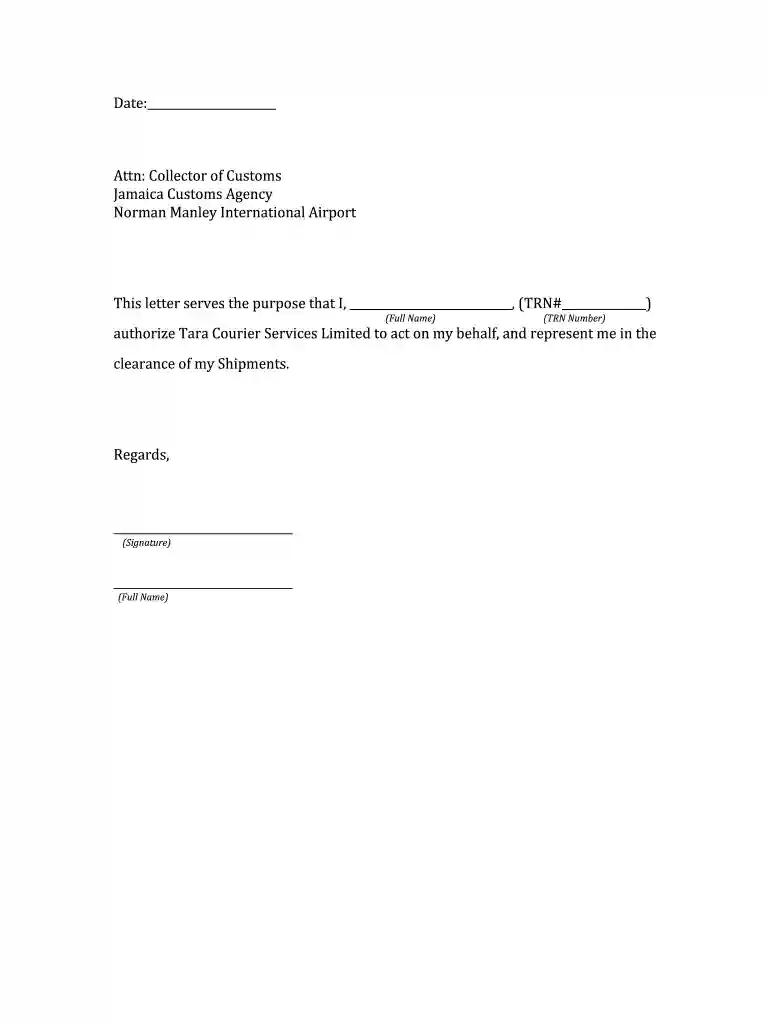
The Authorization Letter for Customs Clearance is a formal document that grants permission to a third party to handle customs clearance on behalf of the primary owner or importer. This form is critical for streamlining the clearance process by allowing a designated agent or broker to manage the documentation and interactions with customs authorities. By legally empowering another person or entity to manage customs duties, this document aids in preventing potential delays at points of entry and ensures compliance with both local and international trade regulations.
To effectively use the Authorization Letter for Customs Clearance, ensure that the form is completed accurately and signed by the authority granting permission. This step involves specifying the party receiving the authorization, detailing the scope of their allowed actions, and including critical details such as shipment information and the necessary customs codes. After finalizing the document, send a copy to both the customs broker and the relevant customs office ahead of shipping to facilitate a smooth clearance process.
Securing the Authorization Letter for Customs Clearance typically involves contacting a customs broker or the international shipping company managing your consignment. They often provide a standard template tailored to comply with specific regional or international requirements. Alternatively, online platforms like DocHub can be used to create a customizable authorization letter, ensuring all legal and procedural details are included. Make sure to verify the document with legal counsel or customs experts to meet all compliance obligations before executing it.
An effective Authorization Letter for Customs Clearance comprises several key elements that ensure its effectiveness and acceptance by customs authorities:
Various stakeholders typically utilize the Authorization Letter for Customs Clearance within international trade:


The Authorization Letter for Customs Clearance serves as a legally binding contract that allows a designated representative to perform specified tasks related to customs processing. Importantly, the document must comply with the customs laws of the country of import, including adhering to local definitions of representation and legal responsibility. As such, ensuring it is detailed and signed by both parties helps prevent potential legal pitfalls, ensuring that all customs procedures are handled appropriately and in line with regulations.
Practical applications of the Authorization Letter for Customs Clearance include:
In each instance, the authorization letter efficiently delegates the complex tasks involved in navigating customs laws, safeguarding shipment timelines, and ensuring adherence to all required regulations.
At DocHub, your data security is our priority. We follow HIPAA, SOC2, GDPR, and other standards, so you can work on your documents with confidence.
The purpose of a Customs letter is to facilitate re-entry to the United States of University of Washington/State of Washington owned equipment.
The information solicited on this form will be used to adjudicate requests for customs clearance of merchandise.


