







Definition and Meaning
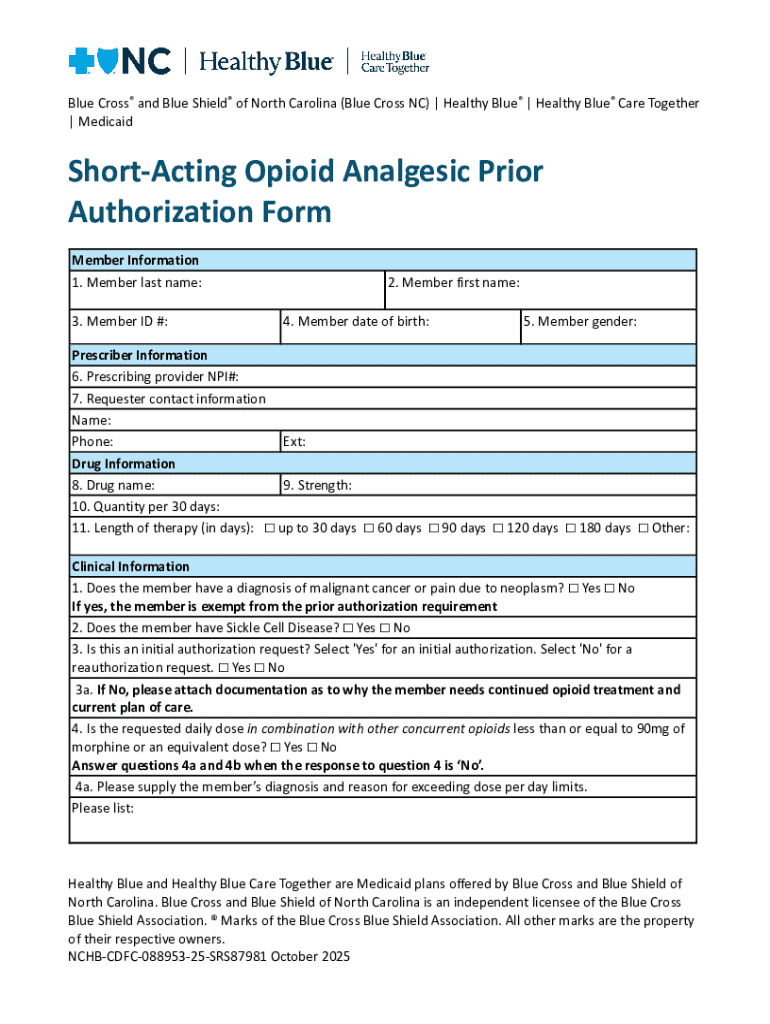
The Short-Acting Opioid Analgesic Prior Authorization Form is a standardized document required by healthcare providers and insurance companies to process the approval of medications classified as short-acting opioid analgesics. These forms help ensure that opioid prescriptions are necessary and appropriate for the patient's condition, maintaining compliance with medical guidelines and preventing misuse.
Purpose and Necessity
- Approval Process: Ensures that opioid prescriptions align with medical standards, reducing unnecessary or inappropriate usage.
- Patient Safety: Verifies that the patient’s health conditions justify the use of such potent medications.
- Cost Management: Helps insurance companies control medication expenses by ensuring coverage is provided only when necessary.
How to Use the Short-Acting Opioid Analgesic Prior Authorization Form
Completing the prior authorization form involves several steps designed to collect comprehensive information about the patient and the prescribed medication. Here’s how to properly use the form:
- Gather Information: Collect relevant patient information such as medical history and current medication regimen.
- Provider Details: Include specific details about the healthcare provider, including credentials and contact information.
- Medication Details: Specify the opioid being prescribed, including dosage and treatment duration.
- Rationale for Prescription: Provide a detailed explanation of why the opioid is necessary, supported by medical evidence.
- Submit the Form: Once completed, send the form to the insurance company, ensuring all required sections are filled out.
How to Obtain the Short-Acting Opioid Analgesic Prior Authorization Form
This form can typically be obtained through several methods, depending on the healthcare provider and insurance company:
- Online Portal: Access the form via the insurance company’s website, often downloadable in PDF format.
- Healthcare Provider: Request the form directly from a physician or medical office, who often have copies on hand.
- Insurance Agent: Contact your insurance provider to receive the form through email or postal mail.
Steps to Complete the Short-Acting Opioid Analgesic Prior Authorization Form
Completing the form requires attention to detail and thoroughness to avoid delays in processing:
- Patient Identification: Complete all sections related to patient demographics and contact information.
- Medical Justification: Clearly articulate the medical necessity for the prescribed opioid.
- Prescription Information: Enter detailed information about the opioid prescription, including potential alternative treatments considered.
- Authorization and Consent: Ensure the patient’s consent is recorded, with appropriate signatures from both the patient and provider.
Who Typically Uses the Short-Acting Opioid Analgesic Prior Authorization Form
The form is primarily used by the following parties:
- Physicians and Healthcare Providers: To document and justify the need for prescribing opioids to patients.
- Pharmacists: To ensure that prescriptions align with regulatory requirements before dispensing medication.
- Insurance Companies: To review and authorize coverage for prescribed medications.


Key Elements of the Short-Acting Opioid Analgesic Prior Authorization Form
The form comprises several critical areas necessary for successful completion:
- Patient Information Section: Details personal information, insurance ID, and contact details.
- Prescriber Information: Includes the provider’s contact details and National Provider Identifier (NPI) number.
- Medication and Diagnosis Details: Lists the name of the drug, dosage, diagnosis details, and treatment plan.
- Clinical Documentation: Sections for supporting documents that validate the prescription necessity.
Legal Use of the Short-Acting Opioid Analgesic Prior Authorization Form
The form is a legal document that must be completed accurately and truthfully to comply with healthcare regulations:
- Regulatory Compliance: Aligns with state and federal laws governing controlled substances.
- Confidentiality Requirements: Safeguards patient information under HIPAA regulations during submission and review.
- Provider Accountability: Ensures healthcare providers maintain accurate records to support their clinical decisions.
Legal Protections
- Patient Rights: Ensures patients are informed of their treatment and consent to medication use.
- Provider Responsibilities: Mandates healthcare providers document and verify medical necessity for prescribed opioids.
State-Specific Rules for the Short-Acting Opioid Analgesic Prior Authorization Form
Each state may have unique regulations impacting the completion and submission of the form:
- Varying Approval Processes: Certain states might require additional documentation or specific forms tailored to their regulations.
- Prescription Monitoring Programs (PMPs): Some states mandate integration with PMPs to further track opioid prescriptions and prevent abuse.
Examples of Using the Short-Acting Opioid Analgesic Prior Authorization Form
Consider scenarios where this form plays a crucial role:
- Post-Surgical Pain Management: A surgeon may submit the form to ensure coverage for short-term opioid use post-operation.
- Chronic Pain Conditions: A pain management specialist documents previous treatments and resistance to alternative medications to justify an opioid prescription.
- End-of-Life Care: Hospice providers might use the form to obtain necessary medications to manage severe pain for terminally ill patients.
Form Submission Methods (Online / Mail / In-Person)
Various methods are available to submit the form for processing:
- Online Submission: Upload through a secured portal provided by the insurance company, ensuring quick electronic processing.
- Mail Submission: Send via certified mail to prevent loss and ensure tracking.
- In-Person Delivery: When appropriate, deliver directly to an insurance office or healthcare provider handling the request.
Tips for Successful Submission
- Confirmation of Receipt: Always follow up to ensure the form has been received and is being processed.
- Include All Documentation: Attach any supporting documents to strengthen the case for the authorization request.




