
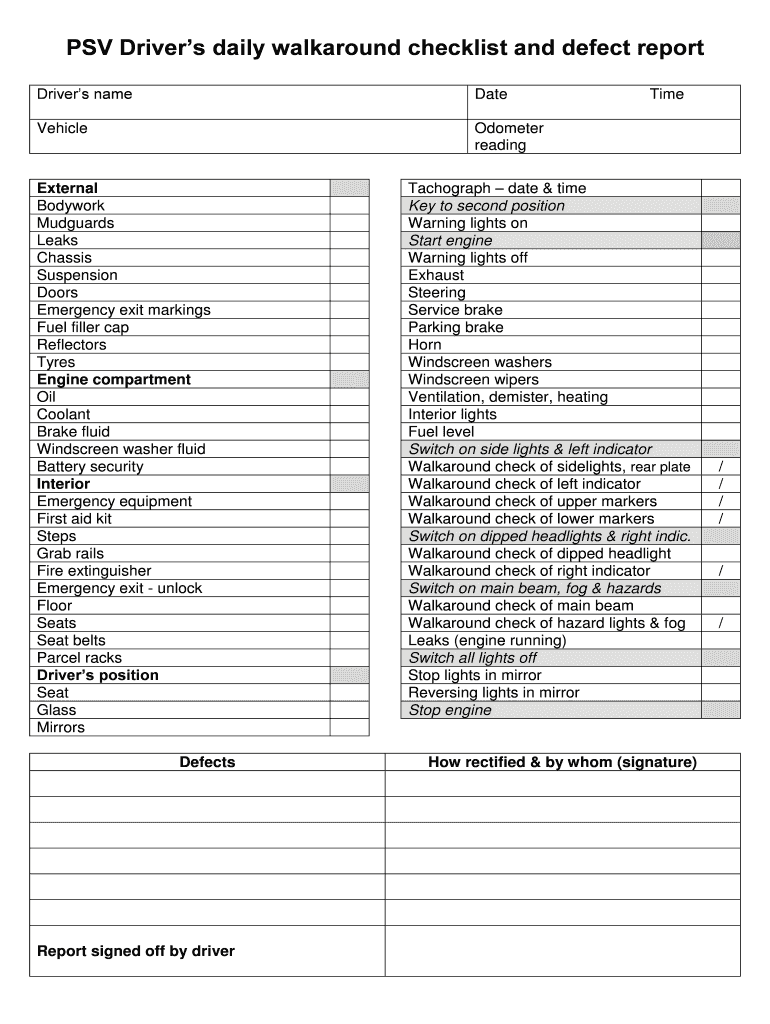







Definition and Purpose of the PSV Driver’s Daily Walkaround Checklist
The PSV Driver's Daily Walkaround Checklist is an essential form utilized by Public Service Vehicle (PSV) operators to conduct systematic inspections of their vehicles. This checklist serves as a preventative measure, ensuring that all critical components of the vehicle are examined before it is set into service. The primary aim is to identify any defects or issues that could potentially compromise safety or operational efficiency. Common elements checked include the vehicle's external bodywork, lights, tires, and braking system. These regular inspections help maintain high safety standards and compliance with legal requirements, minimizing the risk of accidents and breakdowns.
How to Use the PSV Driver’s Daily Walkaround Checklist
Using the PSV Driver’s Daily Walkaround Checklist involves a methodical approach to inspect various aspects of the vehicle.
-
Visual Inspection: Begin with a general observation of the vehicle's exterior, looking for any visible signs of damage, such as dents or scratches.
-
Component Checks: Examine specific parts of the vehicle, including lights, tires, suspension, fuel filler caps, and emergency exits. Each section of the checklist corresponds to an area or component that needs inspection.
-
Documentation: Record findings meticulously. If any defects are identified, document them accurately on the checklist to ensure they are addressed promptly.
-
Final Review: After completing the checklist, review the findings to ensure no potential issues are overlooked. Share the results with the vehicle maintenance team if repairs or further inspections are required.
How to Obtain the PSV Driver’s Daily Walkaround Checklist
The PSV Driver's Daily Walkaround Checklist can be obtained through several channels. Typically, operators will provide these forms to their drivers as part of their vehicle maintenance protocols.
-
Vehicle Operators: Many operators have their own standardized versions of the checklist, tailored to their specific fleet requirements.
-
Government or Industry Bodies: Standard templates may be available from official transport authorities or relevant industry organizations. These often include the latest regulatory requirements and best-practice guidelines.
Steps to Complete the PSV Driver’s Daily Walkaround Checklist
Completing the checklist involves a series of defined steps to ensure a thorough inspection:
-
Prepare the Vehicle: Park on a flat surface with the engine off. Ensure all necessary tools for inspection, such as a flashlight or pressure gauge, are available.
-
Check Exterior:
- Bodywork and mirrors for damage.
- Lights for functionality.
- Tires for proper inflation and tread depth.
-
Interior Inspection:
- Ensure all emergency exits are operational.
- Check seat belts for wear and tear.
-
System Checks:
- Brake performance.
- Fuel levels and potential leaks.
-
Documentation: As each item is checked, mark it off on the checklist, noting any anomalies.
Importance of the PSV Driver’s Daily Walkaround Checklist
The checklist is critical for ensuring vehicle safety and compliance with transport regulations. By conducting daily inspections, drivers can identify potential hazards before they result in serious malfunction or accidents. This proactive approach not only helps in maintaining vehicles in safe working conditions but also ensures passenger safety, thereby reducing liabilities and enhancing the company’s reputation.
Who Typically Uses the PSV Driver’s Daily Walkaround Checklist
The checklist is primarily used by PSV drivers, fleet managers, and transport operators. Drivers use it to perform routine checks before commencing their routes, while fleet managers utilize the documented checks to ensure maintenance standards are upheld across all vehicles. This document is particularly significant in large operations involving multiple vehicles and routes, where consistent reporting is essential for overall fleet management.


Key Elements of the PSV Driver’s Daily Walkaround Checklist
The checklist typically includes several key areas:
-
External Bodywork: Inspection for physical damage, ensuring mudguards are intact and free from debris.
-
Chassis and Suspension: Evaluate for wear or damage that could affect vehicle stability.
-
Lights and Indicators: Verify all lighting is functioning correctly to ensure visibility and compliance with road safety regulations.
-
Doors and Emergency Exits: Check for proper operation to ensure passenger safety in case of emergency.
-
Fuel Filler Cap: Confirm it is secure to prevent leaks and ensure optimal fuel efficiency.
Each of these areas is critical to maintaining vehicle safety and operational integrity.
Legal Use of the PSV Driver’s Daily Walkaround Checklist
Legally, the checklist serves as an official record of vehicle inspections, demonstrating compliance with vehicle safety regulations. Failure to perform these checks can result in penalties, including fines or suspension of license, particularly if an unattended defect causes an accident. Regular use of the checklist helps ensure adherence to safety regulations and provides documentation that inspections have been thoroughly conducted.
State-Specific Rules for the PSV Driver’s Daily Walkaround Checklist
While the general structure of the checklist remains consistent across the U.S., specific requirements may vary by state due to differing regulatory statutes. Some states might have additional requirements, such as emissions checks or specific safety equipment standards, tailored to their road safety concerns. Ensuring state-specific compliance is vital for operators to avoid legal repercussions.
Digital vs. Paper Versions of the PSV Driver’s Daily Walkaround Checklist
Both digital and paper versions of the checklist offer distinct advantages.
-
Digital: Facilitates easy storage, retrieval, and real-time updating. Digital checklists can be integrated into fleet management software, enhancing record-keeping efficiency.
-
Paper: Provides a tangible record that is convenient for immediate use and is foolproof against technological issues.
Determining which format to use depends on the specific operational needs and resources available to the operator.




