




Definition & Meaning
The Rental Declaration Form is a document typically required by a landlord or property manager to confirm the residency details of a tenant. This form serves as a formal declaration by the property owner, verifying the tenant's address as noted in the lease agreement. It is often used as supporting documentation for various administrative processes, such as tax declarations or legal proceedings.
Rental Declaration Forms play a crucial role in maintaining transparent tenant-landlord relationships. They ensure that the information provided by the tenant is accurate and validated by the property owner. Such forms are often necessary when establishing proof of residence, particularly in cases involving legal or financial matters. Ignoring the completion and submission of this form can lead to complications for both tenants and landlords regarding legal verification of tenancy.
Steps to Complete the Rental Declaration Form
-
Gather Necessary Information: Before commencing the form, ensure you have all relevant details handy. These include the tenant's full name, address, lease start date, lease end date, and any other pertinent residency details. This step is vital to prevent omissions or errors, which could delay the verification process.
-
Fill Out Tenant Information: Begin by inputting the tenant's personal details, including full name and current residential address. Ensure accuracy, as these data points are essential for correctly identifying the tenant in any follow-up documentation or communication.
-
Specify Lease Agreement Details: Enter the lease's start and end dates, along with the rental property's address. Carefully verify these dates against the actual lease agreement to avoid discrepancies that could invalidate the form.
-
Landlord or Property Manager Verification: The property owner or designated representative must complete their section, providing contact information and a signature. This signature verifies the authenticity of the information, serving as the official endorsement by the property owner.
-
Review and Proofread: Double-check all entries for spelling errors, correct dates, and accurate addresses. This final review should ensure the form's integrity before submission.
-
Submit the Form: Depending on its purpose, the form may need to be submitted to a government agency, financial institution, or another relevant entity. Be aware of submission deadlines to avoid complications.
Importance of the Rental Declaration Form
The Rental Declaration Form offers several benefits to both landlords and tenants. For landlords, it ensures that tenant records are up-to-date, which is essential for legal and administrative purposes. For tenants, the form acts as proof of residency, critical for applications for state benefits, school enrollment, or utility services.
Failure to submit this form can result in legal challenges or administrative delays. For instance, tenants may encounter obstacles when attempting to prove their residency status, while landlords might face difficulties in legal actions for tenancy disputes or financial audits. Given these implications, understanding the significance of the form encourages all parties involved to prioritize its completion and submission.
Key Elements of the Rental Declaration Form
-
Tenant's Full Name and Contact Information: Clearly indicate the tenant's full legal name as it appears on the lease agreement, along with updated contact information.
-
Property Address: The rental property's complete address should be precise, as it serves as the primary reference point for the form's application.
-
Lease Agreement Dates: Input the start and end dates of the lease agreement. This information gives context to the period during which the tenant is occupying the property.
-
Landlord's Details and Signature: The property owner's name and contact information, along with a signature, are essential for the form's validity. It establishes the authenticity of the declaration.
Legal Use of the Rental Declaration Form
This form can be employed as evidence in various legal contexts. It might be required in court trials as proof of residency or when addressing tenant disputes. Legal proceedings often demand verifiable documentation of living arrangements, and this form provides a credible source of validation from the landlord.
Beyond its function in tenancy verification, the Rental Declaration Form may be used in conjunction with financial transactions, such as property insurance claims, to prove the legitimacy of a tenancy arrangement. It holds weight in state and federal proceedings, substantiating claims of legal residency or compliance with housing regulations.
State-Specific Rules for the Rental Declaration Form
While the form is generally standardized, particular state regulations may dictate unique requirements or additional fields. For instance, some states might require notarization or additional documentation to accompany the form. It is crucial to consult state-specific housing laws to ensure compliance, particularly for multi-state property owners.
Understanding these nuances helps in preparing a form that aligns with regional regulations, thereby avoiding legal discrepancies or the need for resubmission. For instance, California may have different requirements compared to New York, affecting the form's structure or additional verification steps required before submission.
Digital vs. Paper Version
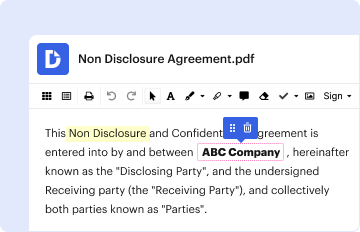
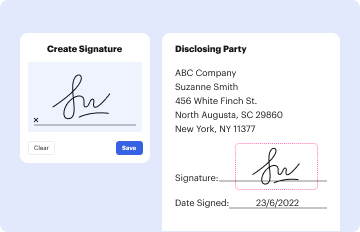
In an increasingly digital landscape, Rental Declaration Forms are available in both paper and digital formats. The digital version offers advantages, such as ease of distribution and quicker processing times. Digital forms can be managed efficiently using platforms like DocHub, which support seamless editing and electronic signatures.
However, some entities still require paper forms for records or legal reasons. While digital forms save time and resources, landlords or property managers should be prepared to provide either version based on tenant or regulatory agency requirements. Additionally, electronic forms may complement property management systems, integrating seamlessly into larger property data frameworks for streamlined operations.
Software Compatibility
Using digital tools to complete the Rental Declaration Form enhances both efficiency and accuracy. Platforms such as DocHub allow users to import, fill, and sign forms electronically, ensuring seamless integration with other software like Google Workspace. Notably, DocHub supports various file formats, providing flexibility for users to begin editing without additional software requirements.
Compatibility extends to collaboration with popular financial and legal software systems, including QuickBooks or TurboTax. This integration aids users, particularly those managing multiple properties, in maintaining organized digital records and tracking necessary information across different systems.
By leveraging software compatibility, property managers and landlords can manage forms more effectively and ensure compliance with local regulations. Using platforms like DocHub offers advantages, such as real-time updates, which minimize the chances of errors due to data discrepancies.