




01. Edit your form online
Type text, add images, blackout confidential details, add comments, highlights and more.

Type text, add images, blackout confidential details, add comments, highlights and more.

Draw your signature, type it, upload its image, or use your mobile device as a signature pad.

Send it via email, link, or fax. You can also download it, export it or print it out.
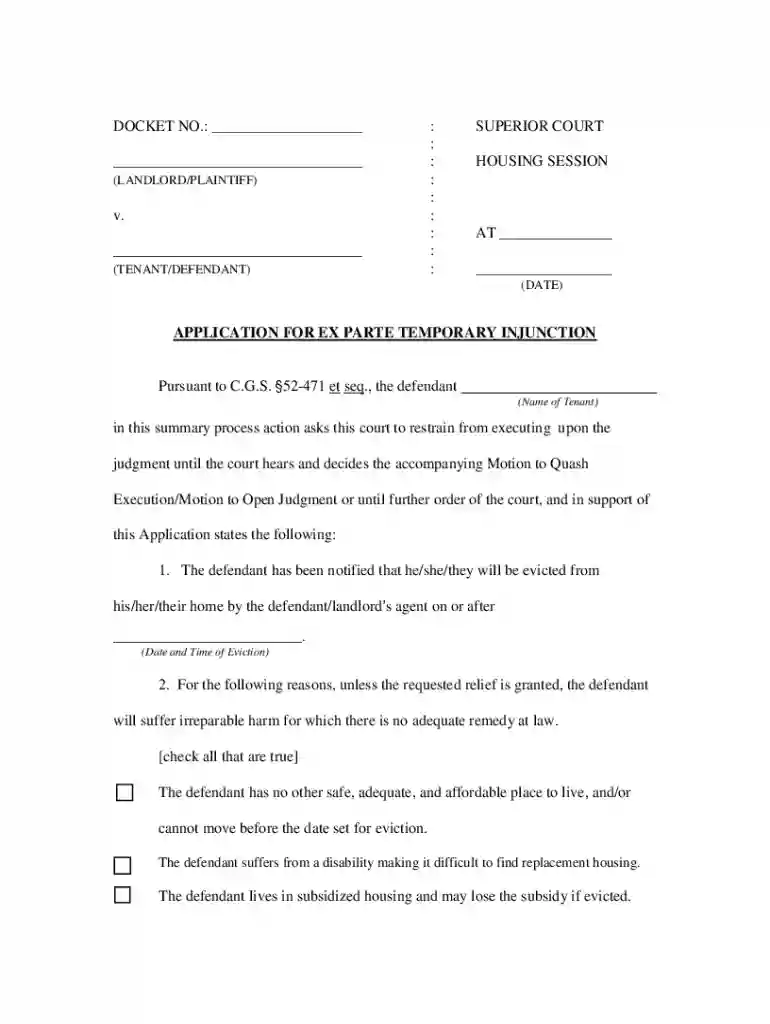
A Connecticut Ex Parte Temporary Injunction Application is a legal form used to request a court order for temporary relief in urgent situations without the presence of the other party. This application is typically utilized in civil cases where immediate legal action is necessary to prevent harm or maintain the status quo. The term "ex parte" denotes that the order is sought without the other party having been notified or present in court, which is permissible under specific circumstances where immediate intervention is essential.
In the context of legal proceedings, an ex parte injunction can be a powerful tool for individuals or entities seeking swift judicial intervention. This form of judicial relief often applies in scenarios such as domestic violence, business disputes, or situations requiring immediate restraining orders.
When using the Connecticut Ex Parte Temporary Injunction Application, it's crucial to understand the specific requirements and process involved. Applicants must fill out the form accurately, detailing the grounds for the injunction and providing sufficient evidence or affidavits to support their request. Here are the steps:
It's essential to consult with legal counsel or a legal aid service to ensure the application is correctly filled and submitted following all procedural requirements.
Obtaining the Connecticut Ex Parte Temporary Injunction Application involves several steps, often requiring access to specific court or legal resources. Here’s how to obtain the form:
Obtaining the form quickly and accurately is critical, given the urgent nature of situations that necessitate an ex parte injunction.
Completing the Connecticut Ex Parte Temporary Injunction Application involves a series of steps designed to provide the court with a comprehensive understanding of the emergency at hand:
Legal guidance is advisable to prevent errors that could delay the process or result in a denial of the application.
Understanding the terminology associated with the Connecticut Ex Parte Temporary Injunction Application is key to navigating the process effectively:
Familiarity with these terms can aid in comprehending the form's requirements and potential implications.
The legal basis for an ex parte temporary injunction in Connecticut derives from the need to address urgent situations where notifying the opposing party could cause further harm or render judicial relief ineffective. Legal use cases include:
Legal counsel should be consulted to ensure proper justification and application for this judicial remedy.
The application comprises several critical sections, each serving a distinct purpose:
These elements collectively make up the logical structure that guides judicial review and decision-making.
Connecticut's legal system outlines specific rules and conditions under which an ex parte temporary injunction can be granted:
Understanding these state-specific protocols ensures the accuracy and viability of the application, aligning it with Connecticut's legal framework.
At DocHub, your data security is our priority. We follow HIPAA, SOC2, GDPR, and other standards, so you can work on your documents with confidence.


