




Definition and Meaning of Transfer On Death Deed Template
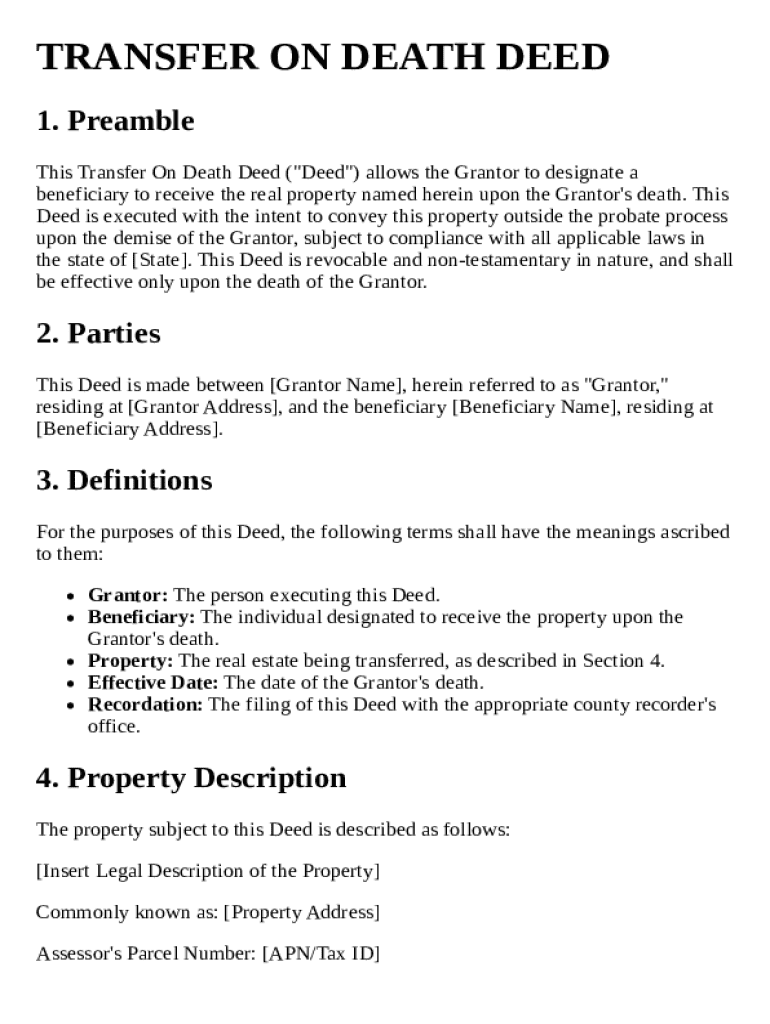
A Transfer On Death Deed (TODD) Template is a legal document that allows property owners, known as grantors, to transfer real estate to a designated beneficiary upon their death without the need for probate. This deed is typically used to streamline the estate planning process, reducing the legal complexities and costs associated with transferring property through probate court. The key advantage of a TODD is that the grantor retains full control and ownership of the property during their lifetime, with the transfer becoming effective only after their passing.
Essential Characteristics
- Non-Probate Transfer: A critical feature of a TODD is that it enables the transfer of property without going through probate, which is both time-consuming and costly.
- Retained Control: The grantor retains full rights to manage, sell, or refinance the property during their lifetime.
- Flexible Designation: Beneficiaries can be individuals, entities, or trusts, offering flexibility in estate planning.
Use Case Scenarios
Consider Jane, a homeowner who wishes to leave her property to her daughter. By using a TODD, Jane can ensure that her daughter receives the property directly upon her death, avoiding the delays of probate.
How to Use the Transfer On Death Deed Template
To effectively use a Transfer On Death Deed template, follow these key steps to ensure the document is completed correctly and legally enforceable.
Customized Completion Process
- Gather Information: Collect all pertinent details such as the property's legal description, the grantor's name, and the designated beneficiary’s information.
- Fill Out the Template: Enter the gathered information into the TODD template meticulously, ensuring that there are no errors in critical details like names and property descriptions.
- Sign and Notarize: The TODD must be signed by the grantor in the presence of a notary public to be valid. The presence of witnesses may be required depending on state laws.
Practical Tips
- Review Local Laws: Laws governing TODDs can vary significantly from state to state, so it is crucial to review local requirements.
- Consult with Professionals: For complex estates or unique situations, legal advice from an estate planning attorney is advisable.
Important Legal Terms Related to Transfer On Death Deed Template
Understanding the terminology associated with TODDs is crucial for proper execution and compliance with legal standards.
Common Terms Explained
- Grantor: The property owner who creates the TODD and retains rights to the property during their lifetime.
- Beneficiary: The person or entity designated to receive the property upon the grantor's death.
- Recording: The process of filing the completed TODD with the appropriate county office to ensure public record and enforceability.
Legal Considerations
- Irrevocable vs. Revocable: A TODD is generally revocable by the grantor, meaning it can be altered or canceled at any time before death.
- Contingent Beneficiaries: Grantors can name alternate beneficiaries in case the primary beneficiary predeceases them.
Steps to Complete the Transfer On Death Deed Template
Completing a TODD involves careful data input and procedural adherence to ensure legality and effectiveness.
Step-by-Step Instructions
- Access the Template: Download the TODD template from a reliable source or legal document provider.
- Enter Grantor and Beneficiary Information: Clearly write the full legal names and contact information, ensuring there are no typographical errors.
- Describe the Property: Include a detailed description of the property, often found on the current deed, to avoid any ambiguities.
- Meet Notarization Requirements: Arrange for a notary to witness the signing, following all state-specific guidelines for valid notarization.
- File the Document: Submit the notarized TODD to the local county recorder’s office for recording.
Example Scenario
For instance, if John, a grantor, wishes to leave his Arizona property to his niece, he must ensure his TODD includes his niece's full legal name as the beneficiary and clearly describes the Arizona property before notarizing and recording the deed in the local county office.
Legal Use and Compliance with Transfer On Death Deed Template
Utilizing a TODD requires compliance with specific legal standards to ensure its enforceability and legal recognition.
Key Legal Requirements
- State-Specific Regulations: Verify that the template meets all regulatory requirements as these can vary significantly by state.
- Clear Intent: Ensure that the grantor’s intent to transfer the property upon death is clearly documented and undisputed.
- Timely Recording: The TODD must be filed promptly with the county recorder’s office to avoid any potential claims of invalidity.
Jurisdictional Considerations
- State Variances: Different states have unique requirements for TODDs, including witness requirements and filing deadlines, which must be meticulously adhered to.
- Revocability Constraints: Understand the revocability clauses applicable within your state to align them with the grantor’s intentions.
Examples of Using the Transfer On Death Deed Template
Exploring real-world scenarios helps illustrate the practical application of TODDs in estate planning.
Real-Life Application Examples
- Family Transfers: Parents often use TODDs to pass property to children, ensuring the asset avoidance of probate.
- Avoiding Disputes: In cases where a blended family is involved, a TODD can clearly define property distribution, preventing potential disputes among heirs.
- Estate Planning for Survivors: For surviving spouses, a TODD provides a seamless transfer mechanism without altering property control during the grantor's lifetime.
Practical Scenarios
Consider a scenario where an elderly widower uses a TODD to transfer his house to his caregiver, stipulating it ensures continued support and minimizes estate complexities.
State-Specific Rules for Transfer On Death Deed Template
Understanding state-specific nuances is crucial to executing a TODD properly, acknowledging variances in legal frameworks.
Overview of State Variations
- Recording Requirements: States differ regarding where and how a TODD must be recorded, some requiring additional statements or affidavits.
- Witness Obligations: Certain states may mandate one or more witnesses to the signing of a TODD, adding a layer of legal authentication.
State-Specific Examples
For example, in Texas, the TODD must be filed before the grantor's death to be valid, showcasing the need for timely compliance with state mandates.
Key Elements of the Transfer On Death Deed Template
The success and enforceability of a TODD hinge on specific key elements that must be included within the document.
Vital Components
- Identification Details: Clear identification of the grantor and beneficiary with their full legal names.
- Property Description: A precise and legal description of the property is vital for the deed's enforceability.
- Legal Provisions: Provisions ensuring the deed’s revocability and conditions under which it may be altered or revoked.
Essential Considerations
- Legibility and Accuracy: Ensure that all details are legibly typed or written, as illegible entries could render the deed invalid.
- Legal Advice: While TODDs are generally straightforward, consulting with an estate attorney can prevent potential oversights, especially in complex cases.