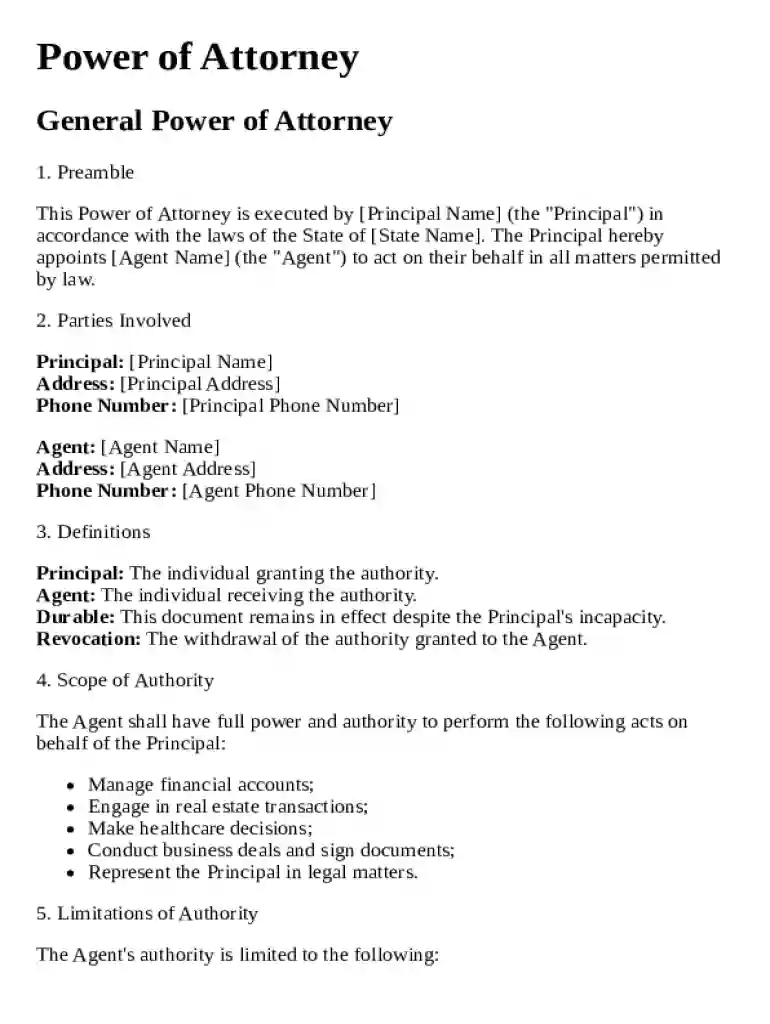
Definition & Meaning
A Standard Power of Attorney Template is a legal document that allows an individual, known as the Principal, to designate another person, the Agent, to act on their behalf. This template is used to outline the specific powers granted to the Agent, which can include managing financial matters, making healthcare decisions, or conducting real estate transactions. The use of this template ensures that the Principal's wishes are clearly documented and legally recognized, providing guidance and authorization for the Agent to act within the defined scope.
Practical Examples
- Financial Management: A retired individual may appoint their adult child as an Agent to manage banking transactions.
- Healthcare Decisions: A Principal might assign an Agent to make medical choices if they become incapacitated.
- Property Management: Someone living abroad could empower an Agent to handle the sale of their real estate in the U.S.
Each scenario highlights the versatility and importance of the Power of Attorney in safeguarding the Principal's interests through legal proxies.
Key Elements of the Standard Power of Attorney Template
A comprehensive Standard Power of Attorney Template typically includes several critical components to ensure clarity and legality. Here are some of the primary sections found in this document:
Basic Information
- Identification: Full names and contact details of the Principal and Agent.
- Date of Creation: The effective date from which the power commences.
Powers Granted
- Scope of Authority: Detailed description of the responsibilities and areas under the Agent's control, such as financial management, healthcare decisions, and legal proceedings.
- Limitations and Restrictions: Limits on the Agent's powers, ensuring they cannot act beyond the Principal's directions.
Duration and Validity
- Start and End Dates: Establishment of the timeframe when the document is in effect.
- Revocation Clause: Outlines how the Principal can terminate the Power of Attorney.
How to Use the Standard Power of Attorney Template
Utilizing a Standard Power of Attorney Template involves several thoughtful steps to ensure it meets legal standards and the Principal's needs:
Step-by-Step Instructions
- Determine the Scope: Decide on the areas where the Agent will have authority.
- Select a Reliable Agent: Choose a trustworthy individual who understands the Principal's wishes.
- Complete the Template: Fill in the necessary details accurately, following legal norms.
- Review and Sign: Both parties should review the document, make amendments if necessary, and sign it in the presence of a notary for authenticity.
Important Considerations
- Legal Advice: Consulting with a legal professional to ensure compliance with state laws.
- Copies: Distributing copies to relevant parties, including banks and medical providers.
Legal Use of the Standard Power of Attorney Template
In the United States, the legal use of a Standard Power of Attorney Template is governed by state-specific regulations and laws. While these templates offer a general framework, variations may apply depending on jurisdictional requirements.
Compliance with State Laws
- Acknowledgment: Requires notarization or witnessing, based on state stipulations.
- Registration: In some states, it may be necessary to file the document with a local court or governmental body for real estate transactions.
Nuances and Variations
- Durable vs. Non-Durable: Some states distinguish between durable power, which remains in effect even if the Principal becomes incapacitated, and non-durable ones that do not.
- Springing Powers: Some templates may include provisions that activate powers only under specific conditions.
State-Specific Rules for the Standard Power of Attorney Template
The rules surrounding the deployment and acceptance of a Power of Attorney can significantly differ from one state to another in the U.S.
State Examples
- California: Requires specific wording about the Agent's ability in financial matters.
- Florida: Mandates a witness and notary requirement for validation.
Key Differences
- Formalities: Witness signatures and notarization requirements may vary.
- Powers Restrictions: Certain states have restrictions on what an Agent can decide, such as healthcare powers blocked unless explicitly stated.
Steps to Complete the Standard Power of Attorney Template
Completing the Standard Power of Attorney Template involves a structured process designed to ensure clear authority is vested in the Agent without room for ambiguity:
Detailed Steps
- Gather Information: Collect names, addresses, and other necessary identification details.
- Define Authority Limits: Clearly specify tasks that the Agent can undertake.
- Set Duration: Determine if the Powers are ongoing, or time-limited, and document this in the template.
- Add Special Instructions: Include any unique conditions or directives for the Agent’s guidance.
- Legal Execution: Sign each section in compliance with applicable state requirements, including witnessing practices.
Adjustment for State-Specific Requirements
- Customization: Adapt standard instructions if local laws necessitate specific clauses or certifications.
Important Terms Related to the Standard Power of Attorney Template
Understanding the terminology in a Standard Power of Attorney Template is crucial for interpreting and documenting this agreement effectively:
Key Terms
- Principal: The person granting authority to the Agent.
- Agent/Attorney-in-Fact: The individual appointed to act on behalf of the Principal.
- Durable Power: A clause that maintains authority after the Principal’s incapacity.
- Revocation: The process of cancelling the Power of Attorney before its natural expiration.