






Definition and Meaning
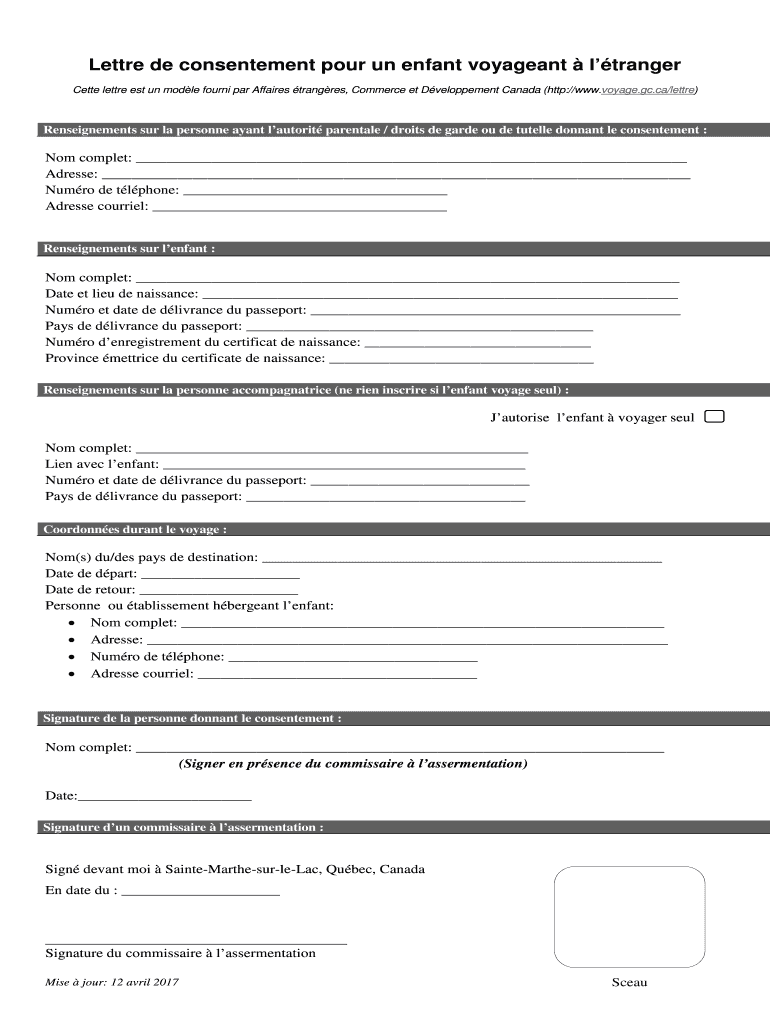
The "Lettre de consentement pour un enfant voyageant à l'étranger" is a legal document that gives permission for a child to travel internationally without one or both parents or legal guardians. This letter acts as a formal declaration, stating that the child has the consent of the absent parent or guardian to travel outside the country, usually for purposes such as a holiday, school trip, or visit to relatives. It's essential in safeguarding against child abduction and ensuring compliance with international travel laws.
- Purpose: Provides legal authorization for a minor to travel alone or with an accompanying adult without all custodial parties present.
- Use Cases: Applicable for family vacations, educational trips, sports events, or visits to relatives living abroad.
- Standardization: Typically should include the name of the child, birthdate, travel itinerary, names of accompanying adults, and contact information of the absent guardian(s).
How to Use the Lettre de Consentement pour un Enfant Voyageant à l’Étranger
When using the "Lettre de consentement," it is crucial for parents or guardians to ensure it is comprehensive and notarized to hold legal validity. Here’s how you can use it:
- Preparation: Gather the necessary details such as travel dates, the child's details, and the name of the accompanying adult.
- Drafting: Carefully fill out the form, ensuring all information is accurate.
- Legalization: It is advisable to have the document signed in the presence of a notary public.
- Presentation: Carry multiple copies during travel, as airlines or border authorities may request to see it.
- Key Tip: Keep a copy of any supporting documents like copies of custody or guardianship papers.
How to Obtain the Lettre de Consentement pour un Enfant Voyageant à l’Étranger
To obtain this consent letter, parents should follow a structured process to ensure it is recognized legally.
- Template: Use a standard template that complies with legal requirements found on official government websites or legal counsel.
- Customization: Input specific travel and personal details as required by the form.
- Consultation: Seek legal advice if unsure about any element regarding custody or travel permissions.
- Certification: Have the document notarized to enhance its credibility and to prevent complications during travel.
Steps to Complete the Lettre de Consentement pour un Enfant Voyageant à l’Étranger
Completing the consent form involves several detailed steps:
- Child’s Details: Include full legal name, date of birth, and passport information.
- Travel Information: Provide complete travel itinerary including dates, flight details, and accommodation.
- Accompaniment Info: Include the full name and contact details of the accompanying adult.
- Guardianship Information: Relevant custody papers or proof of guardianship may need to be incorporated.
- Signature and Notarization: Ensure the document is signed by the consenting parent(s) and is duly notarized.
- Caution: Avoid incomplete forms and ensure the document reflects the exact travel dates and companions to avoid misuse.
Why You Should Use the Lettre de Consentement pour un Enfant Voyageant à l’Étranger
Using a "Lettre de consentement" is critical for several reasons:
- Legal Compliance: Ensures adherence to international laws on child travel.
- Safety Assurance: Protects against international child abduction.
- Ease of Travel: Facilitates smooth border and customs procedures.
- Conflict Avoidance: Prevents disputes with airlines and immigration officers regarding child travel permissions.
Key Elements of the Lettre de Consentement pour un Enfant Voyageant à l’Étranger
To create a legally sound and comprehensive document, certain key elements should be included:
- Identifying Information: Full details of the child, guardians, and accompanying adult.
- Travel Dates and Itinerary: Details about the trip’s duration, destinations, and travel companions.
- Authorization Statement: Clear and unambiguous statement of consent.
- Contact Information: Emergency contacts and address of the absent parent(s).
- Legal Endorsements: Notarization to affirm the authenticity of the document.
Legal Use of the Lettre de Consentement pour un Enfant Voyageant à l’Étranger
Understanding the legal context is crucial to ensure that the consent letter serves its intended purpose.
- Jurisdictional Variability: Different countries have varying requirements; understanding these is crucial.
- Cross-Border Legitimacy: Letter should comply with both the home country's and the destination country’s legal standards.
- Consequence of Forgery: Unauthorized use or forgery of the document could lead to legal penalties.
Required Documents
Accompanying the "Lettre de consentement," several supporting documents may be necessary:
- Child's Passport: A valid identification document for the child.
- Custody Papers: If applicable, verified documents proving guardianship or custody rights.
- Flight Itinerary: Confirmation of travel plans as mentioned in the consent letter.
- Notarization Proof: Legal acknowledgments like notarized copies to support the consent document’s authenticity.
Thorough preparation of these documents enhances the form's credibility and ensures compliance with travel and legal protocols. This preparation is indispensable for facilitating a secure and hassle-free travel experience for unaccompanied minors or those traveling without both parents.