
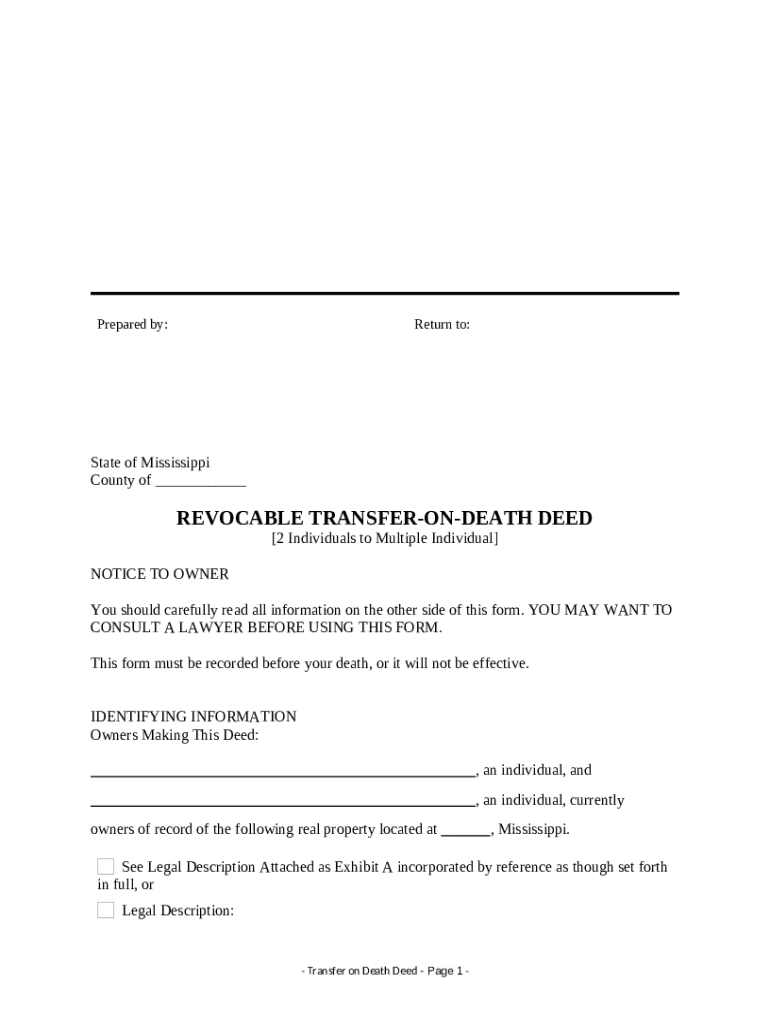







Definition & Meaning of the Mississippi Revocable Transfer-on-Death Deed
The Mississippi Revocable Transfer-on-Death Deed is a legal instrument that permits property owners to transfer real estate ownership directly to beneficiaries upon the owner's death without the property going through the probate process. This transfer is "revocable," meaning the property owner can alter or revoke the deed at any time during their lifetime. The main intention behind this deed is to ensure a smooth transition of property ownership by bypassing traditional probate proceedings, which can often be complex and time-consuming.
How to Use the Mississippi Revocable Transfer-on-Death Deed
To effectively utilize a Mississippi Revocable Transfer-on-Death Deed, a property owner must first have a clear understanding of their estate planning objectives. Here are key steps:
- Preparation: Ensure the property title is clear, as any encumbrances may complicate the transfer process.
- Execution: The document must be completed according to the legal requirements, including the owner's and beneficiary’s information.
- Recording: File the deed with the county recorder where the property is located, as unrecorded deeds aren't valid in transferring ownership post-death.
Considerations for Use
- Revocation: The owner can revoke the deed at any time before death by filing a notarized revocation.
- Amendments: Changes to beneficiary information require formal amendments to be valid.
Steps to Complete the Mississippi Revocable Transfer-on-Death Deed
- Gather Necessary Information: Collect details like the legal description of the property, owner information, and beneficiary details.
- Drafting: Prepare the deed using standardized templates or legal counsel to ensure accuracy.
- Notarization: Sign the document in the presence of a registered notary public.
- Recording: Submit it to the local county recorder's office to make the document legally enforceable.
- Retain Copies: Keep copies for personal records and share relevant details with the designated beneficiaries.
Common Mistakes to Avoid
- Failing to update or revoke incorrect or outdated deeds.
- Not recording the deed, which renders it ineffective.
Key Elements of the Mississippi Revocable Transfer-on-Death Deed
- Property Description: A legally accurate description of the real estate to be transferred.
- Owner(s) and Beneficiary(ies): Names and details of the current property owner and chosen beneficiaries.
- Revocation Rights: An explicit statement allowing the owner to revoke or amend the deed anytime.
- Execution and Witnessing: Proper witnessing and notarization to verify the authenticity of the document.
State-Specific Rules for the Mississippi Revocable Transfer-on-Death Deed
In Mississippi, the Transfer-on-Death Deed must comply with certain state-specific regulations, including:
- Recording Requirements: The deed must be recorded before the owner’s death for effective transfer.
- Homestead Exemptions: Property that qualifies for this exemption may require additional considerations and documentation.
- Filing Fees: State-specific filing fees apply when submitting to the county recorder’s office.
Legal Use of the Mississippi Revocable Transfer-on-Death Deed
The Mississippi Revocable Transfer-on-Death Deed serves multiple legal functions, such as:
- Avoidance of Probate: Helps streamline property transfer without the probate court's intervention.
- Estate Planning Tool: Facilitates the orderly management and distribution of estate assets, providing future financial security for beneficiaries.
Important Terms Related to the Mississippi Revocable Transfer-on-Death Deed
- Grantor: The property owner who initiates the transfer-on-death deed.
- Grantee/Beneficiary: The designated individual(s) who will receive property ownership upon the owner's death.
- Probate: The court-supervised process for validating a will and distributing the deceased's estate.
Examples of Using the Mississippi Revocable Transfer-on-Death Deed
Case Study 1: Single Residential Property Owner
A single homeowner uses a Transfer-on-Death Deed to ensure their primary residence passes directly to their adult child, simplifying posthumous property transfer without entangling court processes.
Case Study 2: Elderly Property Owner with Multiple Properties
An elderly individual with multiple properties uses separate deeds for each real estate parcel, naming specific family members as beneficiaries to distribute assets equitably and avoid probate complexities.




