







Definition & Meaning
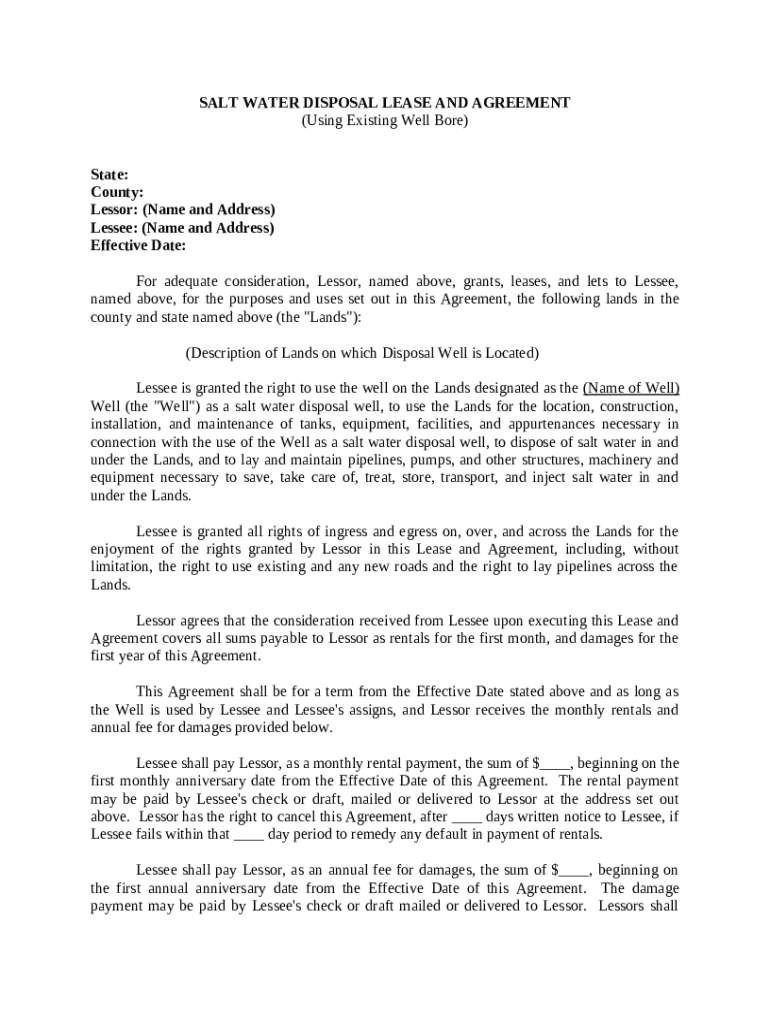
A Salt Water Disposal Lease Agreement is a legally binding contract that sets the terms for the disposal of saltwater, commonly produced during oil and gas extraction. This agreement usually involves a surface owner allowing an oil company to dispose of salt water on their land, often in exchange for compensation. The lease outlines specific conditions, such as the duration of the lease, the method of disposal, and responsibilities regarding environmental compliance.
Salt water disposal is a critical operation in managing by-products from oil and gas production. Without proper agreements, it could lead to disputes between landowners and companies regarding land use and environmental impacts. This form ensures both parties are aligned on expectations, responsibilities, and legal compliance.
How to Use the Salt Water Disposal Lease Agreement
To effectively use the Salt Water Disposal Lease Agreement, there are several steps:
-
Initial Understanding: Both parties should have a comprehensive understanding of the form's terms and conditions. This includes environmental regulations, compensation clauses, and operational logistics.
-
Negotiation: Discuss and agree upon essential terms such as lease duration, rental payments, and liability issues.
-
Drafting and Reviewing: Engage legal professionals to draft and review the document, ensuring clarity and legal compliance.
-
Execution: Once both parties agree on the terms, they can formally execute the document.
-
Monitoring and Compliance: Both parties must adhere to the agreement's provisions. Regular monitoring ensures operations remain within legal and agreed parameters.
Important Terms Related to Salt Water Disposal Lease Agreement
Understanding critical terms within the Salt Water Disposal Lease Agreement is vital:
-
Lessee: The party acquiring the right to dispose of saltwater on another’s land.
-
Lessor: The landowner granting permission for the disposal of saltwater.
-
Indemnification: A provision requiring the lessee to indemnify the lessor against any liabilities arising from disposal activities.
-
Environmental Compliance: Adhering to state and federal regulations concerning the environmental impacts of saltwater disposal.
-
Compensation: Payment terms agreed upon for using the land.
-
Term: The duration the agreement will be in effect.
Legal Use of the Salt Water Disposal Lease Agreement
The legal use of a Salt Water Disposal Lease Agreement ensures all activities comply with existing laws and regulations. This document:
-
Provides a framework for dispute resolution, protecting both parties' interests.
-
Requires compliance with environmental regulations, reducing potential legal liabilities.
-
Defines the scope of liability, ensuring the lessee takes responsibility for any environmental damage caused.
-
Establishes guidelines for operational practices like proper site restoration post-disposal.
Key Elements of the Salt Water Disposal Lease Agreement
Elements integral to the Salt Water Disposal Lease Agreement include:
-
Lease Description: Clear identification of the disposal site boundaries and specifications.
-
Financial Arrangements: Detailed payment structures, including rent, bonuses, and penalties.
-
Rights and Obligations: Outlines the rights and obligations of both parties, ensuring clear understanding.
-
Termination Conditions: Conditions under which the agreement can be terminated before its predetermined end date.
-
Insurance Requirements: Specifies liability insurance coverage required to mitigate risks.
Steps to Complete the Salt Water Disposal Lease Agreement
Completing the Salt Water Disposal Lease Agreement requires the following steps:
-
Information Gathering: Collect necessary details about the land, lessee, and disposal method.
-
Drafting: Create a draft with all terms clearly stated, including site description and financial specifics.
-
Consultation: Have legal and environmental experts review the draft for compliance and potential improvements.
-
Signing: Both parties sign the finalized agreement, possibly in the presence of notaries for authenticity.
-
Record Keeping: Store copies of the signed agreement securely for future reference and compliance checks.
Who Typically Uses the Salt Water Disposal Lease Agreement
The Salt Water Disposal Lease Agreement is primarily used by:
-
Oil and Gas Companies: To legally use land for disposing of saltwater produced during extraction.
-
Landowners: To permit the disposal of saltwater on their property while securing compensation.
-
Environmental Agencies: Which may review these agreements to ensure regulatory compliance.
-
Legal Advisors: Who facilitate the agreement creation and ensure adherence to legal standards.


State-Specific Rules for the Salt Water Disposal Lease Agreement
State-specific rules can significantly impact the agreement:
-
Variations in Regulatory Requirements: Different states have varying disposal regulations which must be included in the agreement.
-
Environmental Permits: Specific permits may be required based on state law before disposal can commence.
-
Compensation Norms: Payment terms might vary reflecting local market conditions and legal stipulations.
Understanding these state-specific elements ensures the agreement's legality and operational feasibility across different jurisdictions.




