




01. Edit your form online
Type text, add images, blackout confidential details, add comments, highlights and more.

Type text, add images, blackout confidential details, add comments, highlights and more.

Draw your signature, type it, upload its image, or use your mobile device as a signature pad.

Send it via email, link, or fax. You can also download it, export it or print it out.
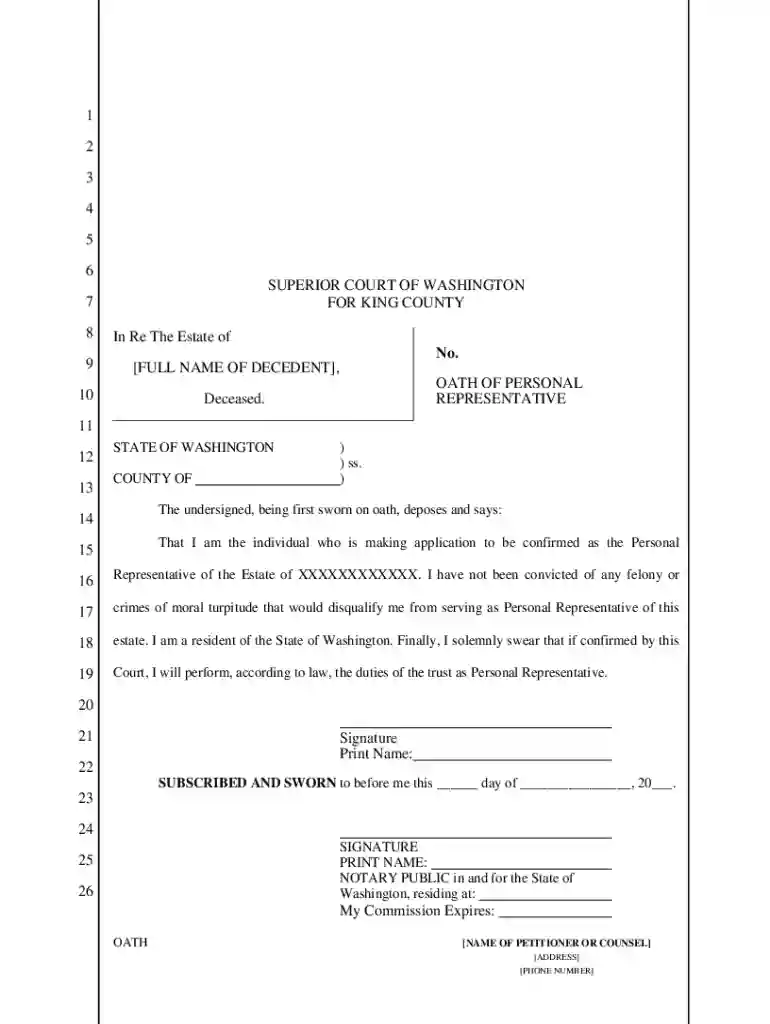
The "Oath of Personal Representative" is a legal document typically used in probate court cases to officially appoint an individual as a personal representative or executor of a deceased person's estate. This document affirms that the appointed individual will dutifully and honestly manage the estate according to the decedent's will or, in the absence of a will, following the state's intestacy laws. The role involves collecting assets, paying debts, and distributing the remaining assets to the rightful beneficiaries.
To obtain the "Oath of Personal Representative," you generally need to visit the probate court where the estate is being processed. The court will provide the necessary documents, and you will typically need to file a petition for probate, which includes requesting the appointment of a personal representative.
Filling out the oath requires careful attention to detail to ensure it is legally valid. The steps typically involve identifying the personal representative and affirming their commitment to managing the estate.
The form is legally binding and serves as a formal and legal recognition of the personal representative's duties. It empowers them to act on behalf of the estate and is often accompanied by a court-issued "Letters of Testamentary" or "Letters of Administration."
Alongside the "Oath of Personal Representative," you may need to submit several other documents when dealing with probate.
While the general process is consistent across the United States, specific rules and requirements can vary by state. Each state may have unique forms, deadlines, and fees.
Certain key components are essential when preparing this legal form to ensure all legal requirements are satisfied.
Real-world scenarios illustrate the function and necessity of the "Oath of Personal Representative" in managing an estate.
By understanding these aspects, personal representatives can confidently fulfill their legal obligations, ensuring a smooth probate process.
At DocHub, your data security is our priority. We follow HIPAA, SOC2, GDPR, and other standards, so you can work on your documents with confidence.
by DT Smith 1996 Cited by 5 Personal representative means the fiduciary appointed by the court to administer the estate and refers to what has been known as an administrator,Read more
Oath of personal representative. Before letters testamentary or of administration are issued, each personal representative or an officer of a bank orRead more


