




01. Edit your form online
Type text, add images, blackout confidential details, add comments, highlights and more.

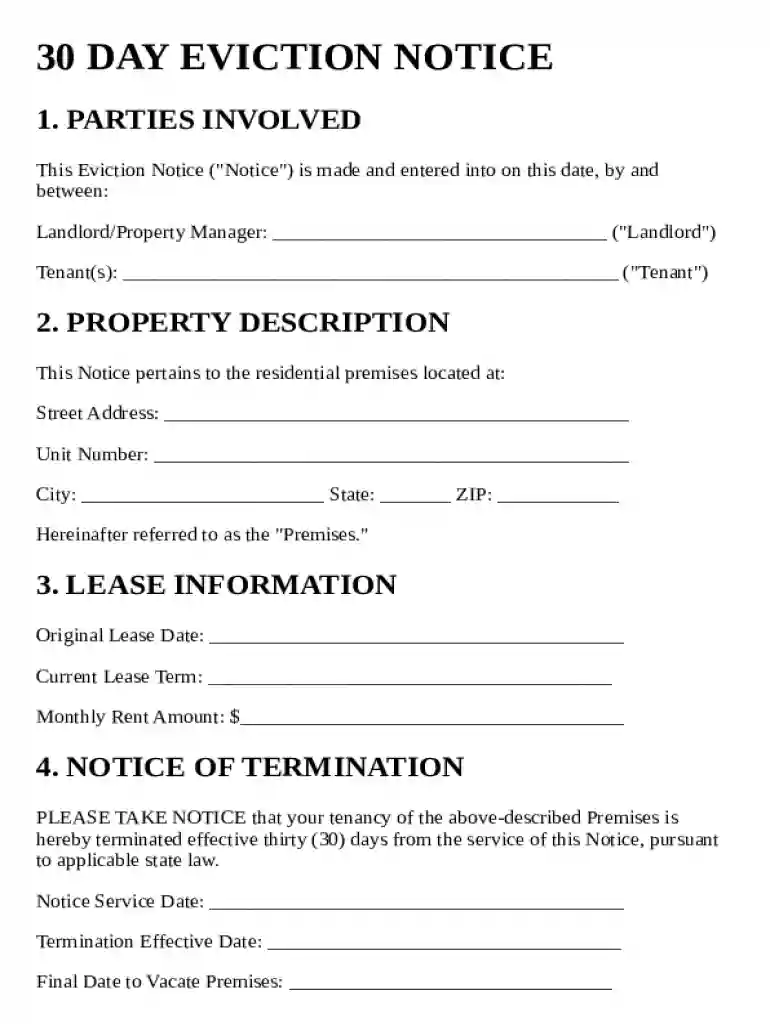
Type text, add images, blackout confidential details, add comments, highlights and more.

Draw your signature, type it, upload its image, or use your mobile device as a signature pad.

Send it via email, link, or fax. You can also download it, export it or print it out.
The "30 Day Eviction Notice Template" is a crucial document in tenant-landlord relationships, often serving as a legal instrument to notify tenants of the landlord's intent to terminate a lease agreement. This form outlines the parameters under which the tenant must vacate the property, typically within 30 days from the notice date. It is a statutory requirement in many jurisdictions in the United States, ensuring that eviction processes are conducted transparently and fairly.
To effectively use the template, landlords should follow several critical steps. First, ensure that the tenant's lease agreements and state laws align with a 30-day notice requirement, as different jurisdictions might have varying mandates. Landlords need to accurately fill in the tenant's details, the property address, and the precise date by which the tenant should vacate. Additionally, it's important to include any valid reasons for termination that are recognized by law to enhance the document's enforceability.
The notice is legally binding and should be used in strict accordance with state landlord-tenant laws. Its primary function is to formally advise the tenant of the landlord's intent to reclaim possession of the property. It must present legitimate reasons for eviction, such as lease term expiration or violation of rental agreements. If the tenant disputes the notice, they have the right to challenge it in court, where the validity of the notice will be scrutinized.
Different states have unique laws concerning eviction notices, affecting both language and process. For instance, in California, the notice must comply with the California Civil Code, detailing specific breaches if applicable. Likewise, New York might require additional time if specific tenure milestones are met. Therefore, always consult local statutes or seek legal counsel to ensure compliance.
The exact requirements for a 30-day eviction notice differ by state, influenced by each state's landlord-tenant laws. While the notice period may remain consistent, the reasons acceptable for termination and the methods of service can vary. For example, states like Texas and Florida may have different stipulations regarding service methods and permissible eviction grounds.
This template is primarily utilized by landlords or property managers to initiate the eviction process. It serves as an official communication tool to inform tenants of impending lease termination. Property management companies, real estate agents, and legal professionals may all employ this template within their procedural documentation to ensure that eviction processes align with recognized legal standards and practices.


At DocHub, your data security is our priority. We follow HIPAA, SOC2, GDPR, and other standards, so you can work on your documents with confidence.
It is understood as follows: a. that a Thirty Day Notice of Intent to Vacate is required by Section 1946 of California Civil Code for month-to-month.Read more
The party giving notice should retain two (2) copies for possible court action. This form may also be used for a mobile home park with less than 12 units.


