




Definition & Meaning
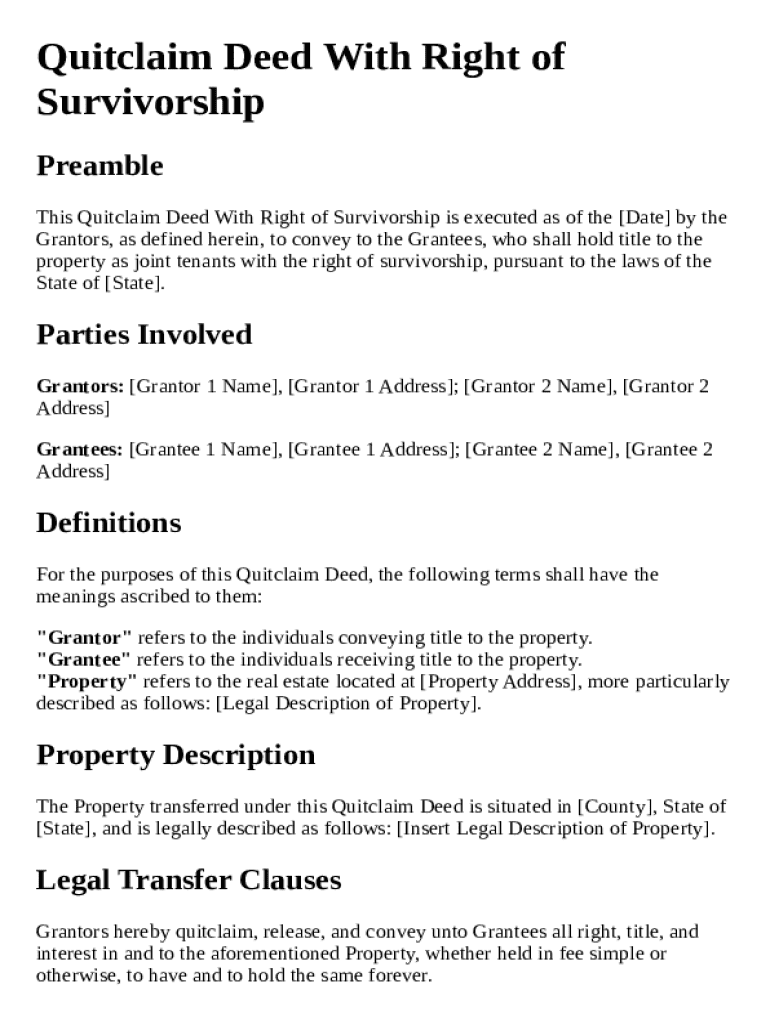
A Quitclaim Deed With Right of Survivorship Template is a legal document utilized to transfer property ownership from one party to another, while simultaneously establishing joint tenancy with the right of survivorship. Under this arrangement, if one of the joint tenants passes away, their interest in the property automatically transfers to the surviving tenant(s) without the need for probate court involvement. This form is particularly beneficial for simplifying the process of ownership transfer among family members or close associates.
How it Works
- Transfer of Ownership: The quitclaim deed allows the grantor to transfer their rights and ownership of the property without any warranties or guarantees regarding the title's status. The grantee receives only the interest the grantor possesses at the time of the transfer.
- Right of Survivorship: This feature ensures the seamless inheritance of property by the surviving owner(s) without legal proceedings.
- Joint Tenancy: All owners share equal ownership and have equal rights to possess and use the entirety of the property.
How to Use the Quitclaim Deed With Right of Survivorship Template
Using the template effectively involves several essential steps:
- Complete the Details: Enter the full legal names of the grantor(s) and grantee(s), along with the legal description of the property. This information must match the records on the existing property deed.
- Notarization and Witnesses: The deed must be notarized. Some states require witness signatures in addition to notarization, so it’s crucial to verify the specific requirements for your state.
- Filing with the County Recorder's Office: Submit the completed and notarized deed to the local county recorder's office. Filing the deed officially records the change in ownership.
Practical Example
If Mary and John own a property together and intend for it to pass from one to the other seamlessly upon either's death, they would use this template to establish a right of survivorship.
Steps to Complete the Quitclaim Deed With Right of Survivorship Template
-
Gather Necessary Information:
- Obtain the full names and addresses of the parties involved.
- Have the property’s legal description ready, usually found on the current deed or title.
-
Fill in the Template:
- Enter the relevant details, including the grantor and grantee information and property description.
- Specify the terms of joint tenancy and survivorship rights.
-
Review for Accuracy:
- Ensure all information is correct, particularly the legal description of the property.
- Verify compliance with local state requirements.
-
Notarize the Document:
- Sign the document in front of a notary public.
- Under some state laws, additional witnesses may be necessary.
-
Submit for Recording:
- Take the properly executed and notarized deed to the appropriate county office.
- Pay any required fees associated with filing.
Key Elements of the Quitclaim Deed With Right of Survivorship Template
- Grantor and Grantee Identification: Clear identification of each party is crucial to avoid any legal complications.
- Legal Property Description: A precise description as recorded in the title to differentiate from similar properties.
- Right of Survivorship Clause: Essential for ensuring that the property bypasses probate and directly transfers ownership to remaining joint tenants.
Important Considerations
- Limitations: It does not guarantee the validity of the property title, unlike a warranty deed.
- Impact on Loans: Properties that are mortgaged may require lender approval before executing new deeds.
Legal Use of the Quitclaim Deed With Right of Survivorship Template
The legal application of this template varies by state law, making it important for parties to consult with a real estate attorney to ensure compliance with local regulations. This template is suitable for straight ownership transfers without financial exchanges, often used among family members for estate planning purposes.
Why It’s Used
- Simplicity: Provides a relatively straightforward process for transferring property ownership among closely associated parties like family members.
- Avoiding Probate: It enables property to automatically pass to survivors, streamlining inheritance handling.
Examples of Using the Quitclaim Deed With Right of Survivorship Template
- Family Transitions: Parents transferring property ownership to children while maintaining joint ownership until both parents are deceased.
- Co-ownership Agreements: Friends purchasing property together who want the survivor to retain the whole ownership automatically.
- Spousal Transfers: Married couples who wish to ensure the surviving spouse retains full ownership without probate hassles.
State-Specific Rules for the Quitclaim Deed With Right of Survivorship Template
State laws regulate the specifics of property transfers via quitclaim deeds.
Common Variations
- Witness Requirements: States like Florida require additional witnesses alongside notary verification.
- Filing Requirements: Some states impose specific timelines for filing to effectuate transfer rights.
Summary
Understanding and adhering to state-specific requirements are essential for legally sound and effective utilization of the quitclaim deed with survivorship rights.