



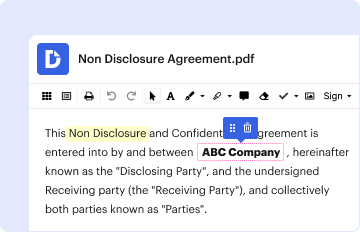
01. Edit your form online
Type text, add images, blackout confidential details, add comments, highlights and more.

Type text, add images, blackout confidential details, add comments, highlights and more.
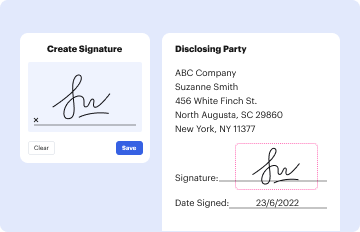
Draw your signature, type it, upload its image, or use your mobile device as a signature pad.

Send it via email, link, or fax. You can also download it, export it or print it out.
The MRI Patient Screening Form is a crucial document used in healthcare settings to assess a patient's eligibility and safety for undergoing Magnetic Resonance Imaging (MRI) procedures. It gathers important information regarding the patient's medical history, current medications, allergies, and any implanted devices. This form ensures that both the patient and medical staff are informed about potential risks, contraindications, or necessary precautions.
Using the MRI Patient Screening Form involves thorough completion of various sections that capture a patient's medical background. The form is typically provided by the healthcare provider prior to scheduling an MRI.
The form comprises several key elements essential for ensuring the patient's safety and the effectiveness of the MRI process.
Completing the MRI Patient Screening Form requires attention to detail to ensure all relevant information is captured accurately.
Completing the MRI Patient Screening Form is a responsible step towards ensuring the safety and success of the MRI process.
The form is primarily used by patients scheduled for MRI scans, but it also serves healthcare professionals to align imaging procedures with individual patient needs.



The form encompasses legal regulations and guidelines to protect patient rights and ensure compliance with medical standards.
While the MRI Patient Screening Form's fundamentals remain consistent nationwide, certain states might have additional requirements or sections based on local regulations.
For digital versions of the MRI Patient Screening Form, compatibility with document management platforms is essential.
With this comprehensive guide to the MRI Patient Screening Form, healthcare professionals and patients can ensure they are well-prepared for safe and effective MRI procedures.
At DocHub, your data security is our priority. We follow HIPAA, SOC2, GDPR, and other standards, so you can work on your documents with confidence.
Oct 5, 2022 MRI reduces the need for invasive and potentially damaging prostate biopsy to confirm the presence of cancer, usually after an initial blood
All individuals are required to fill out this safety form BEFORE entering the MRI scan room. Be advised, the MRI magnet is ALWAYS ON. 1. Have you had a reactionRead more
Magnetic resonance (MR) facilities and units can refer to this sample screening form as a guide in developing facility-specific forms.


