
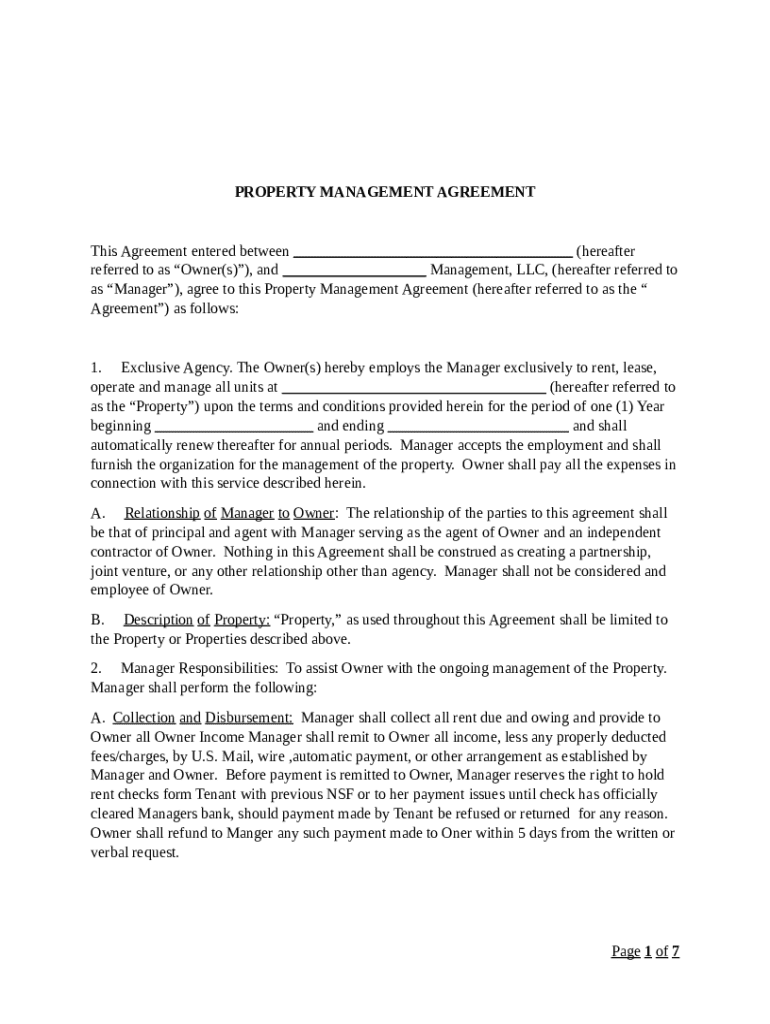







Definition & Meaning
A Property Management Agreement is a contractual document establishing a formal relationship between a property owner and a property management company or individual. It defines the duties, responsibilities, and obligations of both parties in managing residential, commercial, or rental properties. This agreement ensures that the property manager is authorized to act on behalf of the owner in maintaining, leasing, and operating the property efficiently. Such agreements often include clauses related to rent collection, handling maintenance issues, budgeting, and reporting.
- Key Components:
- Parties Involved: Typically includes the property owner and the property manager.
- Scope of Services: Outline the specific duties the manager is responsible for.
- Compensation: States how and when the manager will be paid for their services.
- Duration: Specifies the term of the agreement and conditions for renewal or termination.
Key Elements of the Property Management Agreement
A Property Management Agreement includes several vital components that ensure clarity and mutual understanding. Each element is crucial in defining the role and expectations of the property manager and safeguarding the interests of the property owner.
- Duties and Responsibilities: Explicitly lists the tasks the property manager will handle, such as collecting rent, managing repairs and maintenance, and communicating with tenants.
- Financial Management: Details how the property manager will manage the financial aspects, including rent collection, handling security deposits, and preparing financial reports.
- Maintenance and Repairs: Specifies the procedures and budget for regular maintenance and repairs, including any limits on expenditure before prior approval is needed.
- Termination Clause: Discusses conditions under which the agreement can be terminated by either party and any requisite notice period.
Who Typically Uses the Property Management Agreement
This agreement primarily serves property owners who wish to delegate the management of day-to-day operations to professionals. Conversely, property management companies or individual managers use it to formalize their scope of duties.
- Common Users:
- Individual Property Owners: Especially beneficial for owners with multiple properties or those not residing near their investment properties.
- Real Estate Investment Firms: Leveraging professional management to maximize property value and rental income.
- Commercial Property Owners: Ensures professional handling of multiple tenant requirements and maintenance issues.


Steps to Complete the Property Management Agreement
Completing a Property Management Agreement involves several steps to ensure all provisions are adequately addressed and understood by both parties.
- Identify the Parties: Clearly define the property owner and management entity, including contact details.
- Define Scope of Work: Outline specific services that the property manager will provide.
- Set Financial Terms: Include the management fee structure and any additional costs or reimbursable expenses.
- Review Legal Clauses: Ensure compliance with applicable real estate laws and include dispute resolution procedures.
- Finalize Signatures: Both parties review and sign the document to formalize the agreement.
Legal Use of the Property Management Agreement
The Property Management Agreement must adhere to relevant state and federal laws, protecting both parties' interests while ensuring lawful property operation.
- Compliance: Include clauses to meet Fair Housing laws, local landlord-tenant laws, and other applicable regulations.
- Disclosure Requirements: Ensure transparency regarding the management’s legal authority over the property.
- Legal Advice: Both parties should seek legal counsel to confirm compliance with jurisdiction-specific requirements.
State-Specific Rules for the Property Management Agreement
Rules governing Property Management Agreements can vary significantly from state to state. Awareness of these differences is crucial for ensuring the agreement's legal validity.
- Licensing Requirements: Many states mandate that property managers hold a real estate broker's license.
- Fee Structures: Regulations may dictate permissible fee arrangements, including maximum allowable charges.
- Tenant Rights: Agreements must adhere to state-specific tenant protections, such as notice periods for eviction or lease termination.
Examples of Using the Property Management Agreement
Practical application of the Property Management Agreement often involves diverse scenarios in both residential and commercial real estate.
- Scenario 1: A landlord hires a property management firm to oversee a multi-family residential property, thereby delegating rent collection and maintenance tasks.
- Scenario 2: A commercial property owner utilizes an agreement to authorize a manager to handle tenant leasing negotiations and property upkeep.
- Scenario 3: An absentee owner with properties in another state contracts with a local manager, ensuring efficient handling of daily operations and tenant issues.
Software Compatibility
Managing a Property Management Agreement can be enhanced by using software tools compatible with different document formats. These tools can streamline the process of creating, editing, and sharing the agreement digitally.
- Document Support: DocHub supports formats like PDF, DOC, and TXT, facilitating easy creation and editing.
- Integration: Seamless integration with cloud services such as Google Drive and Dropbox for document storage and sharing.
- Digital Signature Capabilities: Allows secure, legally binding electronic signatures, ensuring all parties can sign documents regardless of location.




