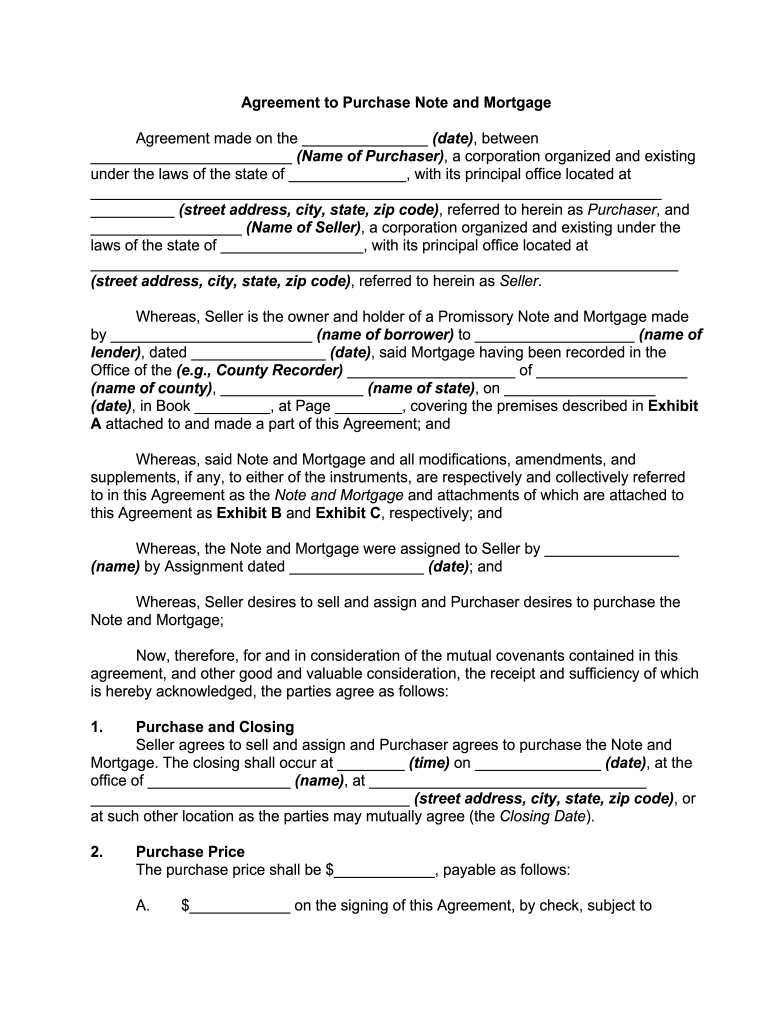







Definition and Meaning of Purchase Note and Mortgage Agreement
A Purchase Note and Mortgage Agreement is a legally binding contract outlining the terms of a loan used to purchase property. This document serves as an agreement between the lender and the borrower, specifying the repayment schedule, interest rates, and conditions under which the loan is provided. It acts as both a promissory note, indicating the borrower's commitment to pay, and a mortgage, granting the lender rights to the property until the debt is settled.
Essential Components
- Loan Amount: Specifies the sum borrowed to purchase the property.
- Interest Rate: Details the percentage charged on the borrowed amount.
- Payment Schedule: Outlines the frequency and amount of payments.
- Collateral Description: Describes the property secured by the loan.
- Default Consequences: States penalties or actions if the borrower defaults on the loan.
Understanding these components is crucial for both parties to ensure they are fully aware of their obligations and rights under the agreement.
How to Use the Purchase Note and Mortgage Agreement
Utilizing a Purchase Note and Mortgage Agreement involves several key steps to ensure its proper execution and compliance with legal standards.
Step-by-Step Process
- Review Terms: Carefully read all clauses related to interest rates, payment schedules, and default conditions.
- Negotiate Terms: Discuss and negotiate any terms that may need adjustment with the lender to better suit your financial situation.
- Legal Consultation: Seek advice from a legal expert to understand implications and ensure legality.
- Execute Agreement: Sign the document along with the lender, indicating mutual consent and understanding.
- Record the Agreement: File the agreement with the appropriate government body to ensure it is recognized legally.
These steps help ensure that both parties have a comprehensive understanding of their commitments and protect their interests.
Key Elements of the Purchase Note and Mortgage Agreement
Understanding the core components of the Purchase Note and Mortgage Agreement is vital for both lenders and borrowers.
Essential Elements
- Parties Involved: Identifies the lender and borrower, including their legal statuses and contact information.
- Property Description: Provides a detailed description of the property being financed, including location and legal identifiers.
- Repayment Terms: Includes specific details on how and when payments should be made, and any penalties for late payments.
- Prepayment Options: Details conditions under which the borrower can pay off the loan early without penalties.
- Legal Jurisdiction: Specifies which state's laws govern the agreement, crucial for resolving any disputes.
These elements form the backbone of the agreement, providing a clear roadmap for the financial relationship between the parties involved.
Legal Use of the Purchase Note and Mortgage Agreement
The Purchase Note and Mortgage Agreement must comply with legal statutes to be enforceable.
Compliance and Legal Requirements
- Regulatory Adherence: The agreement must adhere to federal and state laws, ensuring it respects lending regulations.
- Disclosure Obligations: Lenders are legally required to disclose all terms of the loan clearly to borrowers.
- Legal Remedies: Defines actions parties can take if the agreement is breached, ensuring protection under the law.
Meeting these legal prerequisites ensures the agreement stands up to legal scrutiny and protects the parties involved.
Important Terms Related to Purchase Note and Mortgage Agreement
There are several terms specific to mortgage agreements that participants should be familiar with.
Key Terms
- Amortization: Refers to the process of gradually paying off a debt over a specified period.
- Equity: The value of the borrower's interest in the property after deducting outstanding loan amounts.
- Lien: A legal claim against a property by the lender until the debt is paid.
- Underwriting: The process by which a lender assesses the risk of lending to a borrower.
Familiarity with these terms helps users navigate the complexities of mortgage agreements effectively.
State-Specific Rules for the Purchase Note and Mortgage Agreement
Different states in the U.S. may have specific regulations affecting the Purchase Note and Mortgage Agreement.
Examples of State Variations
- Foreclosure Procedures: States have varying laws about the process and timeline for foreclosures.
- Interest Rate Caps: Some states impose maximum interest rates to protect borrowers.
- Recording Requirements: Requirements for filing and recording mortgage documents differ by state.
Understanding these variations is crucial for ensuring compliance and avoiding legal pitfalls.
Steps to Complete the Purchase Note and Mortgage Agreement
Completing this agreement involves several crucial steps that ensure accuracy and compliance.
Detailed Steps
- Gather Required Information: Collect all necessary personal, financial, and property information.
- Draft Initial Agreement: Use a standard template or legal advice to draft an initial version.
- Review and Revise: Both parties should review the draft and discuss necessary amendments.
- Finalize Terms: Agree on final terms and conditions.
- Sign and Notarize: Both parties sign the agreement, and it is notarized to affirm authenticity.
- Record the Agreement: Submit the finalized document to the local recording office.
Following these meticulous steps helps ensure the agreement is thorough, legally compliant, and mutually beneficial.
Who Typically Uses the Purchase Note and Mortgage Agreement
This type of agreement is commonly used by various individuals and entities involved in property transactions.


Typical Users
- First-time Homebuyers: Acquire financing to purchase residential property.
- Real Estate Investors: Secure loans for investment properties.
- Lending Institutions: Provide loans while retaining rights to repossess the property in case of default.
Identifying the typical users helps anticipate the necessary provisions and considerations in the agreement's formulation.